Kansas pest & disease library

What is actually wrong with your tree

Most Kansas tree problems come down to a short list, and most of that list is survivable. A few are not. This library tells you which is which — what each one looks like, which trees it takes, the weeks in the year when doing something actually works, and the point past which nothing does.

Entries in the library
16pests and diseases profiled
Usually fatal once established
5usually end in removal
With something a homeowner can do
15you can act on yourself
Open the library

Do not have a name for it yet?

This page is organised by cause, which is only useful once you have a suspect. If all you have is something you can see, start there instead — the symptom guides work backwards to the same entries.

The library

Sixteen problems that account for most of it

Filter by the tree you actually own, by the season you are standing in, or by how much trouble you are in. Every entry says plainly what treatment achieves and when a tree is past saving.

Filter by how serious the problem is

16 entries

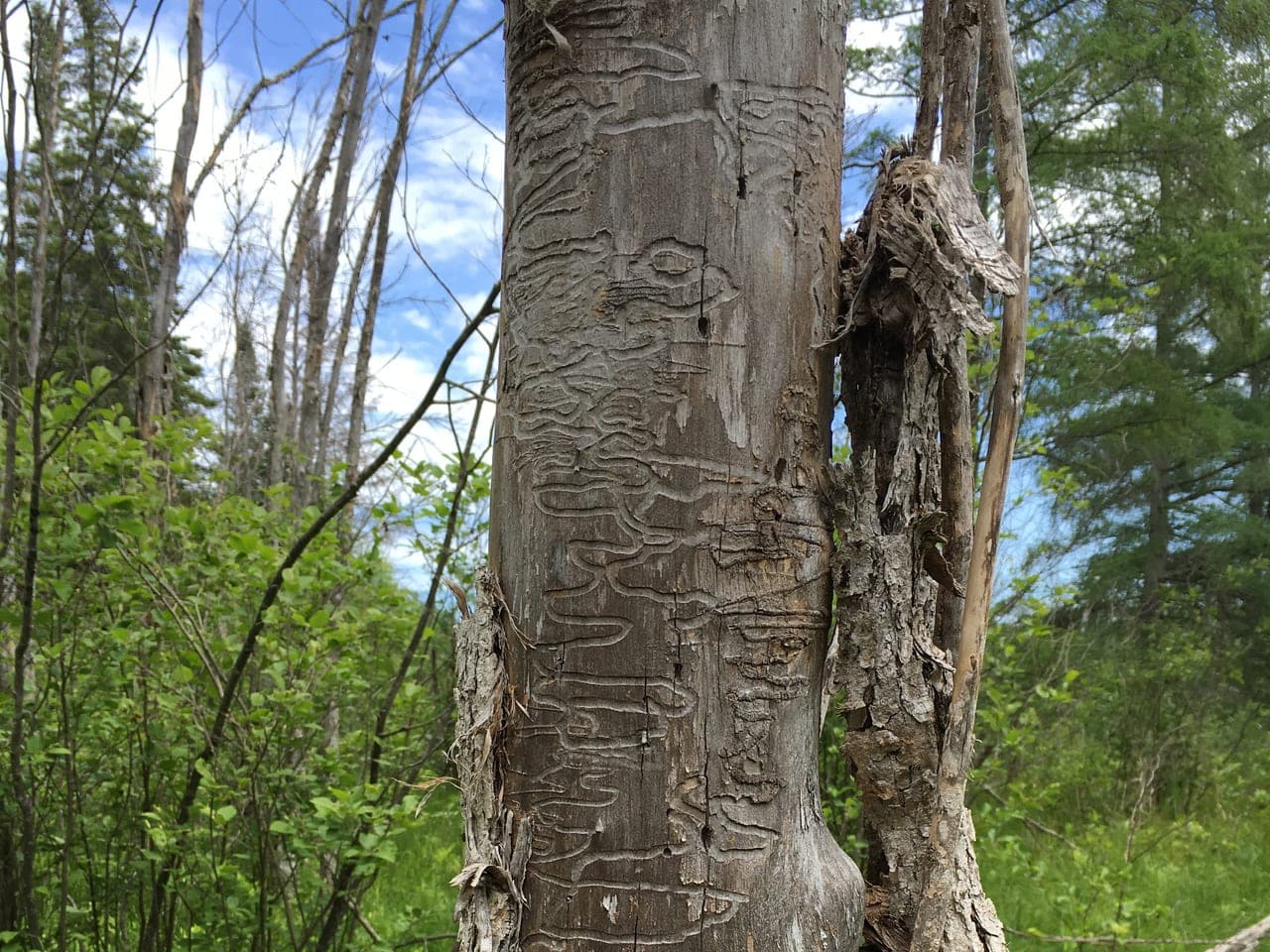
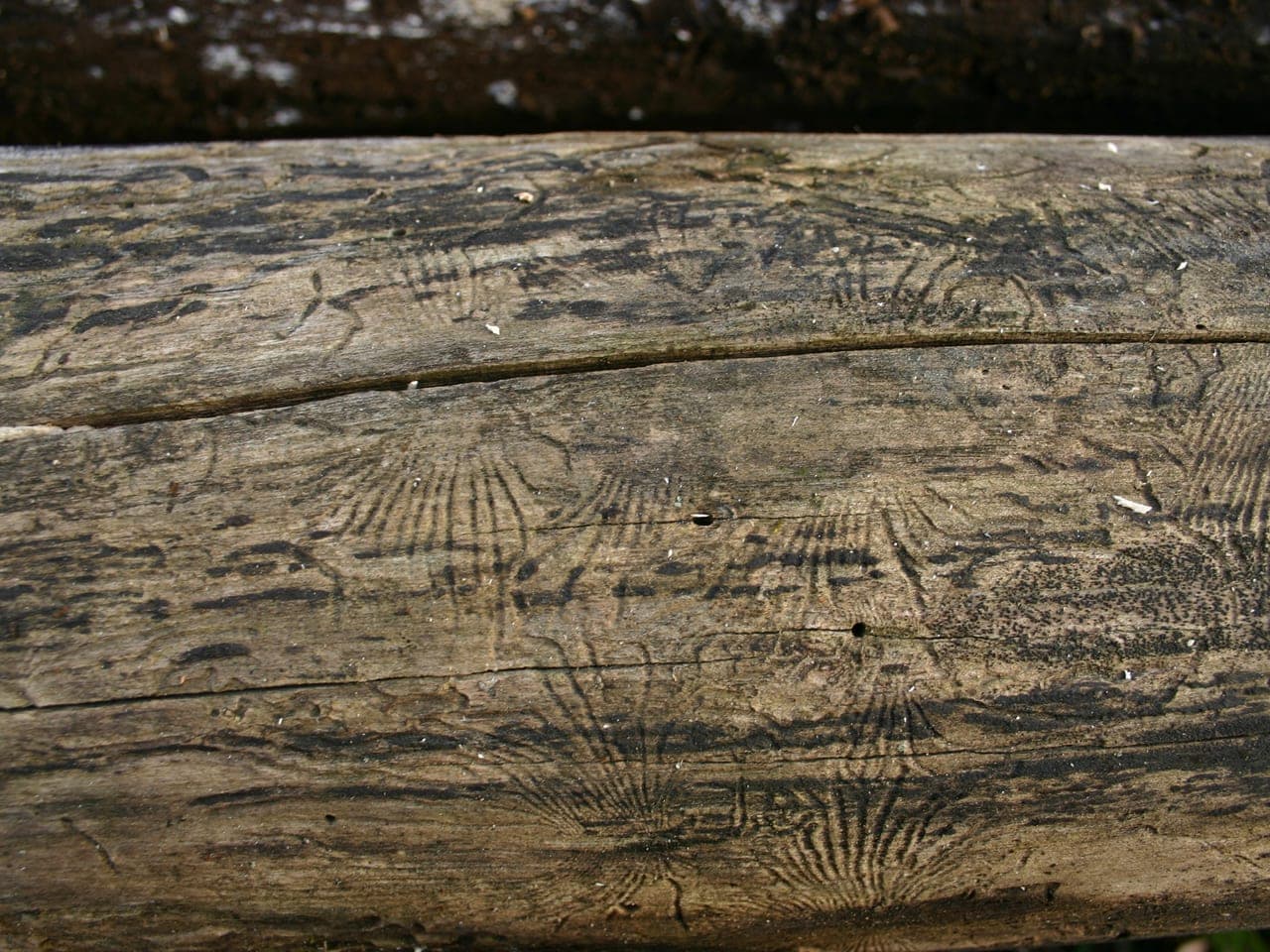
  • Fine winding beetle tunnels radiating from a central channel on the inner face of elm bark
    Usually fatalDisease

    Dutch elm disease

    Ophiostoma novo-ulmi

    The fungus that removed American elm from Kansas streets in the middle of the last century, and it has not gone away. It is carried by bark beetles and travels between neighbouring elms through grafted roots, and the useful Kansas distinction is that Siberian and lacebark elms largely shrug it off.

    Hits American Elm, Siberian Elm, Chinese Elm (Lacebark Elm), and others
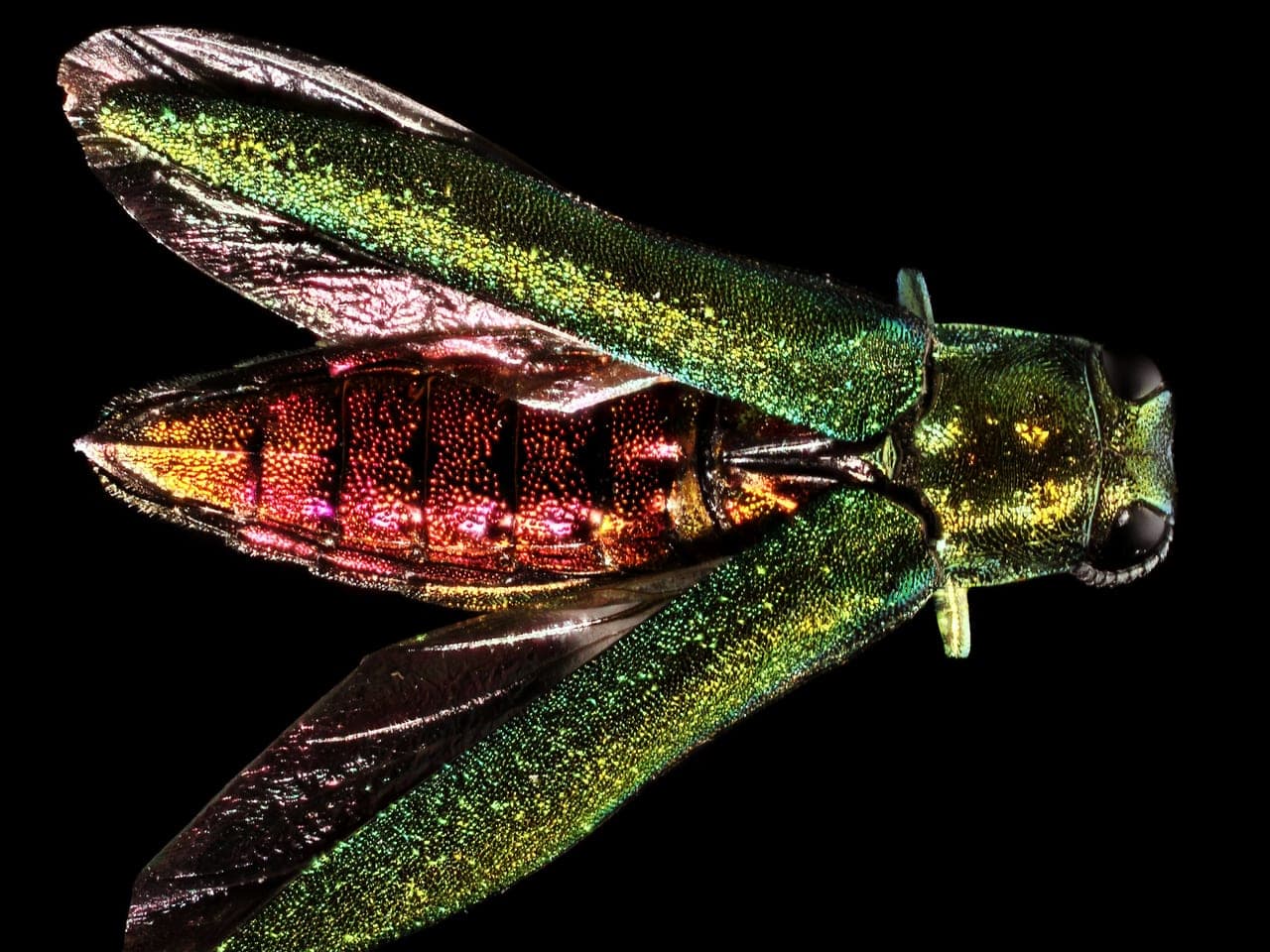
  • A metallic green beetle with wing covers spread, showing a coppery red abdomen beneath
    Usually fatalInsect or mite

    Emerald ash borer

    Agrilus planipennis

    An invasive beetle that has killed essentially every untreated ash in the areas it has reached, and it is still moving across Kansas county by county. An ash you want to keep has to be on a treatment program before it looks sick — once a third of the canopy is gone, the window has closed.

    Hits Green Ash, and others

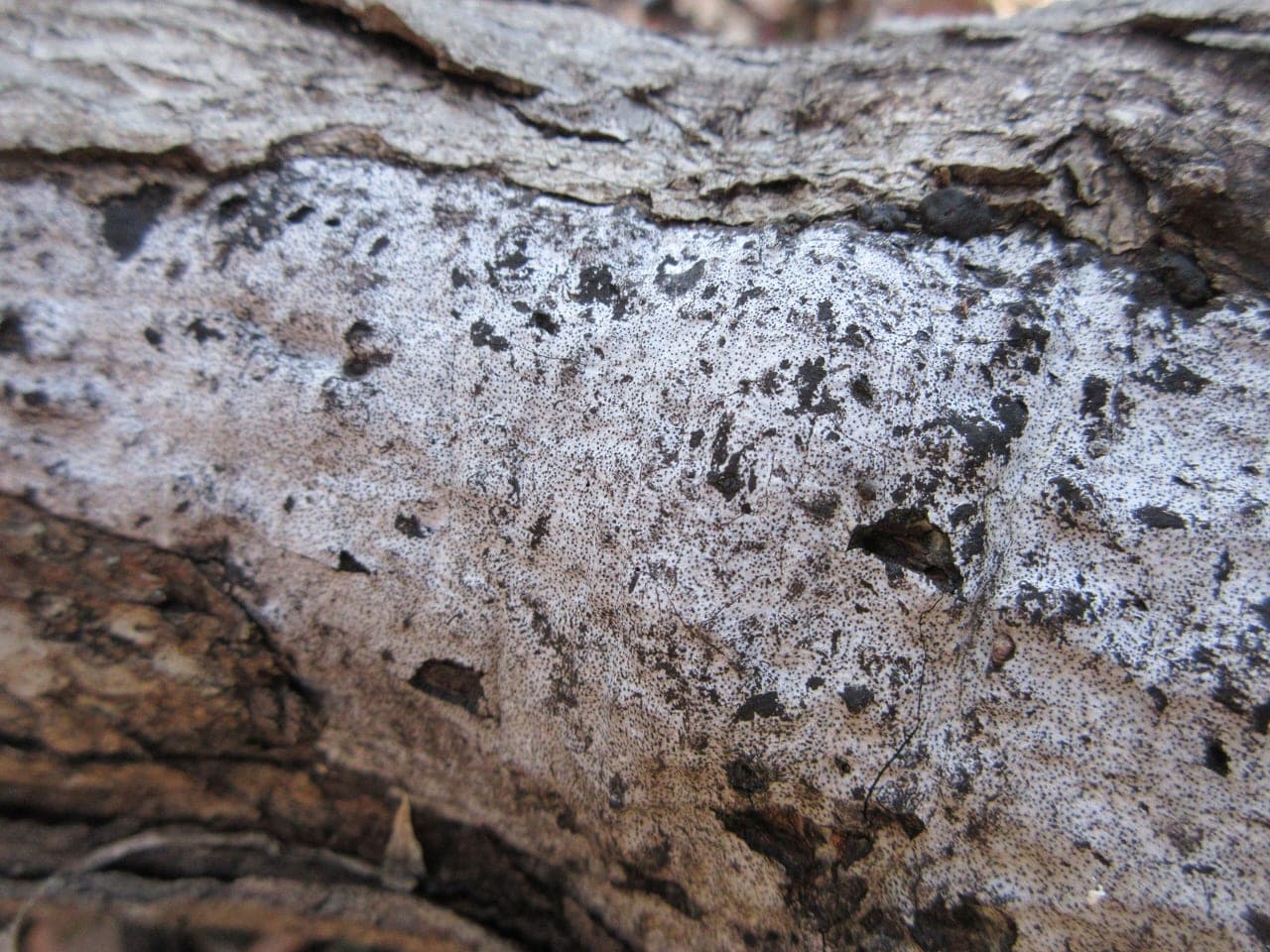
  • A patch of bark fallen from a trunk exposing a smooth silvery-grey fungal crust on the wood beneath
    Usually fatalDisease

    Hypoxylon canker

    Biscogniauxia atropunctata

    A fungus that lives quietly inside healthy oaks and only turns destructive when the tree is severely stressed — most often by drought. Bark sloughs away in sheets to reveal a silver-grey crust, and by the time you can see it, that part of the tree is already dead.

    Hits Bur Oak, Northern Red Oak, Pin Oak, and others

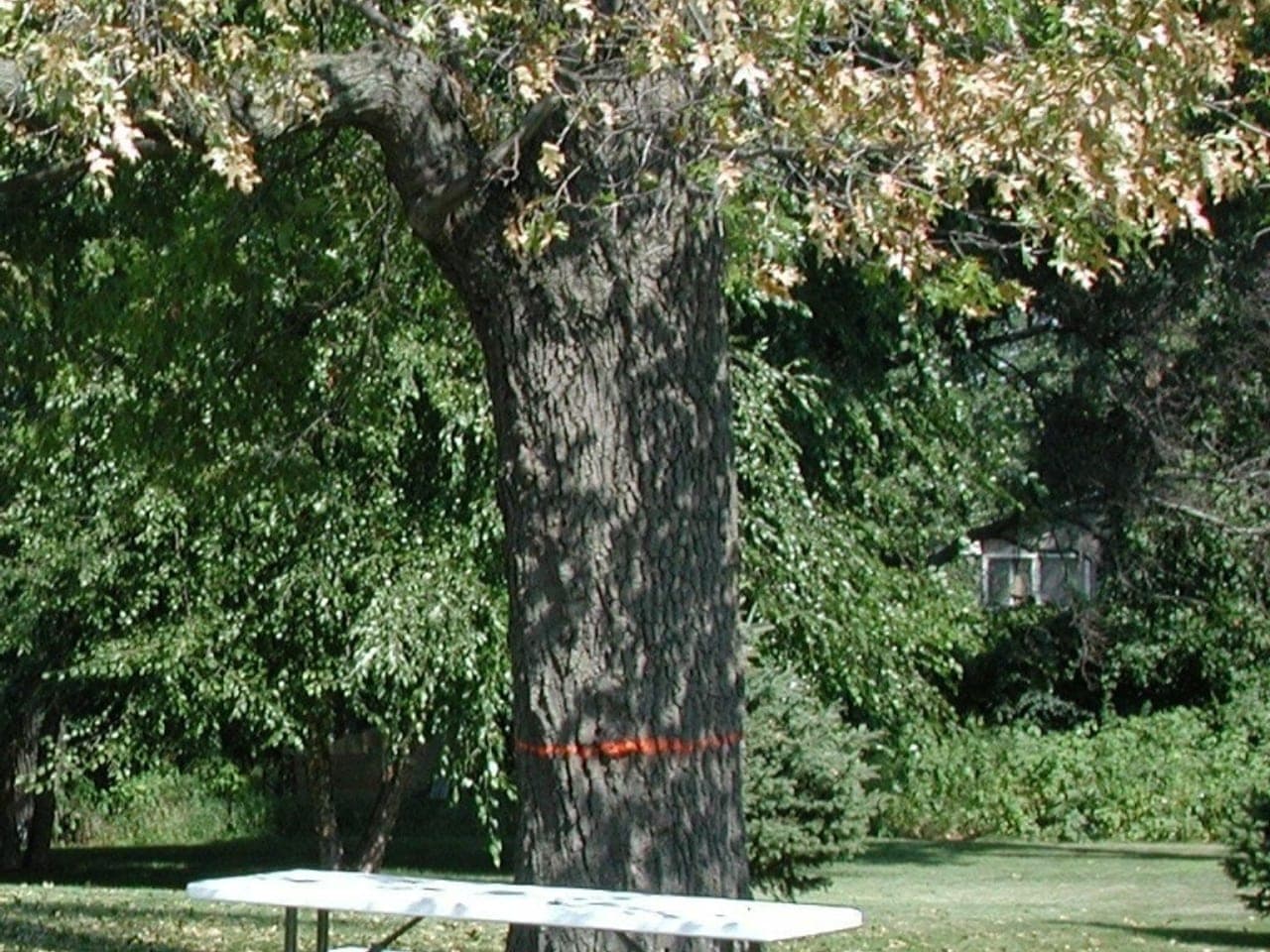
  • A yard oak marked with an orange survey band, its whole upper canopy browned while surrounding trees stay green
    Usually fatalDisease

    Oak wilt

    Bretziella fagacearum

    A fungal disease that plugs the water-conducting vessels of an oak from the inside. Red oaks can go from healthy to dead in a single season, and because it also travels underground through grafted roots, one infected tree threatens every oak near it.

    Hits Northern Red Oak, Pin Oak, Bur Oak, and others

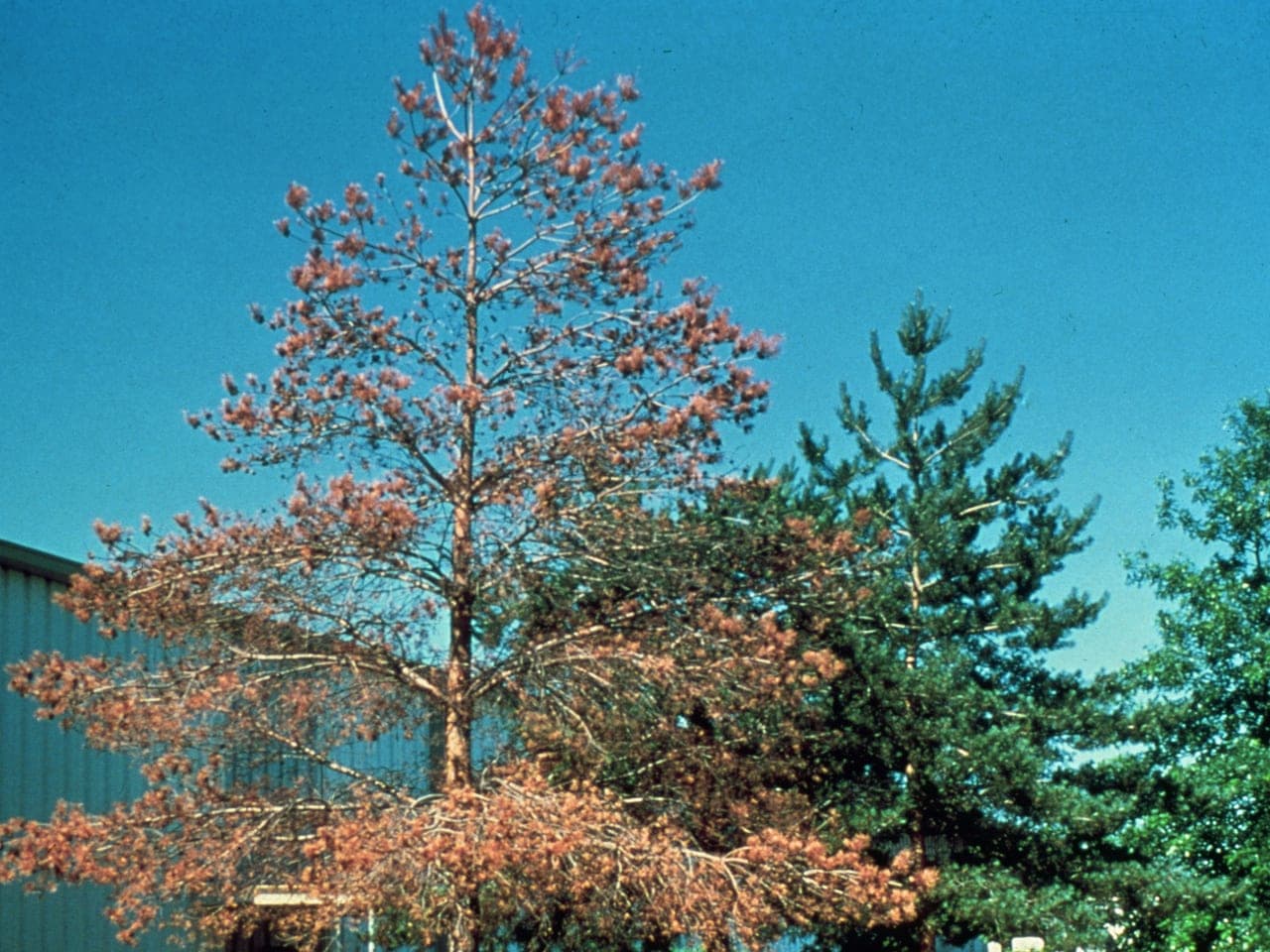
  • A pine with completely rust-brown needles standing among neighbouring pines that are still green
    Usually fatalDisease

    Pine wilt

    Bursaphelenchus xylophilus

    A microscopic nematode carried tree to tree by pine sawyer beetles, which multiplies inside a pine and shuts down its water supply. A mature Scots or Austrian pine can go from green to entirely brown in a matter of weeks, and there is no treatment once it is infected.

    Hits Austrian Pine, and others

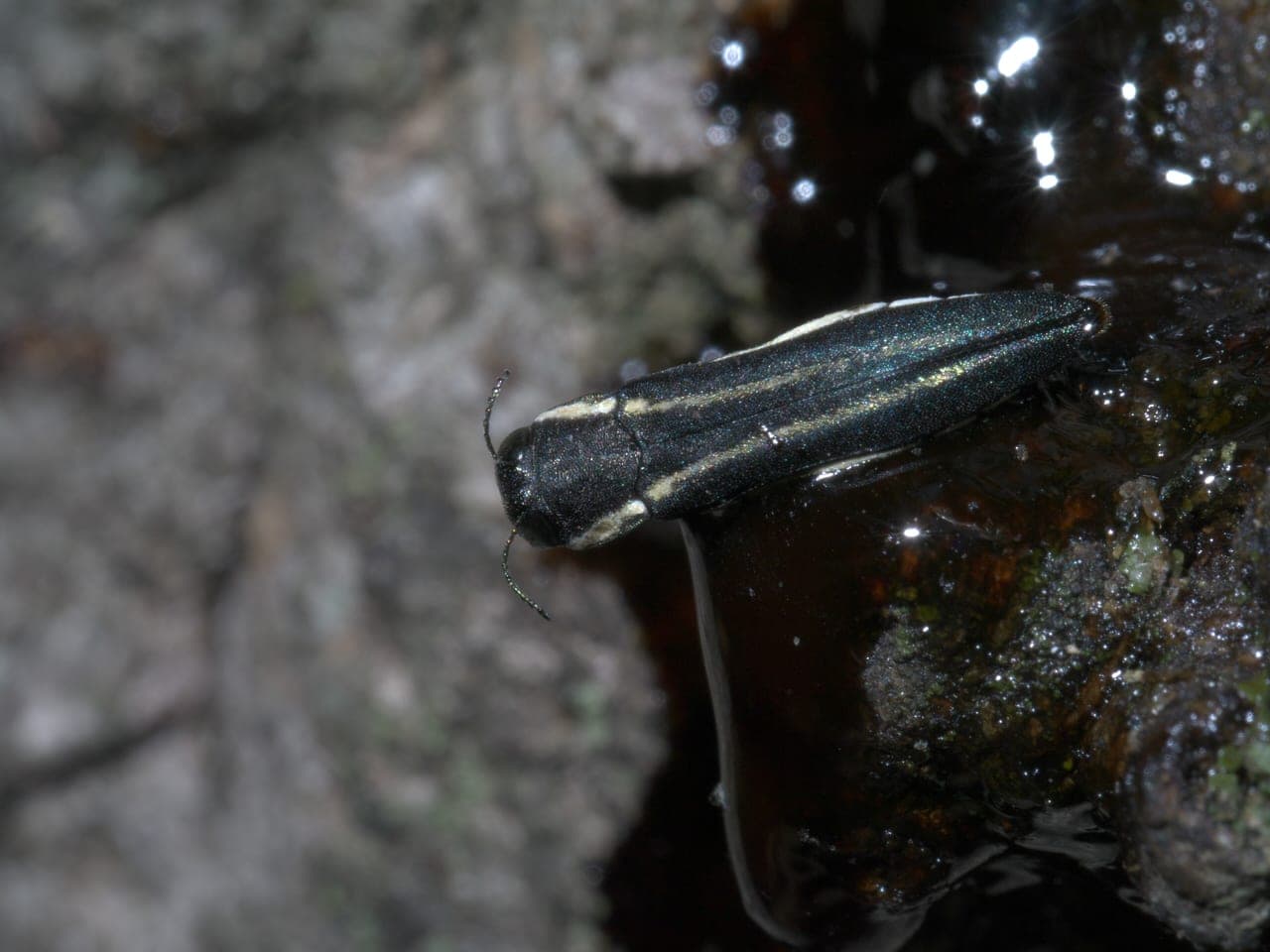
  • A slender dark metallic beetle with two faint pale stripes on its wing covers
    SeriousInsect or mite

    Borers

    Beetle and moth larvae that tunnel through the living tissue just under the bark. With the sole exception of emerald ash borer, they are opportunists that attack trees already weakened by drought, heat, or damage — which makes an infestation a diagnosis of the tree's history, not just its pests.

    Hits Bur Oak, Northern Red Oak, Pin Oak, Eastern Cottonwood, Silver Maple, Eastern Redbud, and others

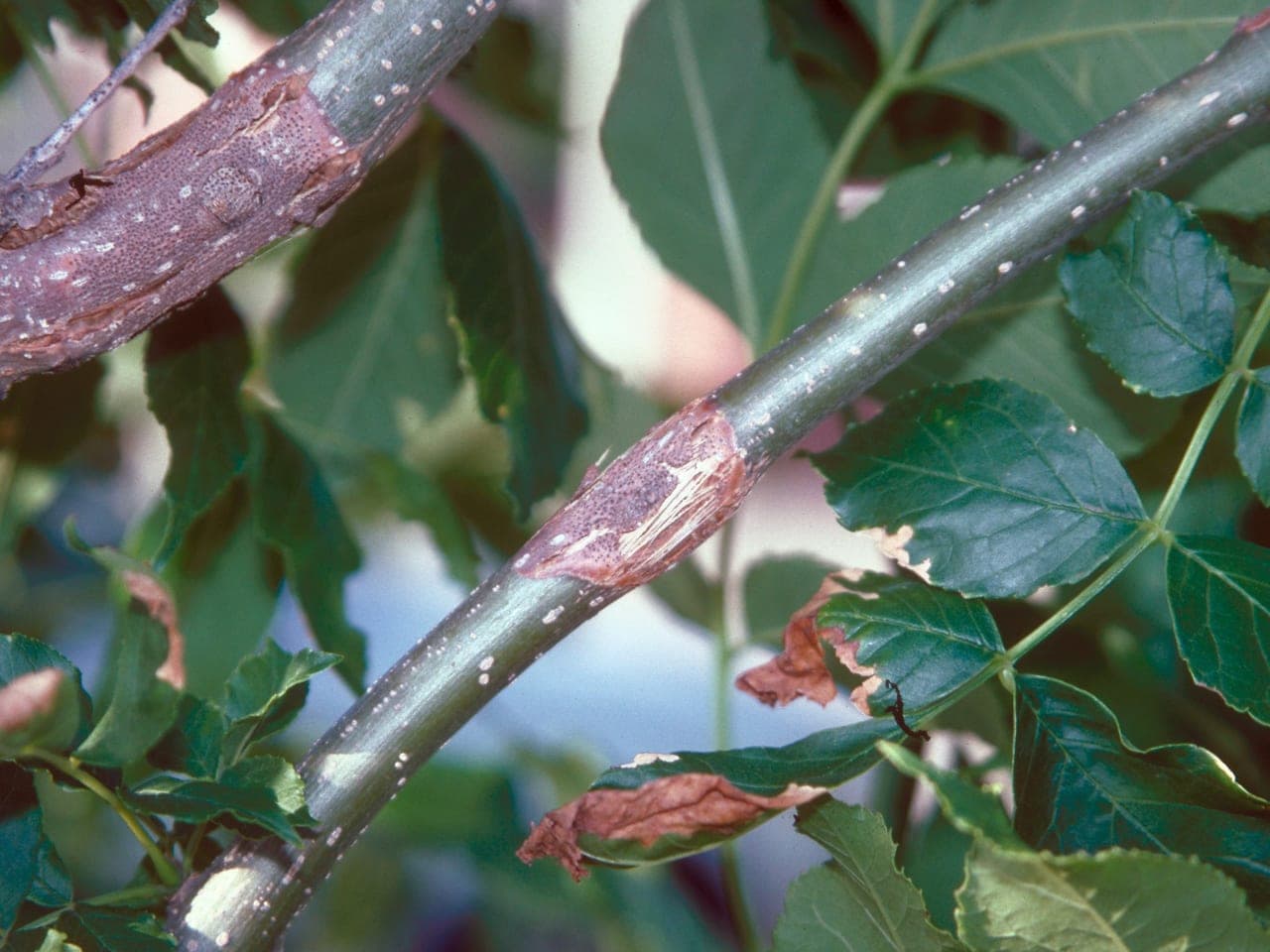
  • An elongated sunken dead patch on a green ash trunk with cracked bark at its margins
    SeriousDisease

    Cankers

    Localized dead patches in the bark and the living layer beneath it, caused by fungi that get in through wounds or take advantage of a stressed tree. Almost every canker fungus in Kansas is an opportunist, which means the canker is usually the second thing that went wrong.

    Hits Eastern Cottonwood, Silver Maple, Honey Locust (thornless), Green Ash, Eastern Redbud, and others

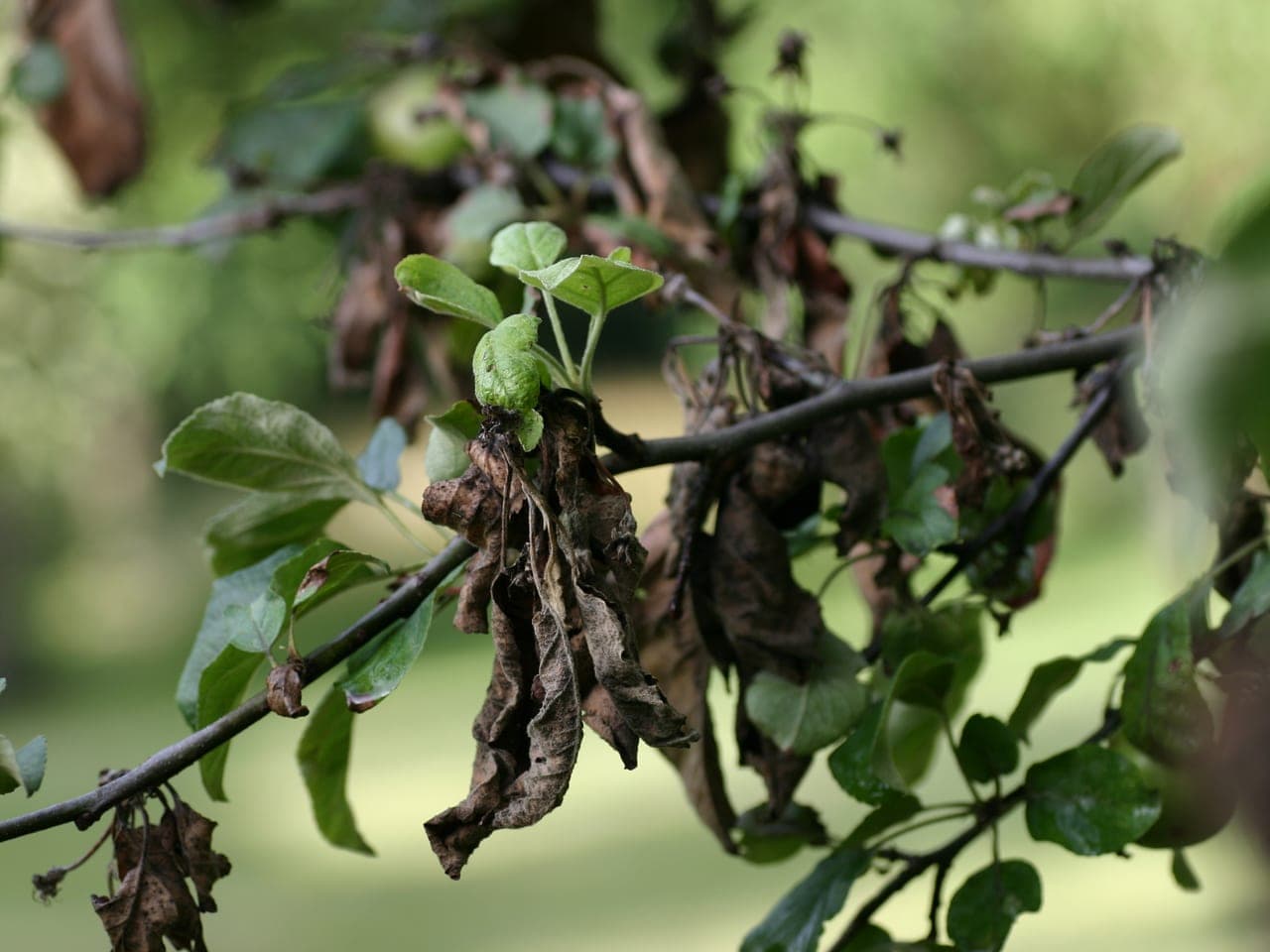
  • An apple branch hung with blackened shrivelled leaves among healthy green foliage
    SeriousDisease

    Fire blight

    Erwinia amylovora

    A bacterial disease that runs down shoots from the blossoms in warm wet spring weather, leaving branches that look genuinely scorched. In Kansas it is above all a Callery and Bradford pear problem, on a tree that already has other reasons to come out.

    Hits Bradford (Callery) Pear, and others

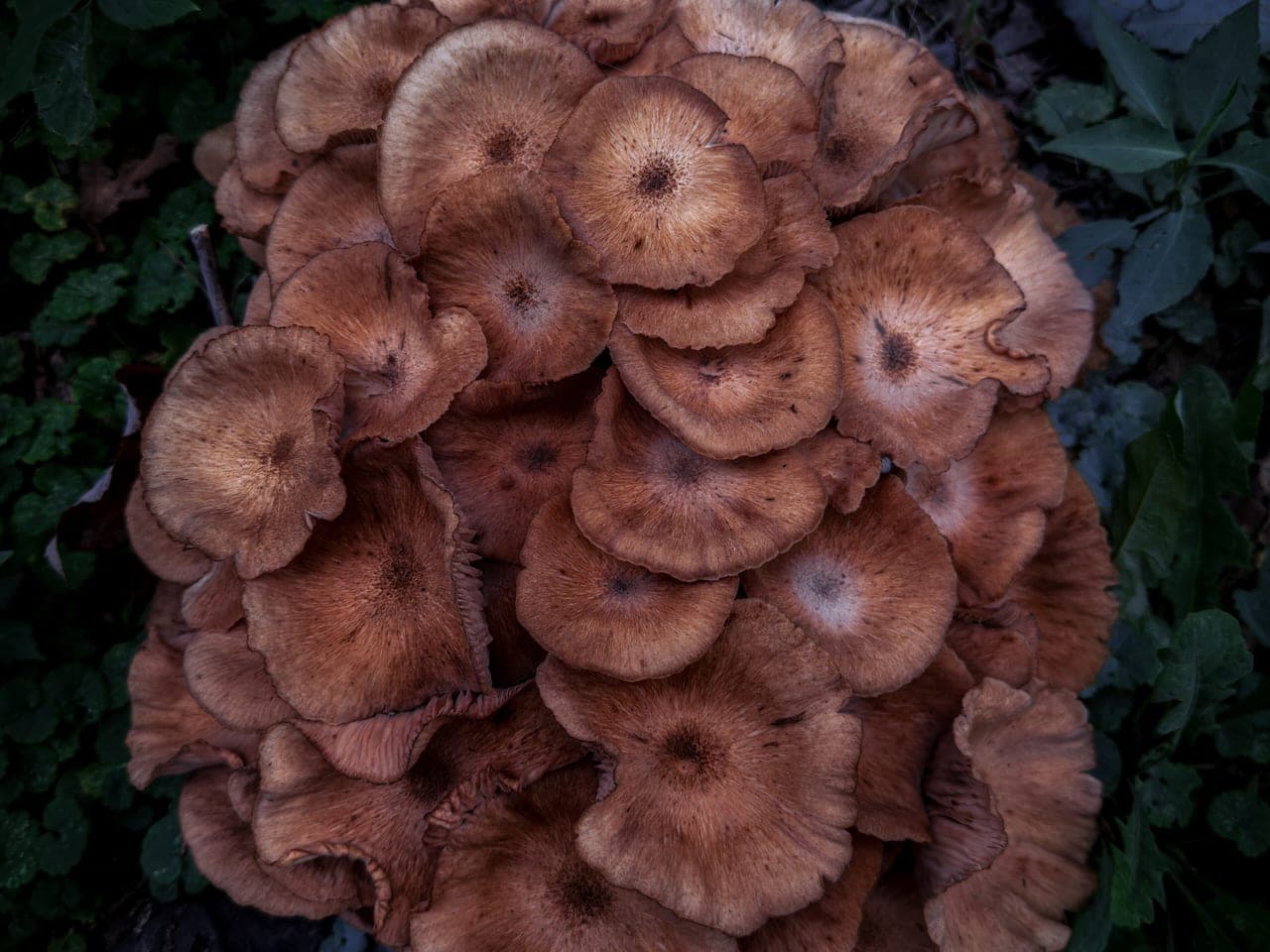
  • A dense cluster of honey-coloured mushrooms growing from the base of a tree trunk
    SeriousDisease

    Root and butt rot

    Fungi that decay roots and the base of the trunk, out of sight, for years before anything shows above ground. It is the leading cause of whole-tree failure in Kansas wind, and the most important thing about it is that a full green canopy is not evidence against it.

    Hits Silver Maple, Pin Oak, Bradford (Callery) Pear, Eastern Cottonwood, Siberian Elm, and others

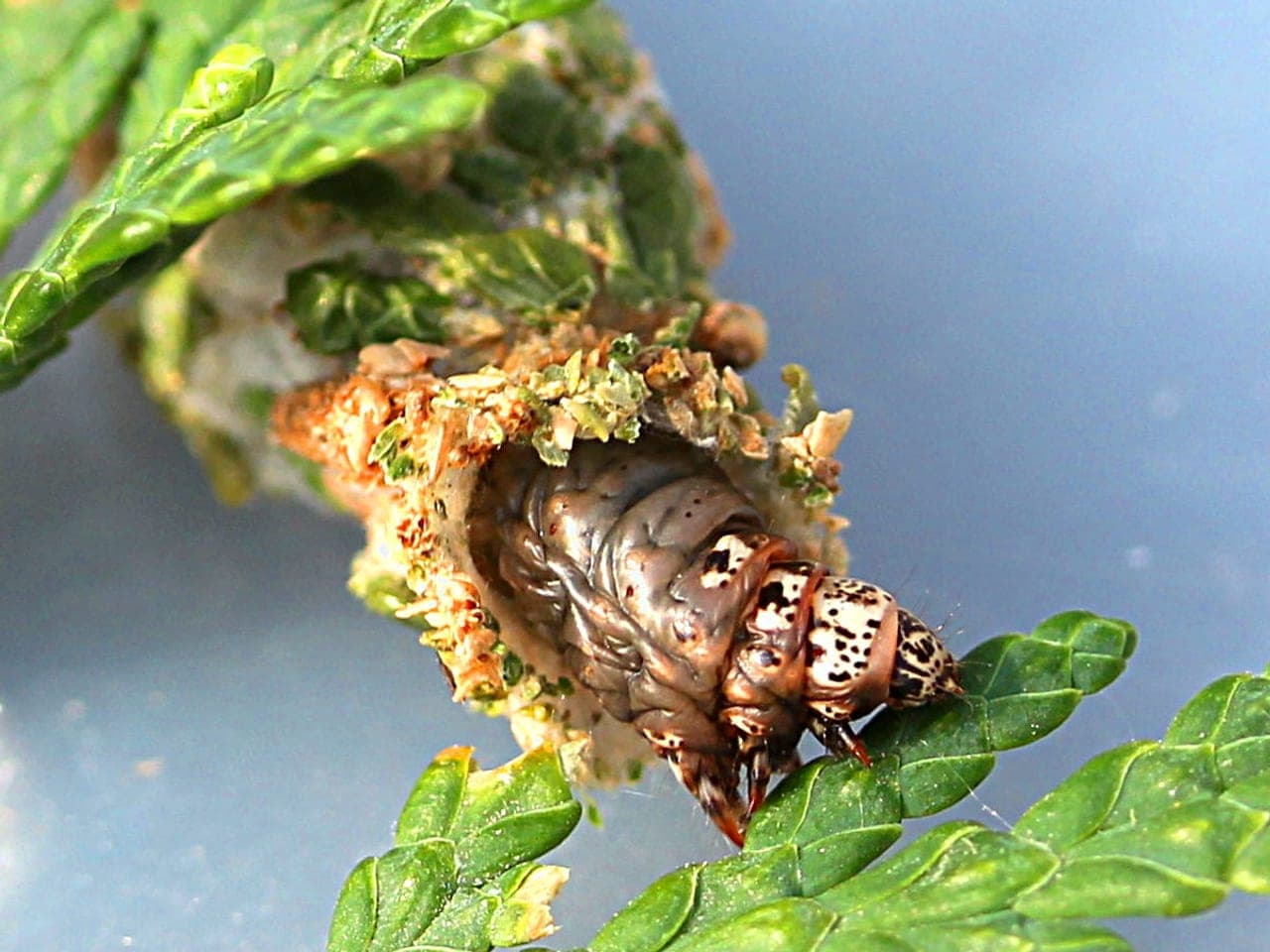
  • A bagworm caterpillar leaning out of its silk case, showing a pale spotted head and thorax
    ManageableInsect or mite

    Bagworms

    Thyridopteryx ephemeraeformis

    Caterpillars that build a spindle-shaped bag out of the plant they are eating and drag it around as they feed. Entirely controllable — but only inside a narrow early-summer window, and on evergreens the cost of missing that window can be the whole tree.

    Hits Eastern Red Cedar, Austrian Pine, Honey Locust (thornless), and others

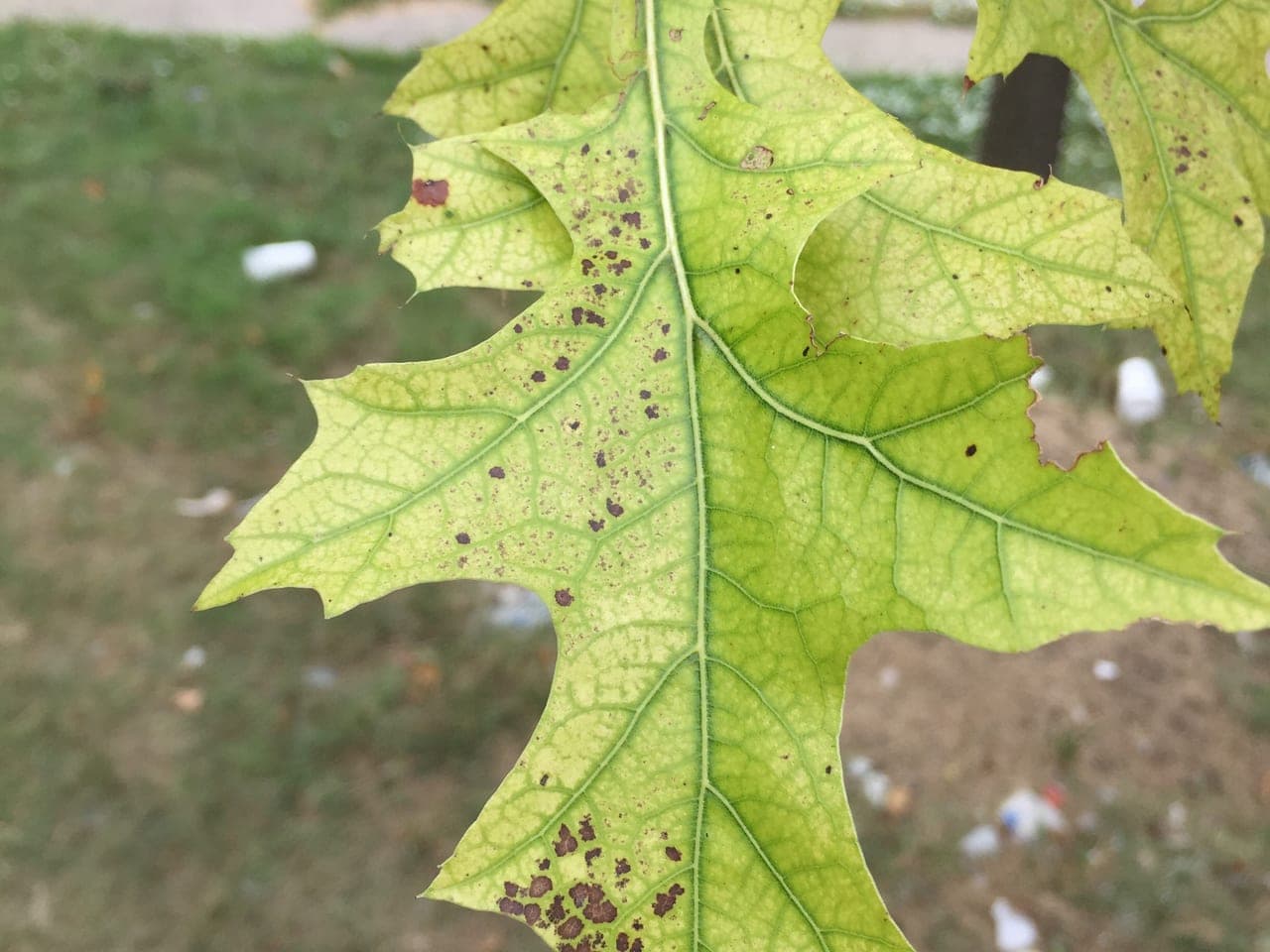
  • A pin oak leaf turned pale yellow between its veins while the vein network stays green
    ManageableEnvironmental

    Iron chlorosis

    Yellowing caused not by a shortage of iron in Kansas soil but by soil too alkaline for the tree to take the iron up. It is the classic Kansas planting mistake made visible, and on the species that suffer it, the honest long-term answer is often a different tree.

    Hits Pin Oak, Silver Maple, Eastern Redbud, American Sycamore, and others

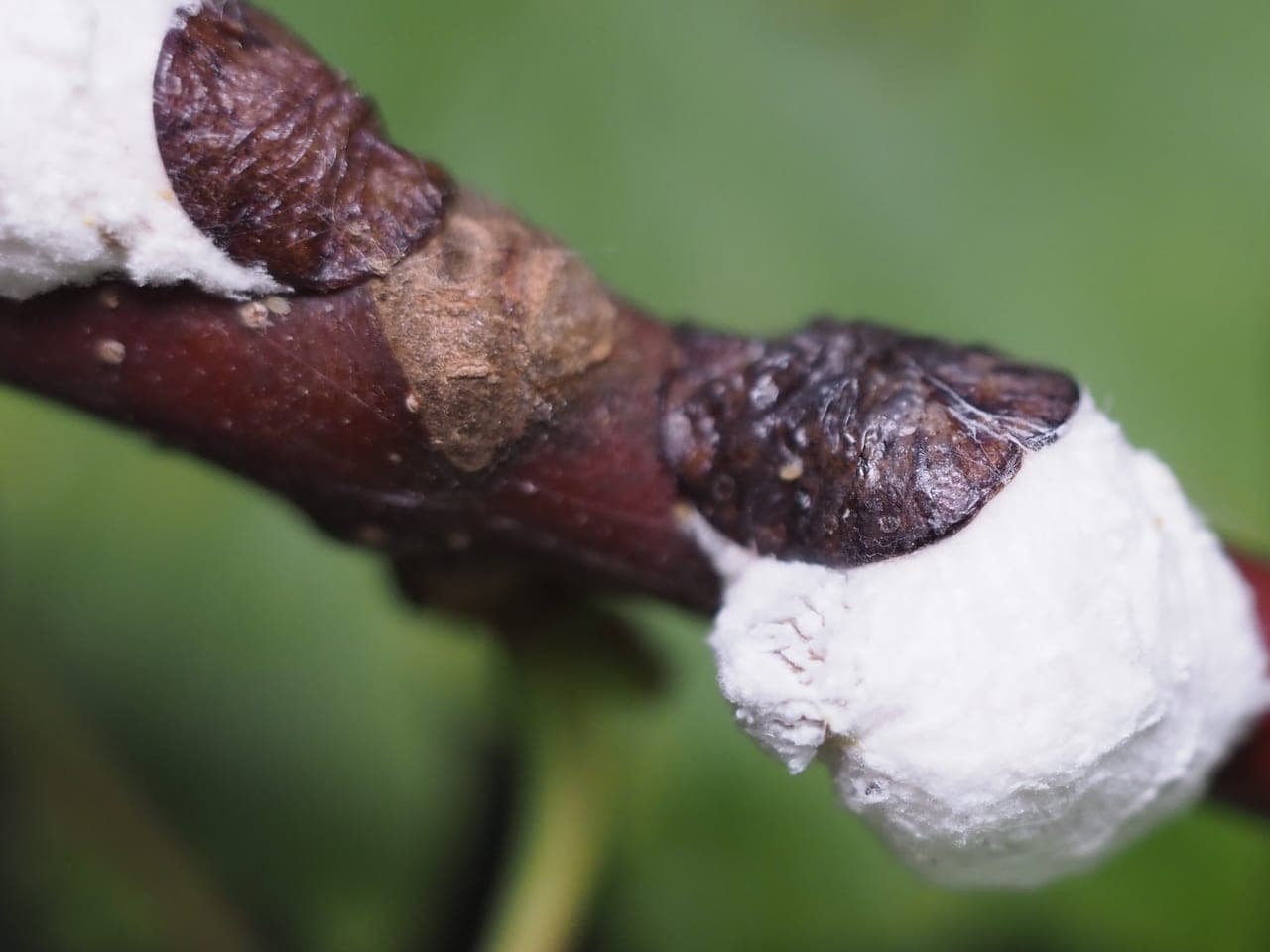
  • White cottony egg masses bulging from beneath brown scale covers on a dark twig
    ManageableInsect or mite

    Scale insects

    Insects that spend most of their life immobile under a waxy shell fixed to bark or leaves, looking far more like a growth than an animal. Heavy infestations cause branch dieback, and there is exactly one short window each year when they can be reached.

    Hits Silver Maple, Honey Locust (thornless), Eastern Redbud, White Mulberry, Pin Oak, and others

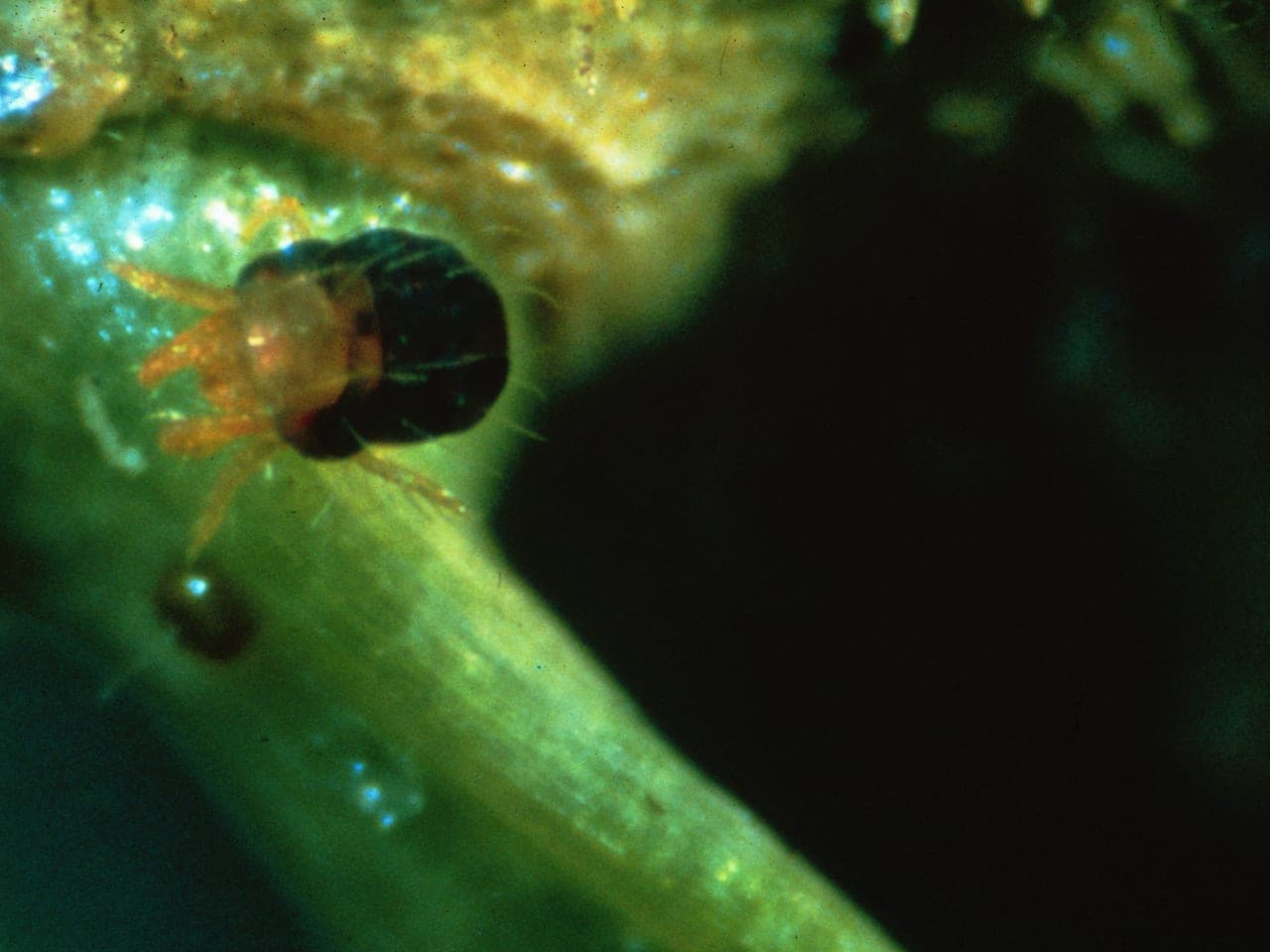
  • Extreme close-up of a spruce spider mite on a needle surrounded by fine silk
    ManageableInsect or mite

    Spider mites

    Not insects but relatives of spiders, small enough that most people diagnose them from the damage rather than the animal. Kansas summers — hot, dry, and dusty — are close to ideal for them, and the standard homeowner response of reaching for an insecticide reliably makes them worse.

    Hits Austrian Pine, Eastern Red Cedar, Honey Locust (thornless), Boxelder, Silver Maple, and others

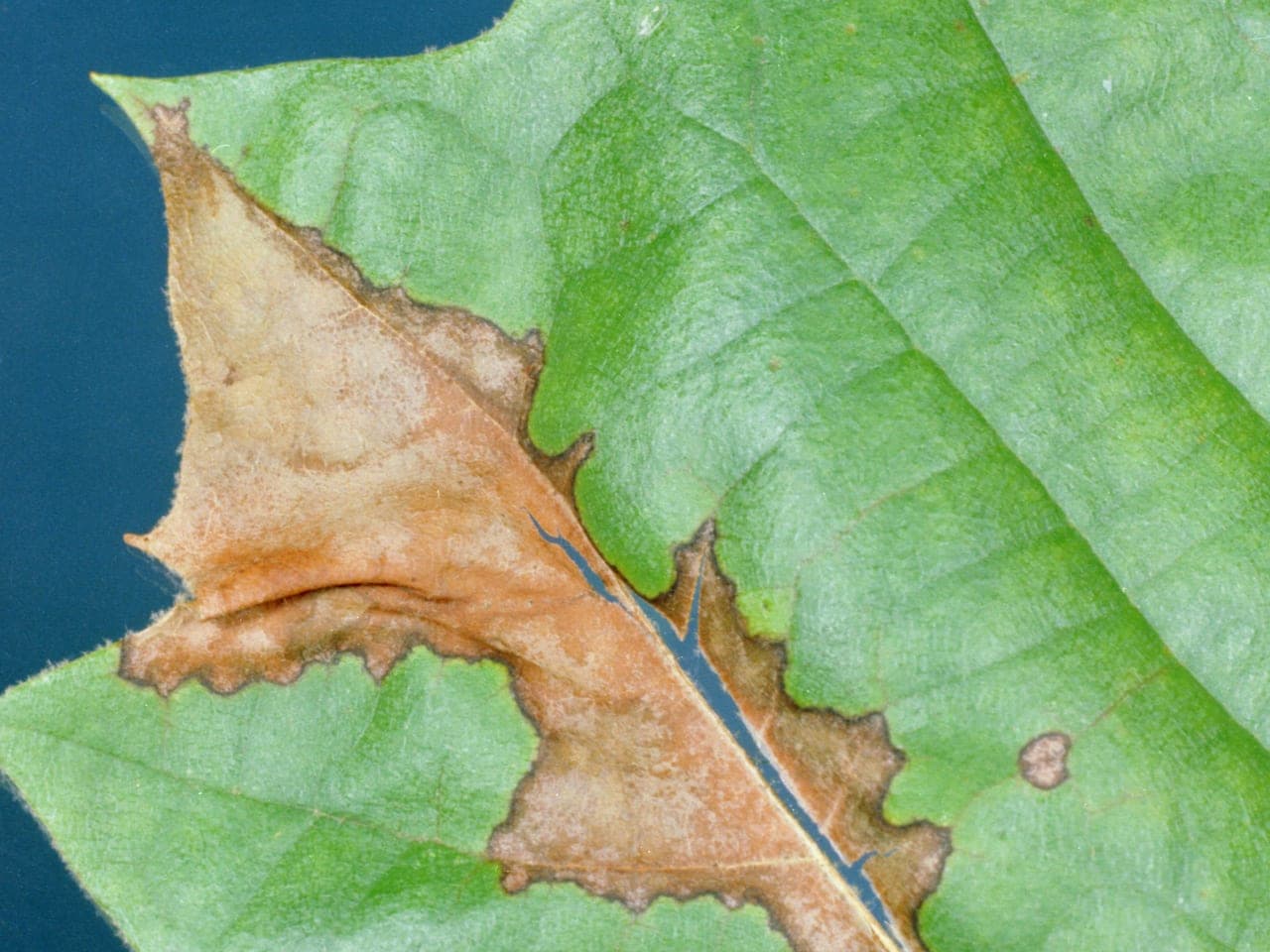
  • A sycamore leaf with irregular brown blotches spreading outward along its veins
    Mostly cosmeticDisease

    Anthracnose

    A group of fungal leaf and shoot diseases that arrive in cool wet springs, disfigure the first flush of foliage, and are almost always over by midsummer. Alarming to look at on a sycamore, and very rarely a threat to an established tree.

    Hits American Sycamore, Green Ash, Silver Maple, Bur Oak, White Mulberry, and others

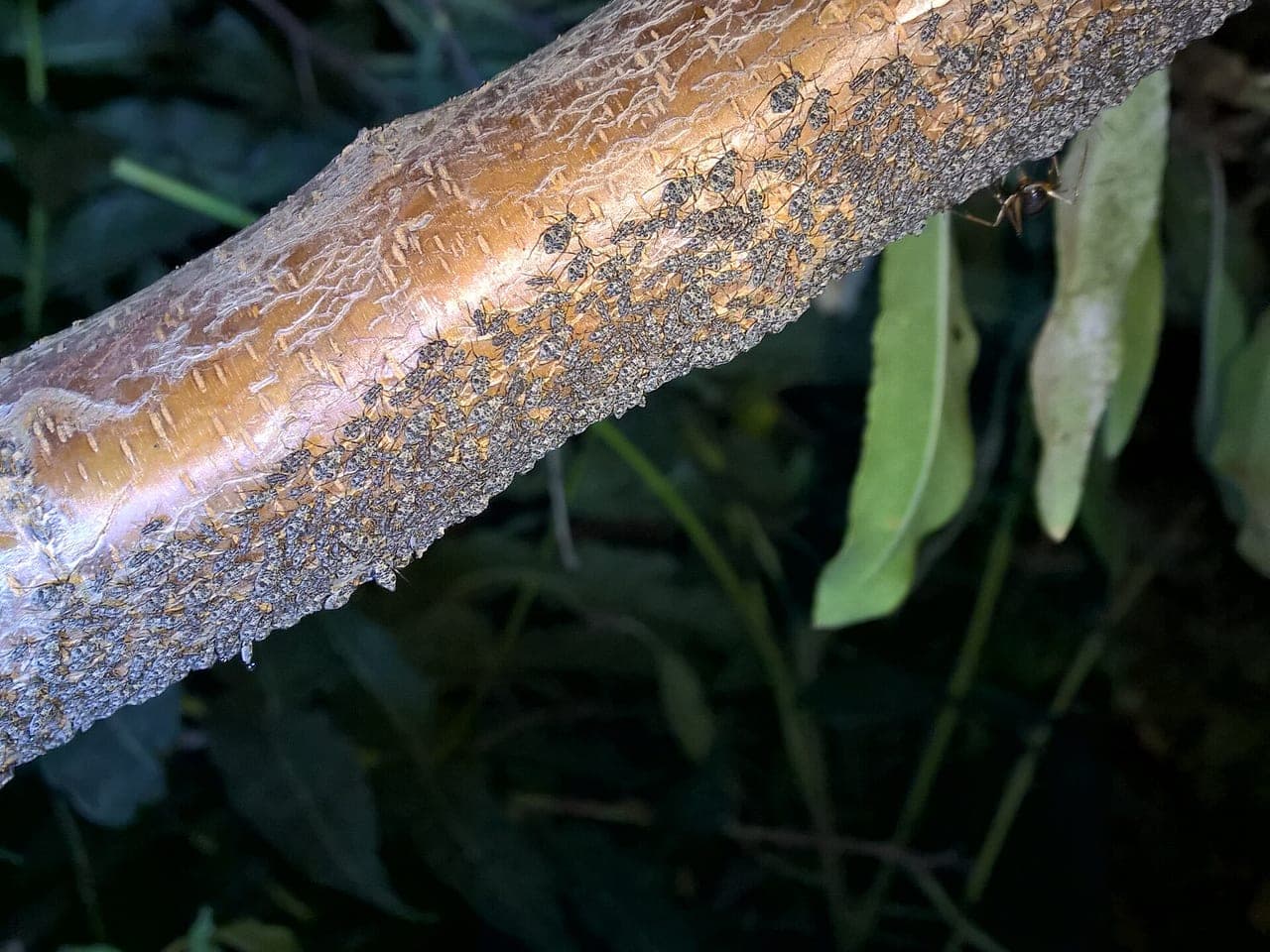
  • A tree branch densely packed with hundreds of aphids, with an ant walking among them
    Mostly cosmeticInsect or mite

    Aphids

    Soft-bodied insects that feed on sap and excrete the sticky residue that coats cars, patios, and anything else parked under an infested tree. Spectacularly annoying, essentially never fatal, and usually best handled by doing nothing at all.

    Hits Silver Maple, Common Hackberry, Honey Locust (thornless), Boxelder, Eastern Redbud, and others

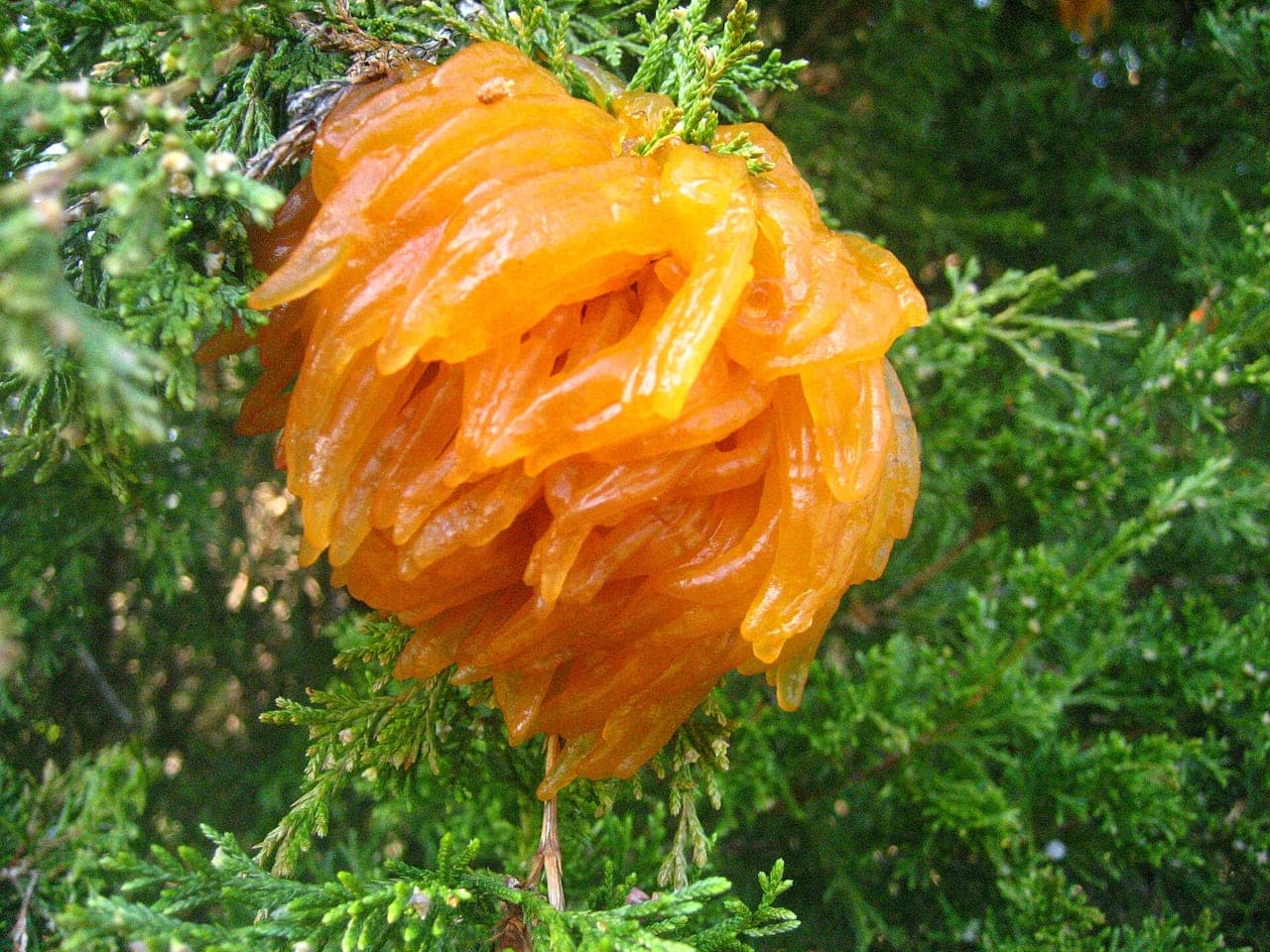
  • A brown gall on a juniper twig extruding bright orange gelatinous horns after rain
    Mostly cosmeticDisease

    Cedar-apple rust

    Gymnosporangium juniperi-virginianae

    A fungus that needs two different hosts to complete its life cycle — a juniper or red cedar and an apple, crabapple, or hawthorn — and produces bright orange gelatinous horns on the cedar in spring rain. Startling to look at, and almost entirely harmless to the cedar.

    Hits Eastern Red Cedar, and others

Timing

Nearly all of this is a calendar problem

Bagworm spray works in June and does nothing in September. Oaks pruned in May catch oak wilt and oaks pruned in January do not. Almost every failed treatment on this page failed because it happened in the wrong month, not because it was the wrong product.

  • Spring13

    The busiest window and the one most often missed. Oak pruning stops, bagworms hatch, scale crawlers move, and fungal spores travel on every wet day.

  • Summer15

    Heat and drought do the real damage; the insects that follow get the blame. Watch conifers for mites and stressed oaks for borers.

  • Fall6

    Fruiting season for the root and butt rots, and the right moment to test soil, plan removals, and reassess anything that struggled.

  • Winter3

    The cheapest control window in the year. Pick bagworm bags, apply dormant oil, prune oaks and elms safely, and destroy diseased wood before spring.

The Kansas tree care calendar breaks the year down month by month

When a tree cannot be saved

Every entry here ends with the signs that a tree is past recovery, because the alternative is watching somebody spend four hundred dollars treating a tree that was already finished. Four patterns come up again and again.

The damage has gone around the trunk
Everything above a girdled point is being supplied by tissue that no longer exists. This is the arithmetic behind emerald ash borer, canker, and hypoxylon alike — once the ring closes, the top is on borrowed time regardless of how green it still looks.
More than a third to a half of the canopy is gone
Below that, most trees rebuild. Above it, the tree no longer has the leaf area to fund repairs, and the treatments that would have worked earlier have nothing left to move through.
The problem is at the base
Root and butt decay is different in kind, because it takes the whole tree over at once rather than dropping a limb. A full green canopy is not evidence that the base is sound, and that gap is where people get hurt.
It came back after treatment
A tree that responds and then reverts the following season is usually telling you the site is wrong rather than the diagnosis. Chronic chlorosis on alkaline ground is the clearest Kansas example: the treatment works every time and never once fixes anything.

One exception that is not about the tree

A dead or dying tree standing over a house, drive, or play area stops being a horticultural question and becomes a structural one. Ash killed by borer in particular goes brittle unusually fast and behaves unpredictably under a saw. Do not take that one down yourself.

What a website cannot do

Several things on this page look alike from a photograph and are told apart by cutting into wood, sending a sample to a laboratory, or knowing what the weather did two summers ago. Pine wilt needs a nematode extraction to confirm. Oak wilt needs a laboratory. How much sound wood is left at the base of a decayed trunk is measured on site and nowhere else.

Use this library to narrow the field and to know which questions are worth asking. It is not a diagnosis.

Need professional help in the Wichita area?

If a tree is declining fast, standing over something that matters, or you have been told it needs removing and want a second opinion, an in-person assessment is the honest next step.

When a situation calls for professional help in the Wichita area, we refer readers to Kohnen's Tree Service, a working Kansas tree-care company whose field experience informs this site. That relationship is disclosed here and on our About page.