Field guide

Kansas Tree Identification

Twenty-two species account for most of what grows in Kansas yards, parks, windbreaks, and fence lines. Sort them by the leaf in your hand, the bark on the trunk, or whatever is dropping on your driveway — then use the four-question key to name almost anything else.

species profiled
22species profiled
native to Kansas
14native to Kansas
identification photographs
72identification photographs
Start identifying

Three patterns across all twenty-two

These are not general facts about trees. Each one is a count taken from the profiles below, and each changes how you go about naming a tree in Kansas.

15 of 22

turn yellow in fall

Kansas autumn runs gold, not red

Most of what turns color here finishes yellow. New England red comes from maples and oaks growing in acidic soil; our alkaline clay locks up the iron those trees need, so Kansas fall reads warm and burnished rather than fiery. Reliable red in this library comes from the red-oak group alone.

2 of 22

keep their leaves all year — only 1 native

We have essentially one native evergreen

Fire and grazing kept the prairie open for millennia, and conifers never got a foothold. Eastern red cedar is the exception — and now that fire has been suppressed, the same toughness that made it a superb windbreak tree is letting it swallow unmanaged pasture across the state.

12 of 22

have furrowed bark when mature

Furrowed bark barely narrows anything

More than half of these trees end up with ridged, furrowed bark on a mature trunk, so "deeply furrowed" is close to useless on its own. The pattern between the ridges is what carries the information: tight diamonds, flat-topped ribbons, or interwoven orange.

The directory

Start with the leaf in your hand

Leaf shape narrows twenty-two trees down to a handful in one click. Add bark, seed, or size from the panel below and the list keeps shrinking until a name is left.

Filter by leaf shape

22 trees

Ordered by how often each tree turns up in Kansas yards, windbreaks, and fence lines — the ones you are most likely to be looking at come first.

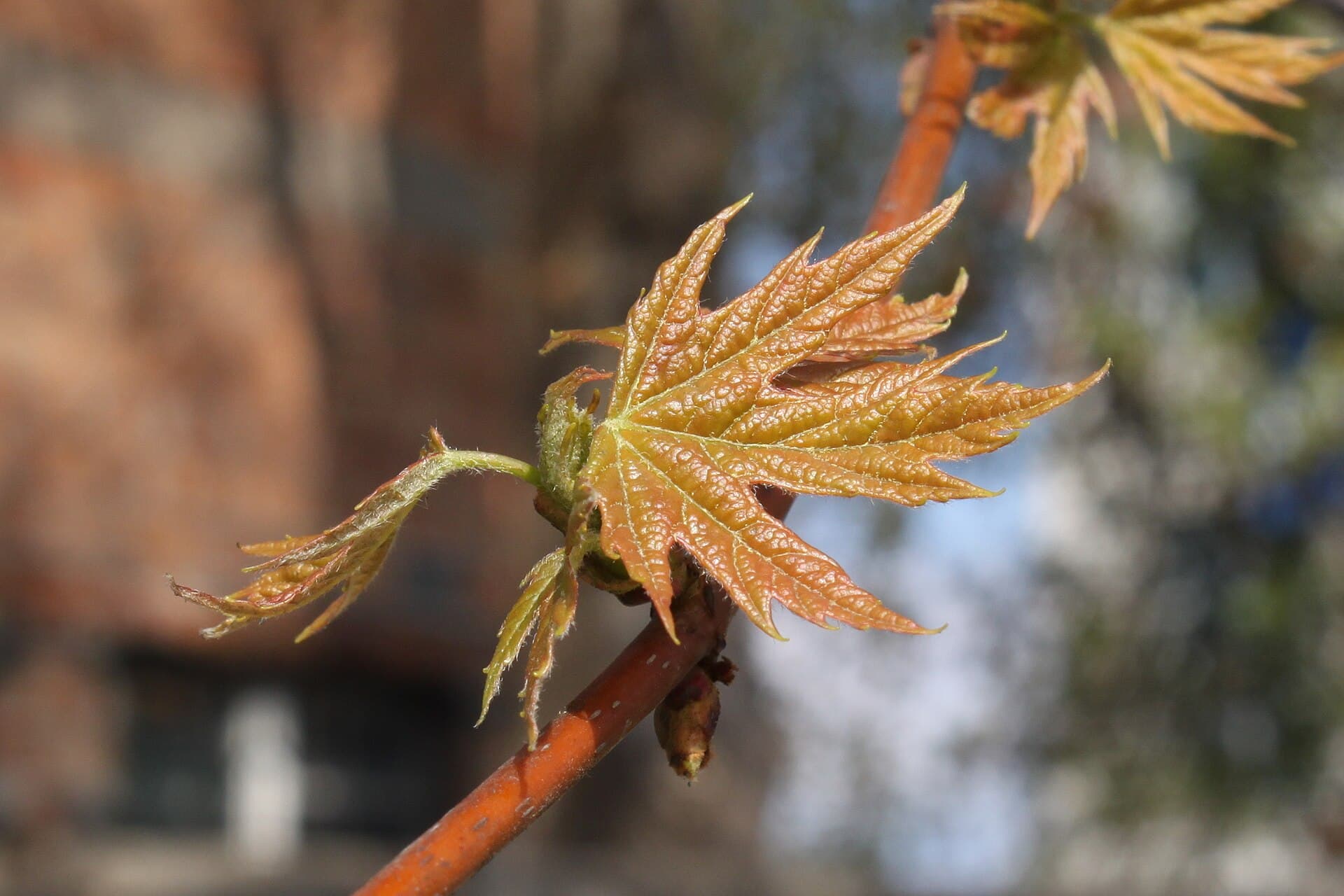
  1. Young silver maple leaves with deeply cut lobes emerging in spring

    Silver Maple

    Acer saccharinum

    The fast shade tree planted across older Wichita neighborhoods — and the one tree services visit most after windstorms. Quick cooling shade up front; brittle wood, surface roots, and storm cleanup later.

    Lobed leavespeeling barkwinged seedsgold in fall

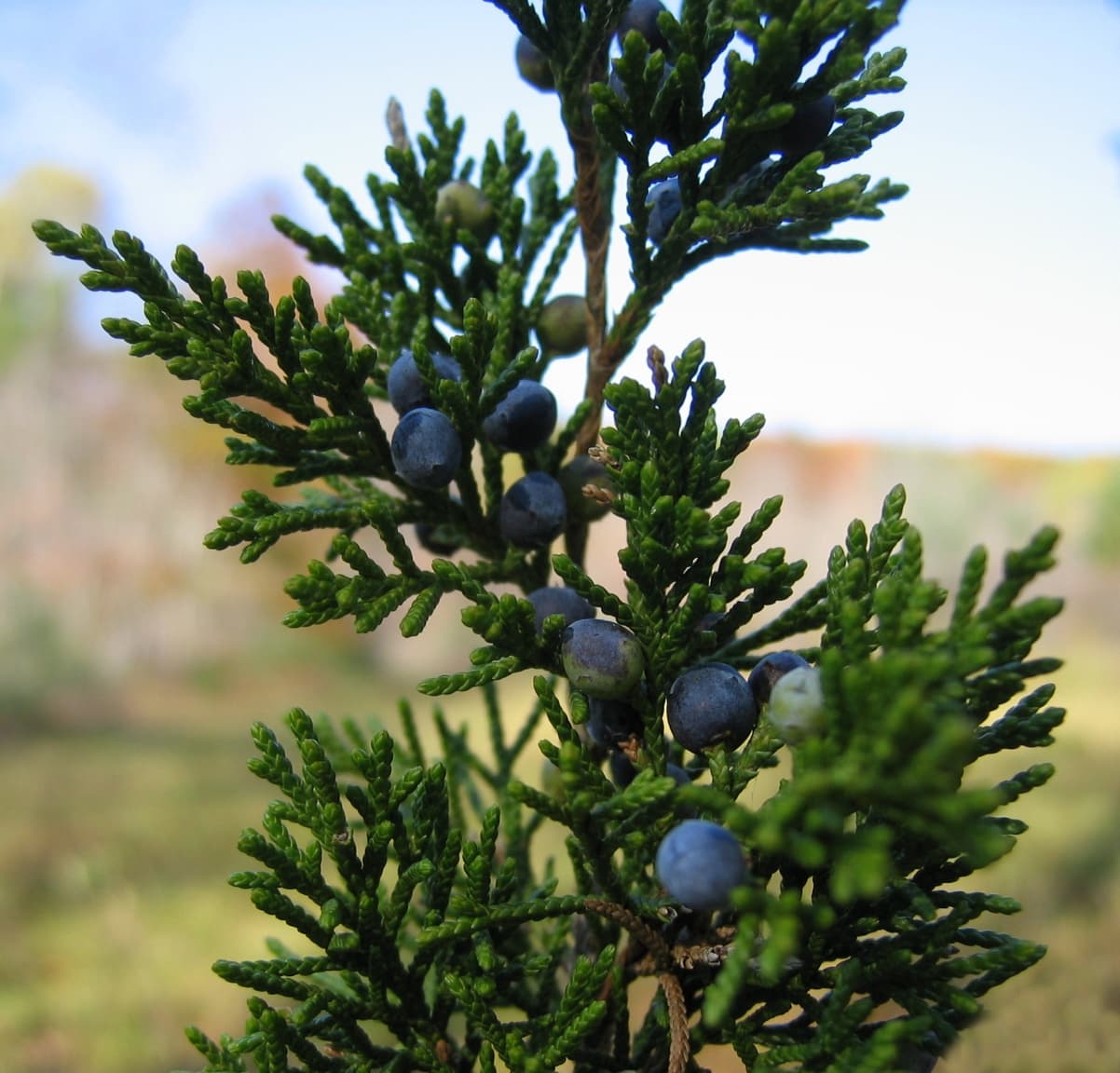
  2. Eastern red cedar foliage with clusters of blue berry-like cones

    Eastern Red Cedar

    Juniperus virginiana

    Kansas' only common native evergreen: the backbone of farm windbreaks, winter bird cover, and — where fire no longer runs — an aggressive invader of prairie pasture. In town, a tough screen with two caveats: bagworms and cedar-apple rust.

    Scale foliagepeeling barkfleshy fruitgreen year round

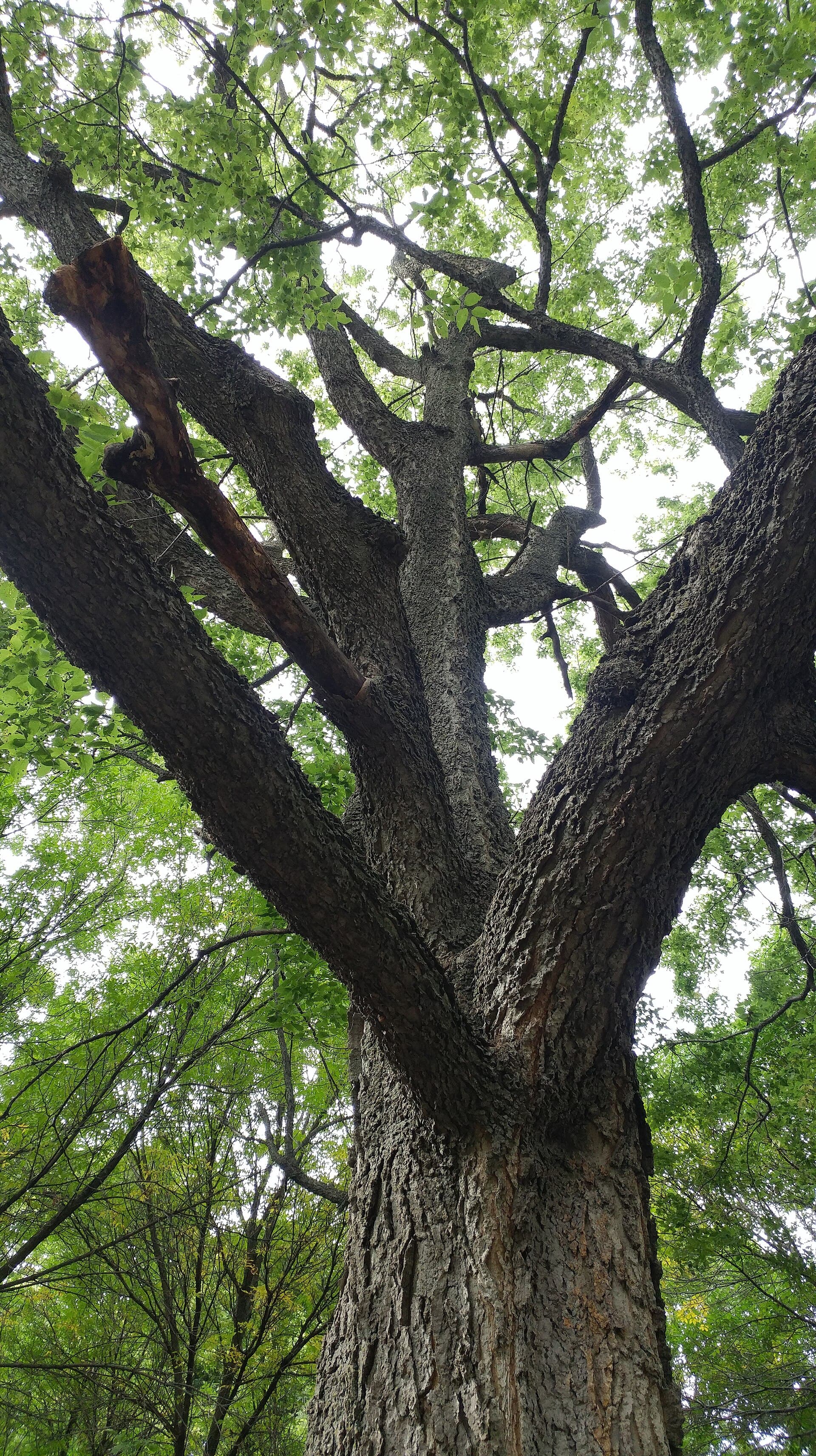
  3. Looking up the warty, corky bark of a mature hackberry into its green canopy

    Common Hackberry

    Celtis occidentalis

    The unsung native that shrugs off everything Kansas throws at it — clay, drought, wind, ice, and city soil. Not glamorous, genuinely dependable.

    Toothed leaveswarty barkfleshy fruitgold in fall

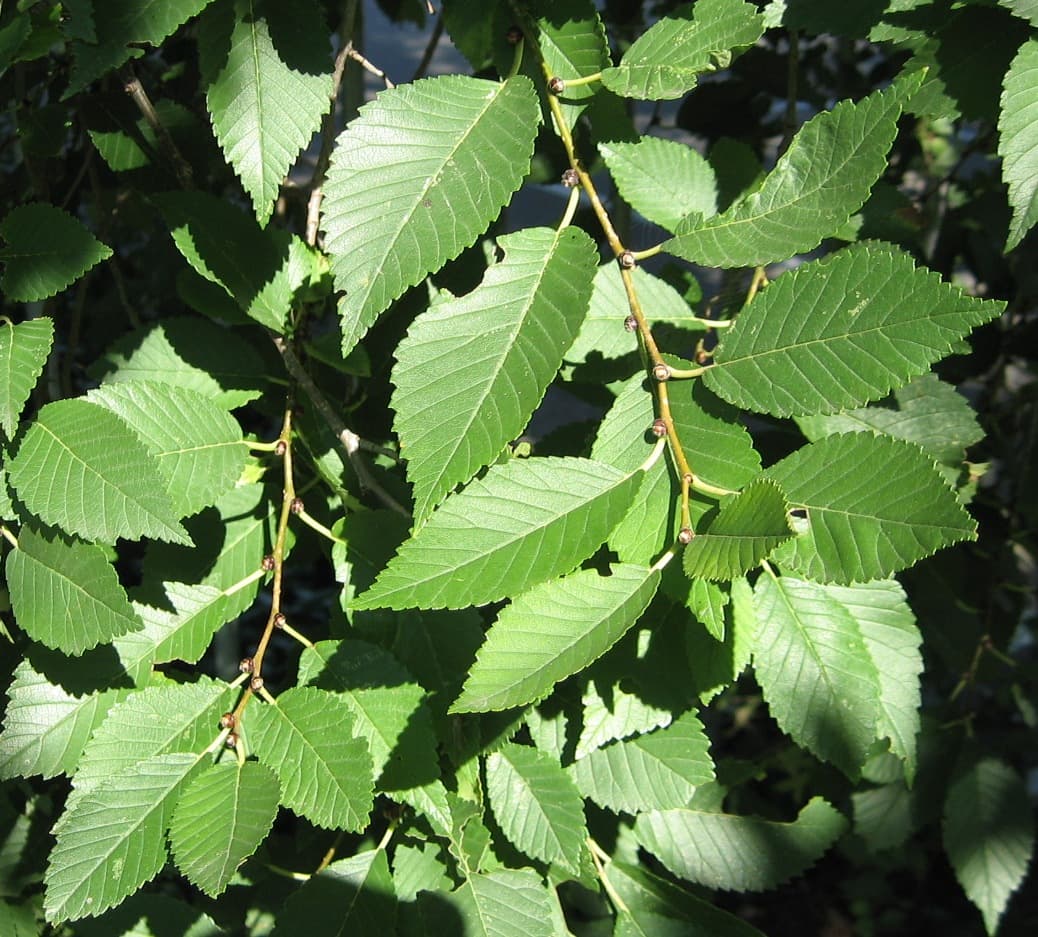
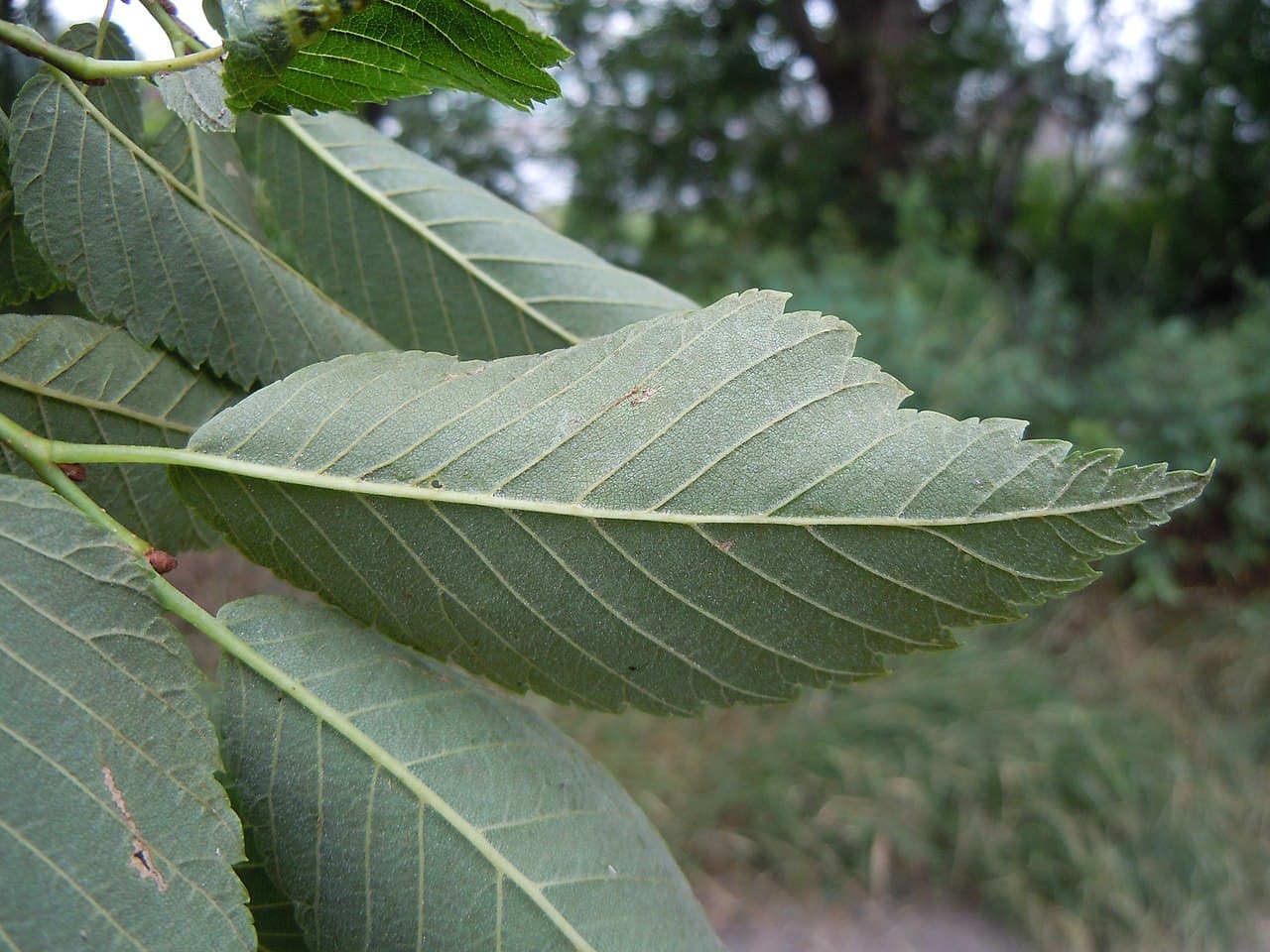
  4. Siberian elm twigs crowded with small, narrow, single-toothed leaves

    Siberian Elm

    Ulmus pumila

    The tough, fast, brittle elm that filled Dust Bowl-era windbreaks and now seeds itself into every unmowed corner of Kansas. It survives anything — and drops limbs on whatever's beneath it.

    Toothed leavesfurrowed barkwinged seedsgold in fall

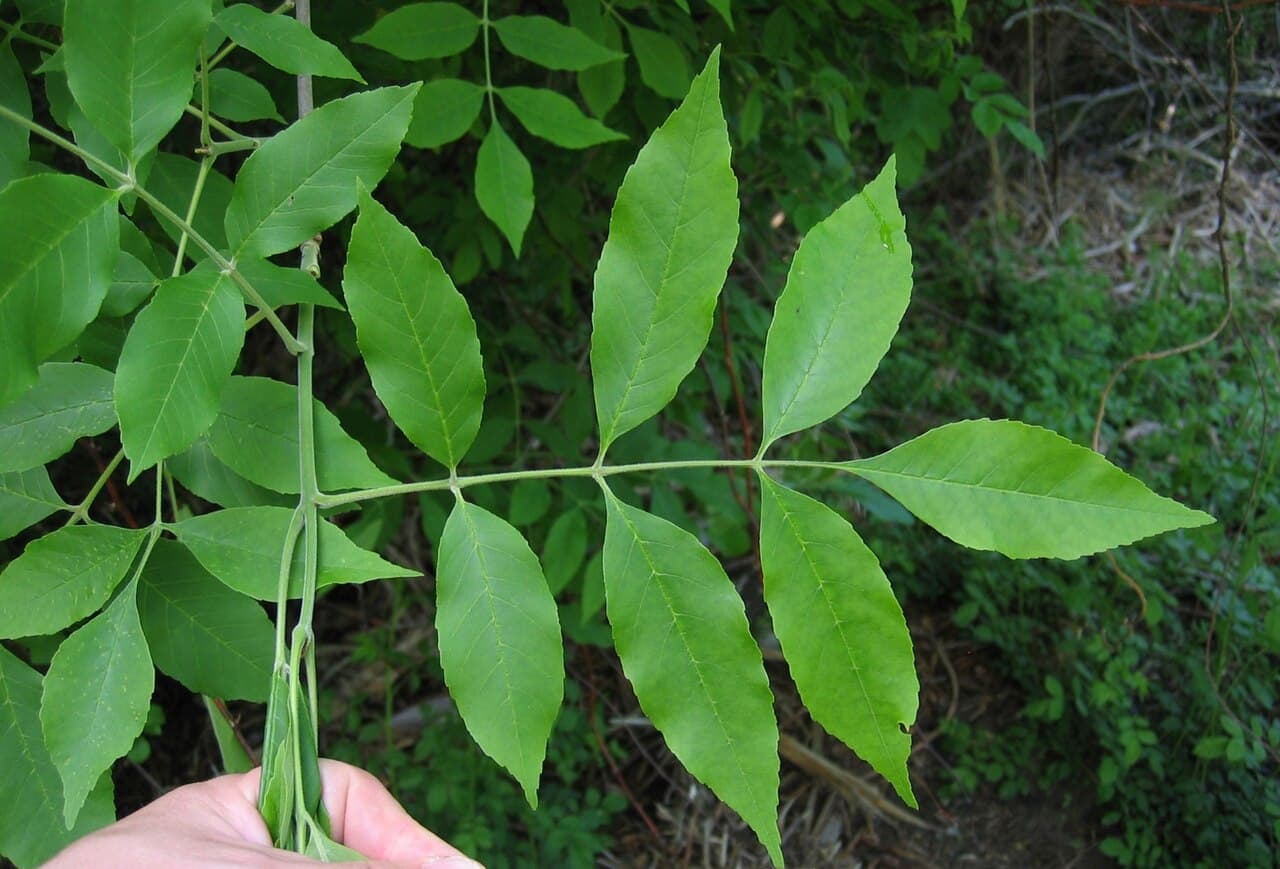
  5. A green ash compound leaf held open to show seven pointed leaflets

    Green Ash

    Fraxinus pennsylvanica

    For decades one of Kansas' most dependable shade trees — until emerald ash borer arrived. EAB is now confirmed in a growing list of Kansas counties and is fatal to untreated ash, which changes the math for every ash owner.

    Compound leavesfurrowed barkwinged seedsgold in fall

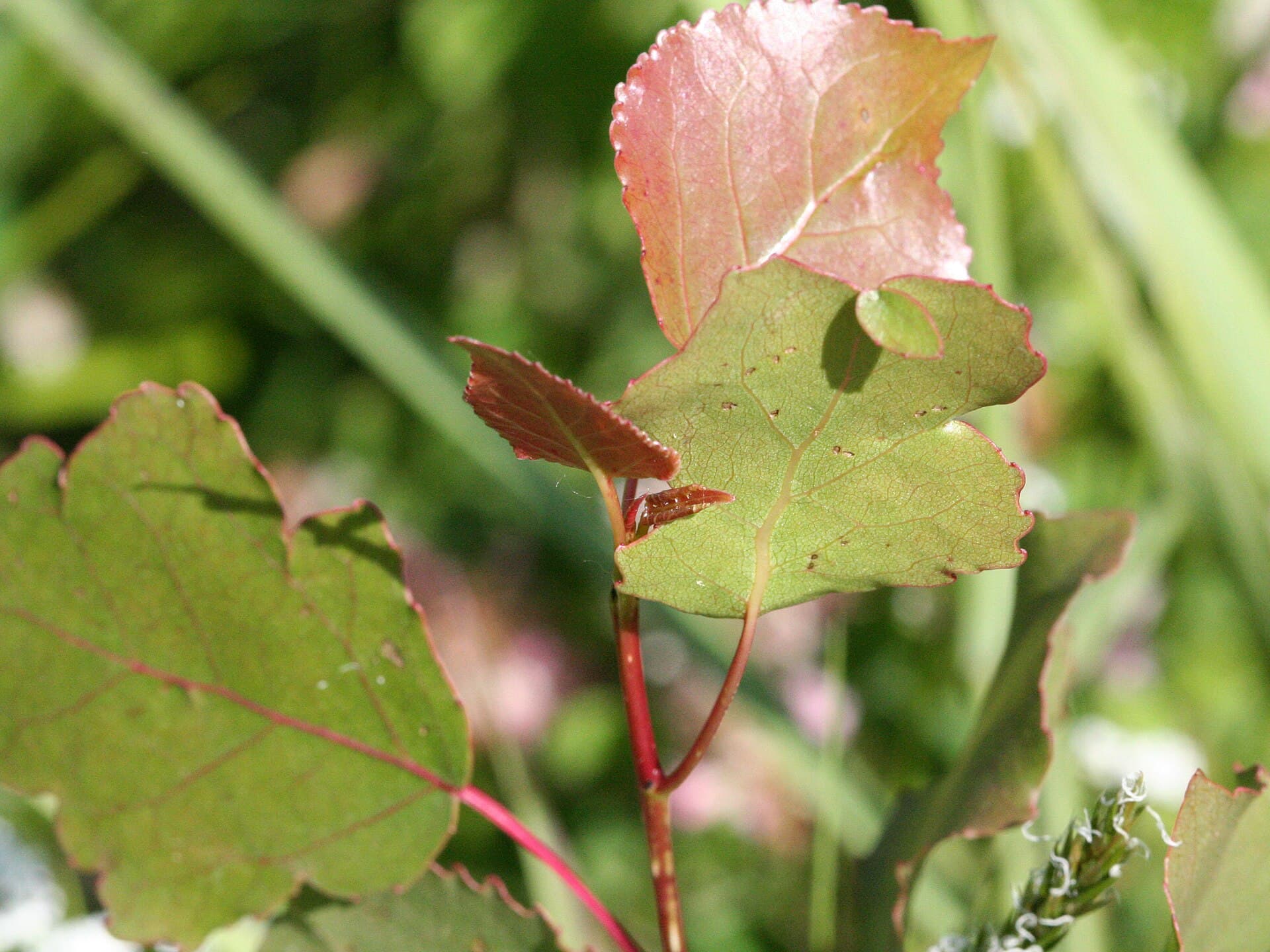
  6. Eastern cottonwood leaves showing their triangular shape with toothed edges

    Eastern Cottonwood

    Populus deltoides

    The Kansas state tree, and the giant of our river bottoms — shimmering leaves, ninety feet of presence, and a June snowstorm of cotton. Magnificent in open ground; a liability crowding a house.

    Toothed leavesfurrowed barkcottony seedgold in fall

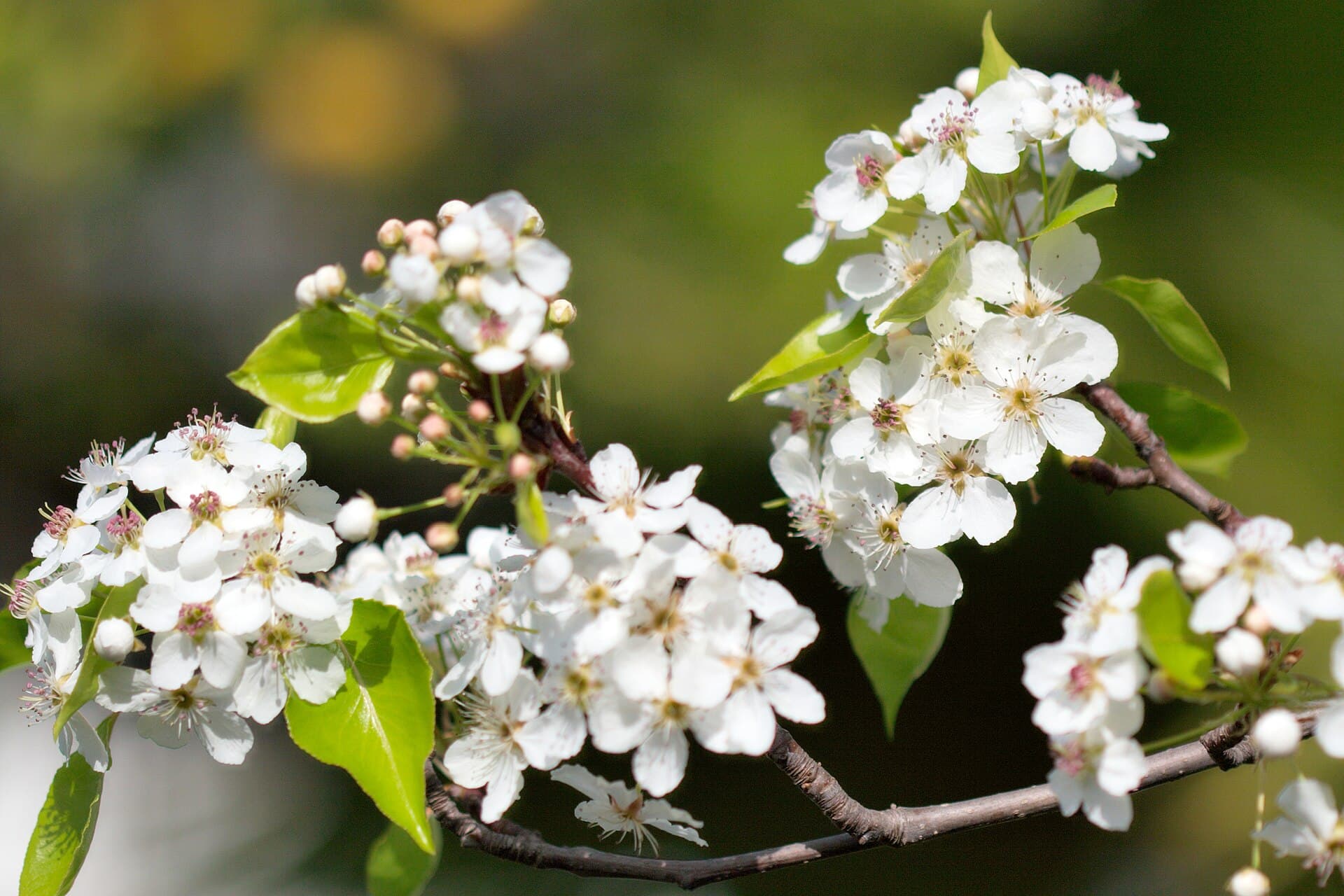
  7. Clusters of white callery pear blossoms on dark branches in early spring

    Bradford (Callery) Pear

    Pyrus calleryana

    The white-flowering subdivision tree of the 1990s and 2000s — uniform, showy, and structurally doomed. Tight branch angles make mature Bradfords split apart in Kansas wind, and wild callery seedlings are invading fence lines and pastures.

    Toothed leavessmooth barkfleshy fruitmaroon in fall

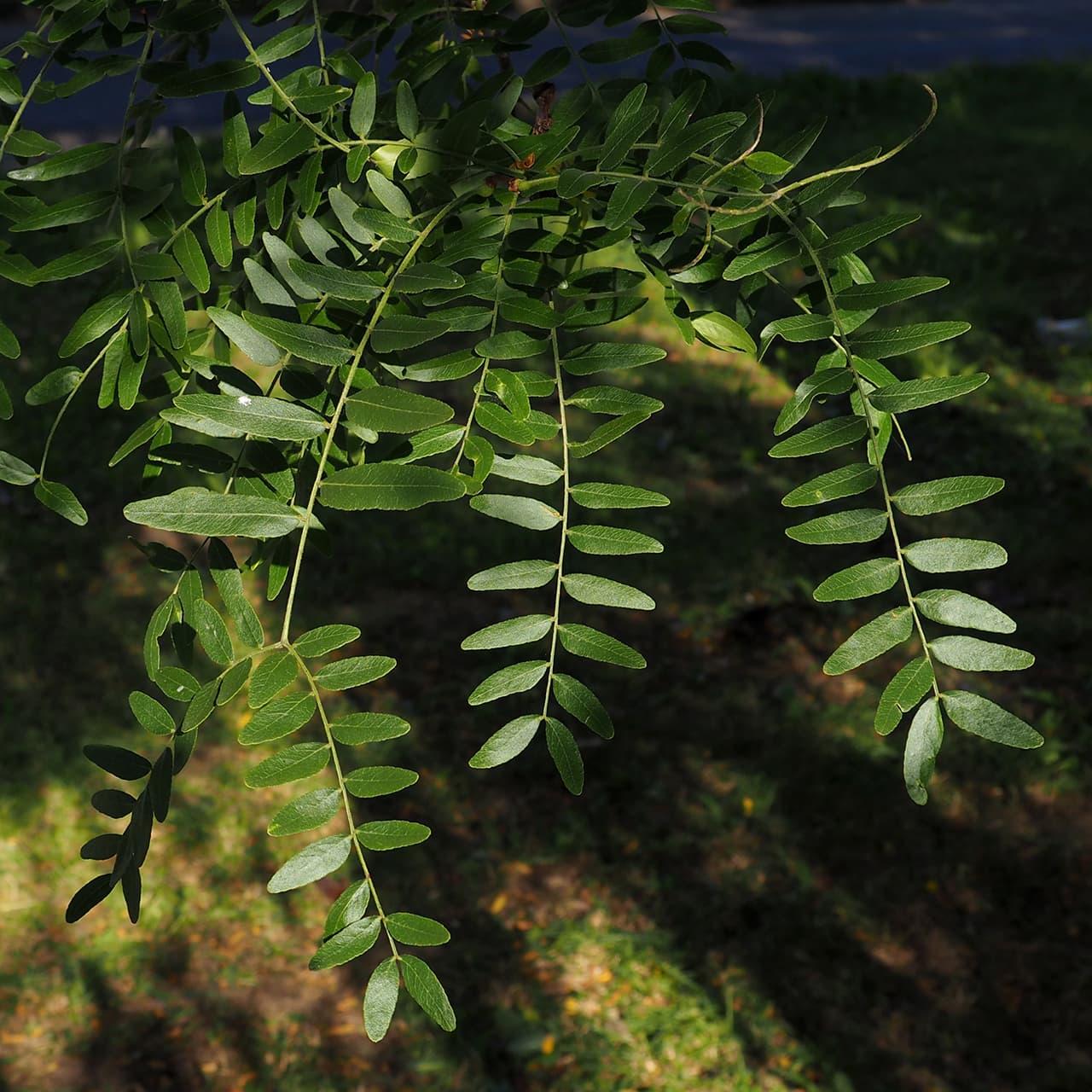
  8. Feathery honey locust compound leaves with rows of small oval leaflets

    Honey Locust (thornless)

    Gleditsia triacanthos var. inermis

    Fine, ferny foliage that casts filtered shade lawns actually grow under, small leaflets that vanish into the grass each fall, and serious drought toughness. Thornless, seedless cultivars are the ones to plant.

    Compound leavesplated barkseed podsgold in fall

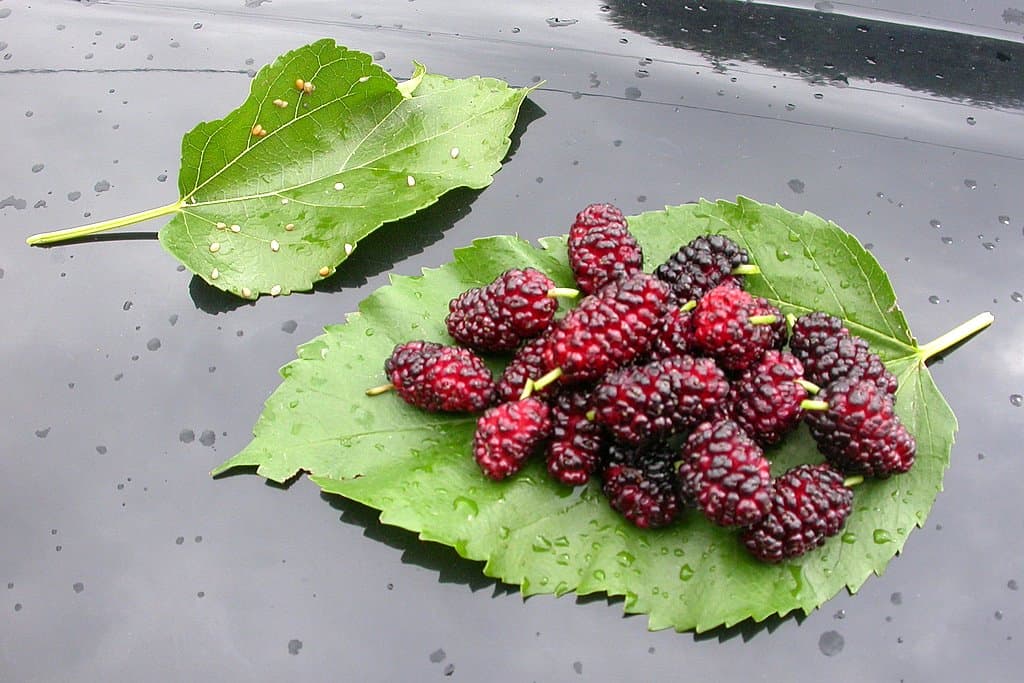
  9. Ripe dark purple mulberries piled on a toothed mulberry leaf

    White Mulberry

    Morus alba

    The volunteer tree in every unmowed Kansas fence line, planted by birds and nearly impossible to discourage. Fast, tough — and the berries stain everything they touch.

    Lobed leavesfurrowed barkfleshy fruitgold in fall

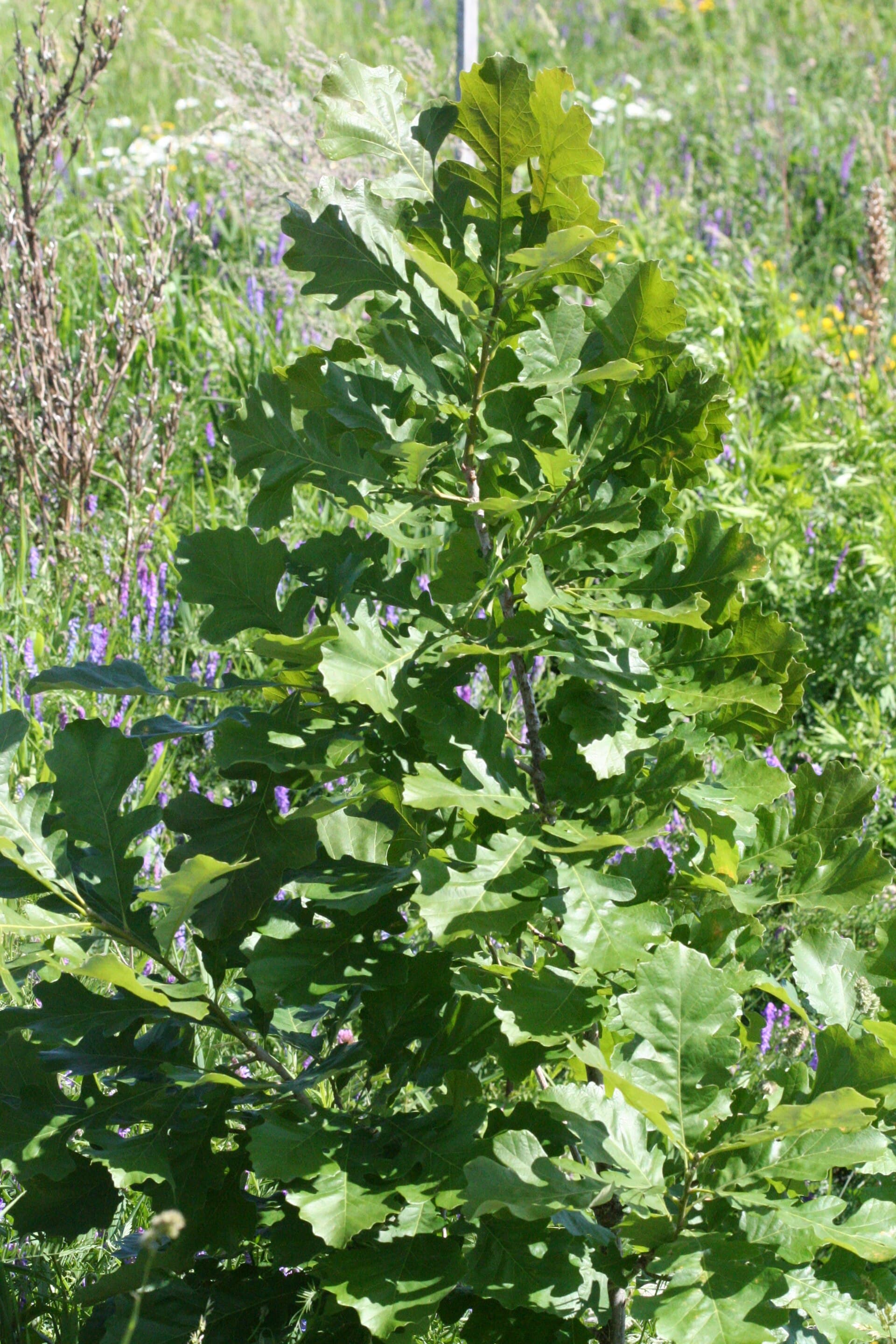
  10. Young bur oak with deeply lobed green leaves growing in a prairie meadow

    Bur Oak

    Quercus macrocarpa

    The workhorse shade tree of the Kansas prairie edge — deep-rooted, drought-tough, and built for wind. Slow to start, but a bur oak planted well can outlive everything else on the block.

    Lobed leavesfurrowed barkacornsbronze in fall

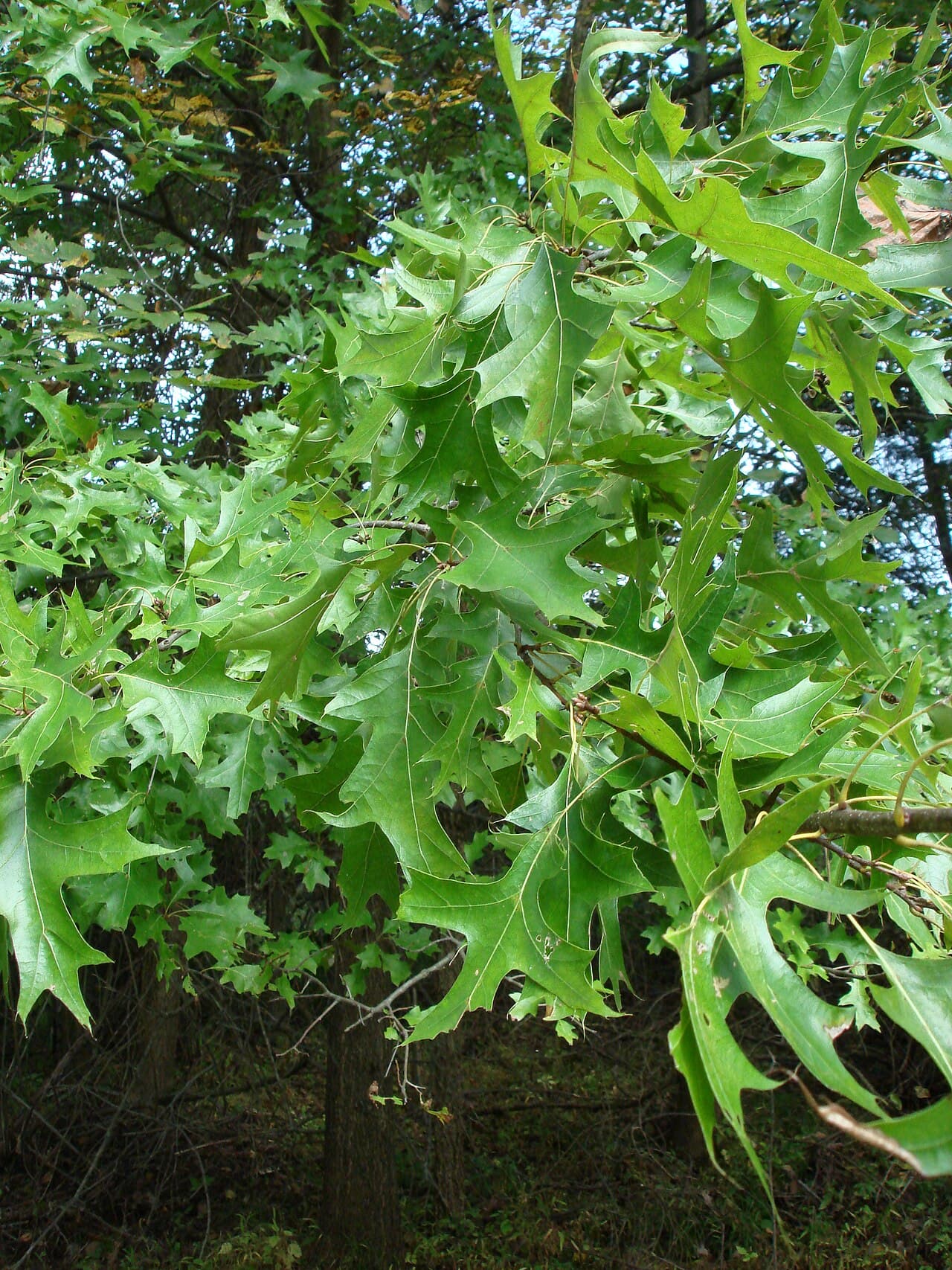
  11. Pin oak foliage with deeply cut lobes ending in sharp bristle tips

    Pin Oak

    Quercus palustris

    A handsome, fast oak that struggles in most of Kansas for one reason: our alkaline soil locks up iron, and pin oaks slowly starve for it. The yellow-leafed pin oak is a Wichita front-yard classic — for the wrong reasons.

    Lobed leavesfurrowed barkacornsred in fall

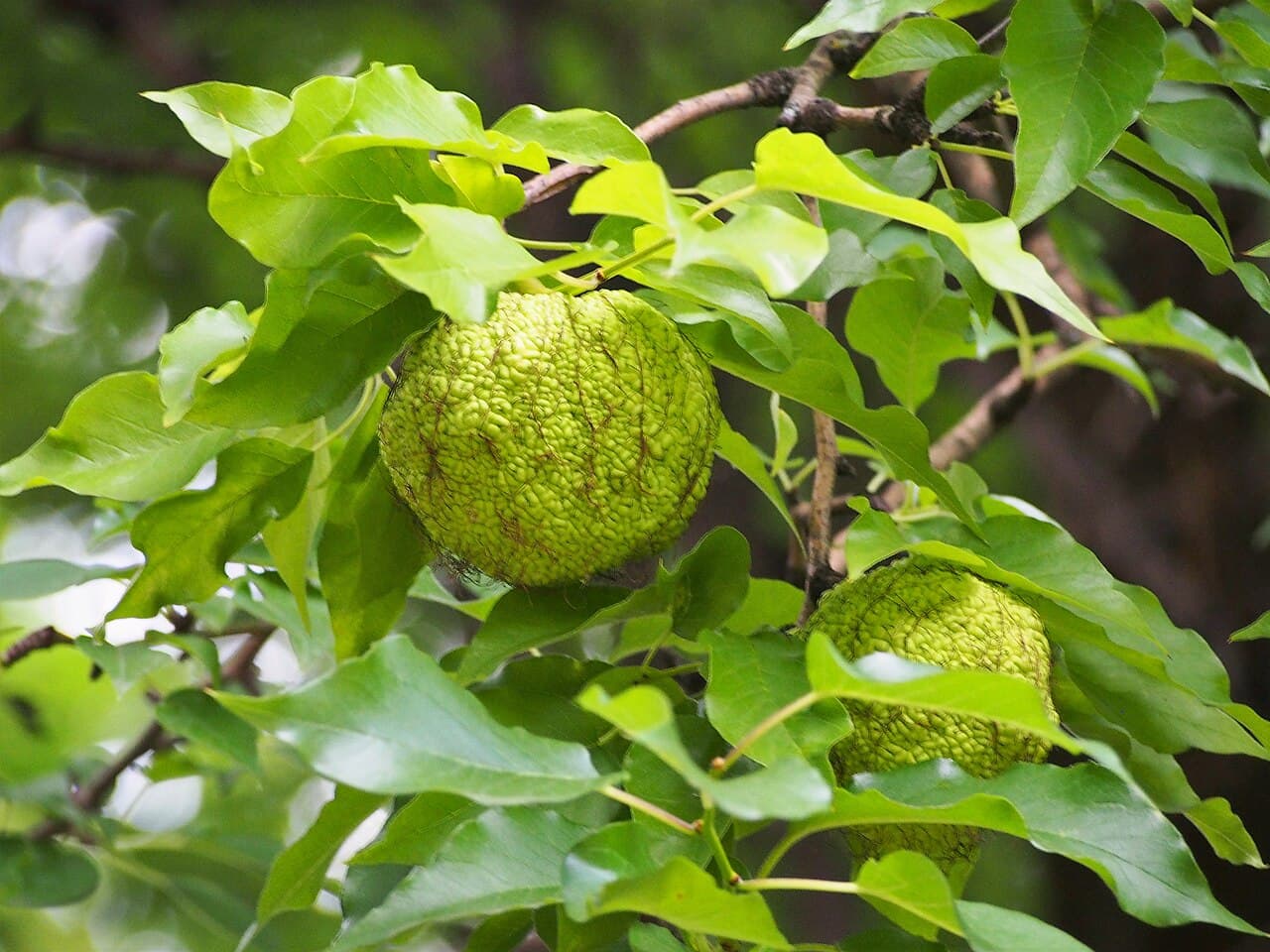
  12. A green, brain-textured hedge apple hanging among glossy Osage orange leaves

    Osage Orange

    Maclura pomifera

    The 'hedge' tree that fenced Kansas before barbed wire, with wood so dense the fence posts outlast the fences. Nearly indestructible — and armed with thorns and softball-sized hedge apples on wild trees.

    Smooth-edged leavesfurrowed barkfleshy fruitgold in fall

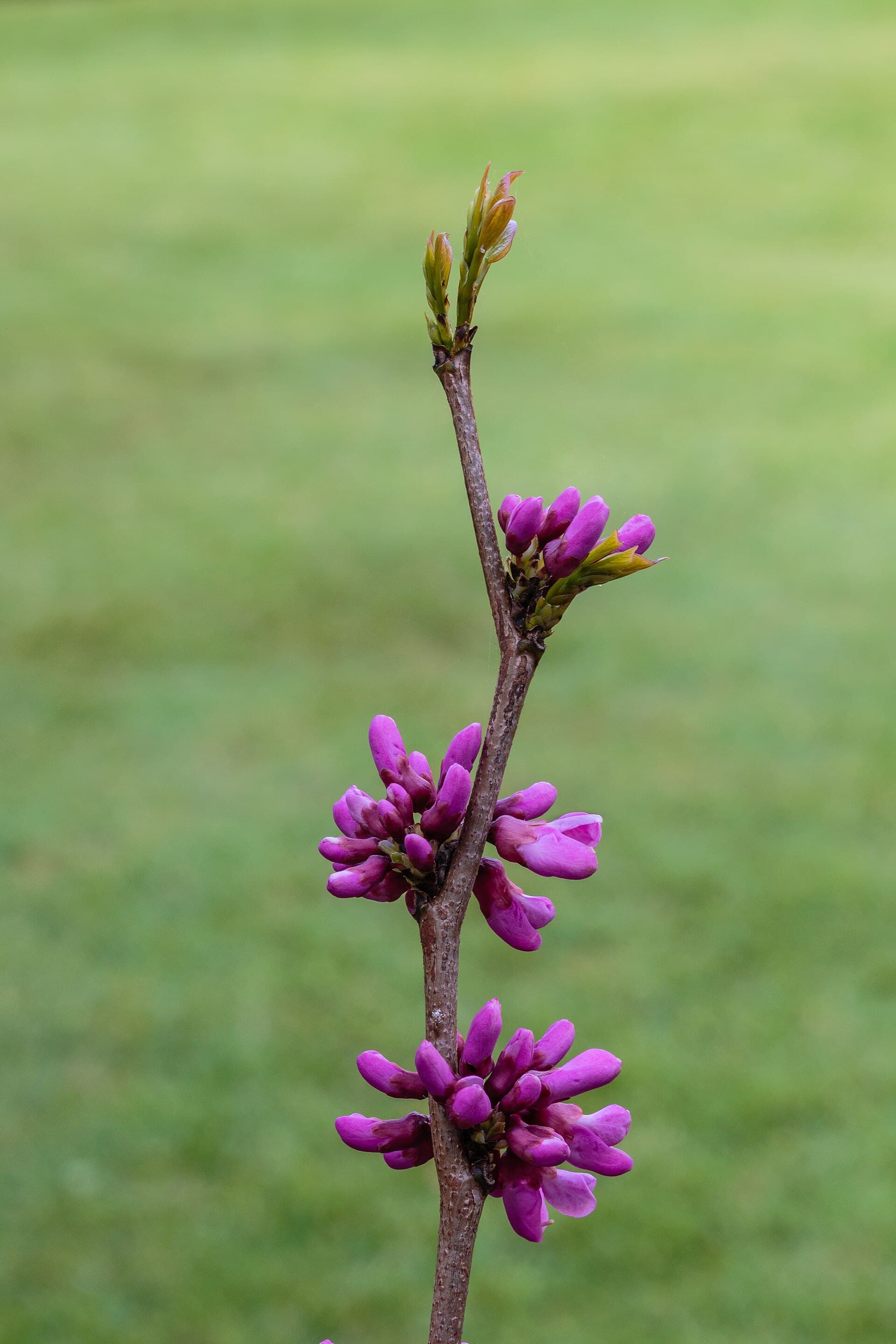
  13. Magenta redbud flower clusters blooming directly on a bare branch

    Eastern Redbud

    Cercis canadensis

    The best small flowering tree for Kansas yards: magenta blooms straight off the bare branches in early spring, a patio-friendly size, and roots that won't hunt your foundation.

    Smooth-edged leavessmooth barkseed podsgold in fall

  14. A mature boxelder growing in open parkland

    Boxelder

    Acer negundo

    A maple that does not look like one. Compound leaves and a talent for growing anywhere have made boxelder the volunteer tree of Kansas alleys and fence lines — and the source of the black-and-red bugs that cover south-facing walls every October.

    Compound leavesfurrowed barkwinged seedsgold in fall

  15. An American elm leaf showing straight parallel veins and a lopsided base

    American Elm

    Ulmus americana

    The tree that once vaulted over every Kansas main street until Dutch elm disease took them by the tens of thousands. Disease-resistant cultivars are finally bringing this great native back.

    Toothed leavesfurrowed barkwinged seedsgold in fall

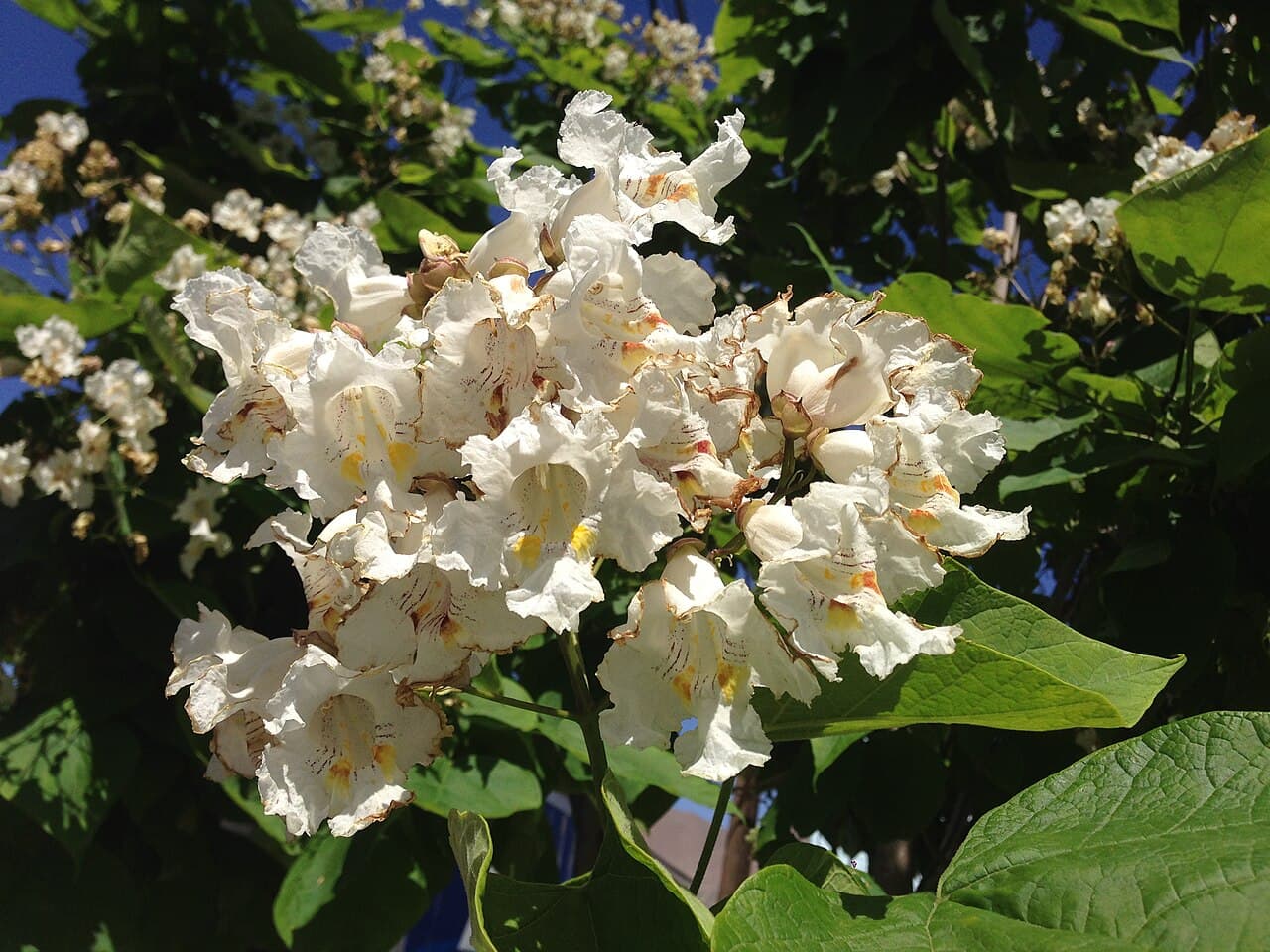
  16. A cluster of white catalpa flowers marked with purple streaks and yellow throats

    Northern Catalpa

    Catalpa speciosa

    Huge heart-shaped leaves, orchid-like June flowers, and long dangling bean pods — a tough, showy tree for big spaces that sheds coarse litter and the occasional brittle limb.

    Smooth-edged leavesplated barkseed podsgold in fall

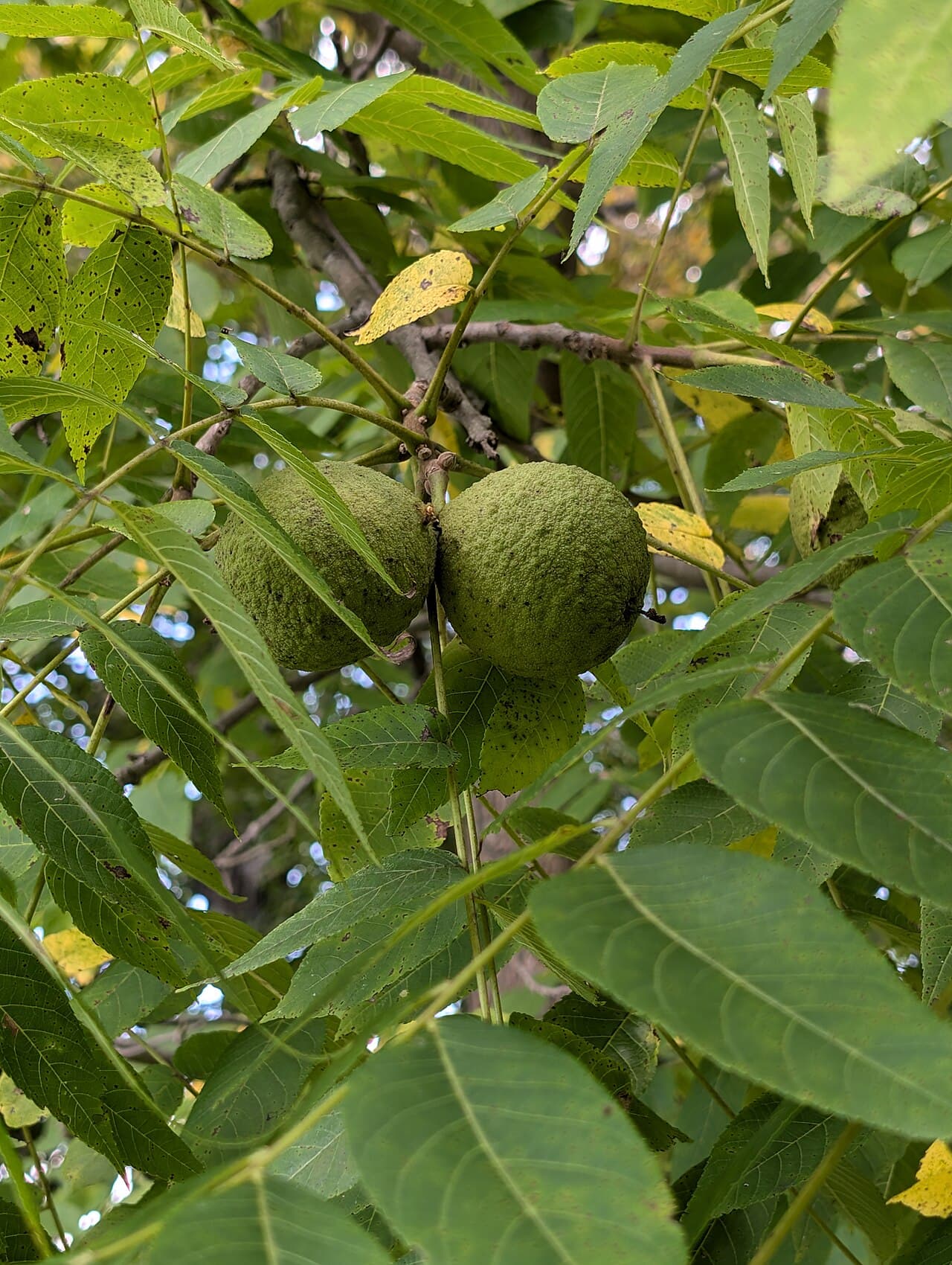
  17. Round green-husked black walnuts hanging among long compound leaves

    Black Walnut

    Juglans nigra

    A valuable native hardwood with two famous quirks: falling nuts that dent cars and stain drives, and juglone — a root chemical that quietly kills tomatoes and many ornamentals planted nearby.

    Compound leavesfurrowed barkhard nutsgold in fall

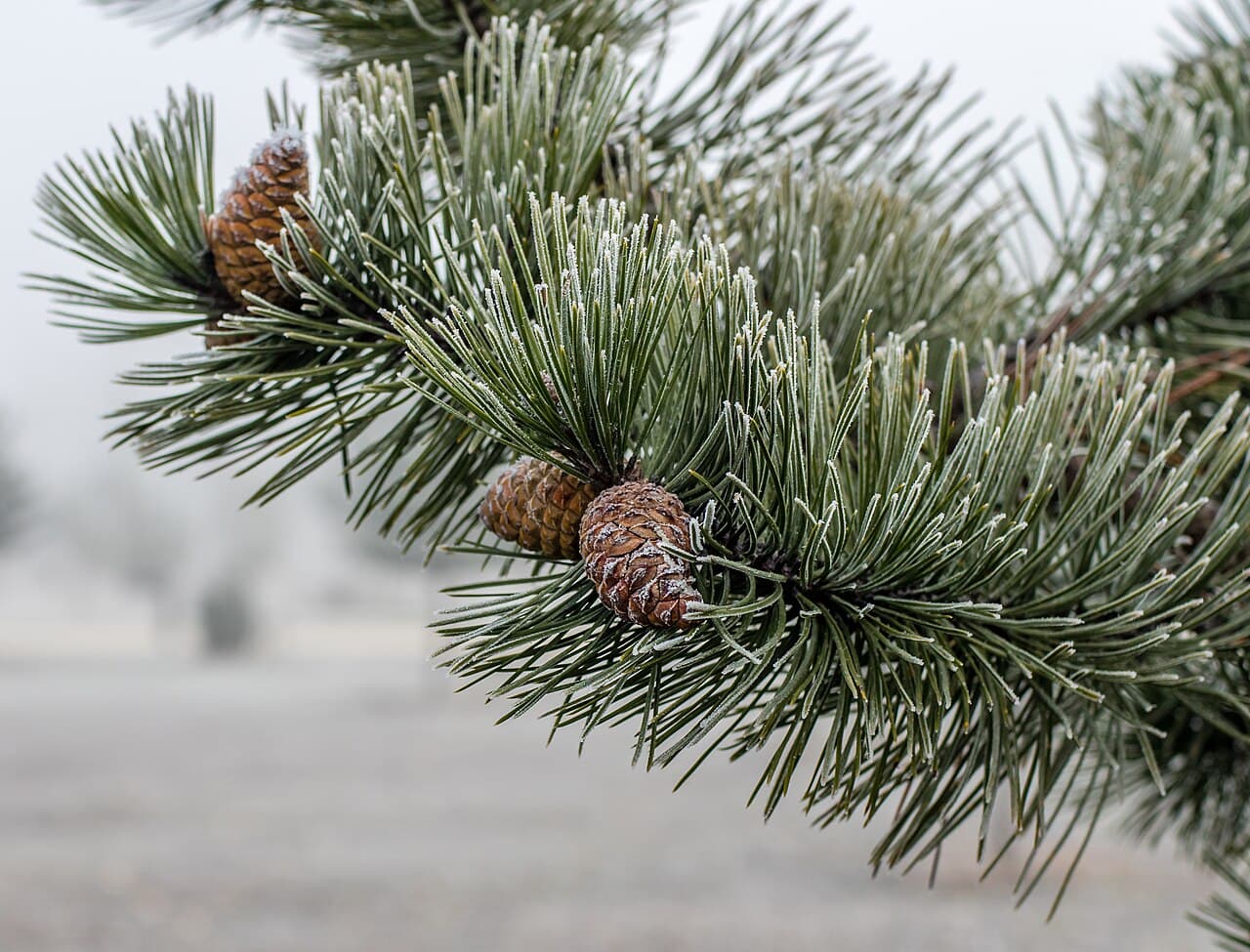
  18. Frost-rimed Austrian pine needles in pairs beside brown egg-shaped cones

    Austrian Pine

    Pinus nigra

    For fifty years the default Kansas evergreen — until pine wilt arrived. The nematode-borne disease kills mature Austrian and Scots pines in a single season, and it has removed thousands across the state.

    Needlesplated barkwoody conesgreen year round

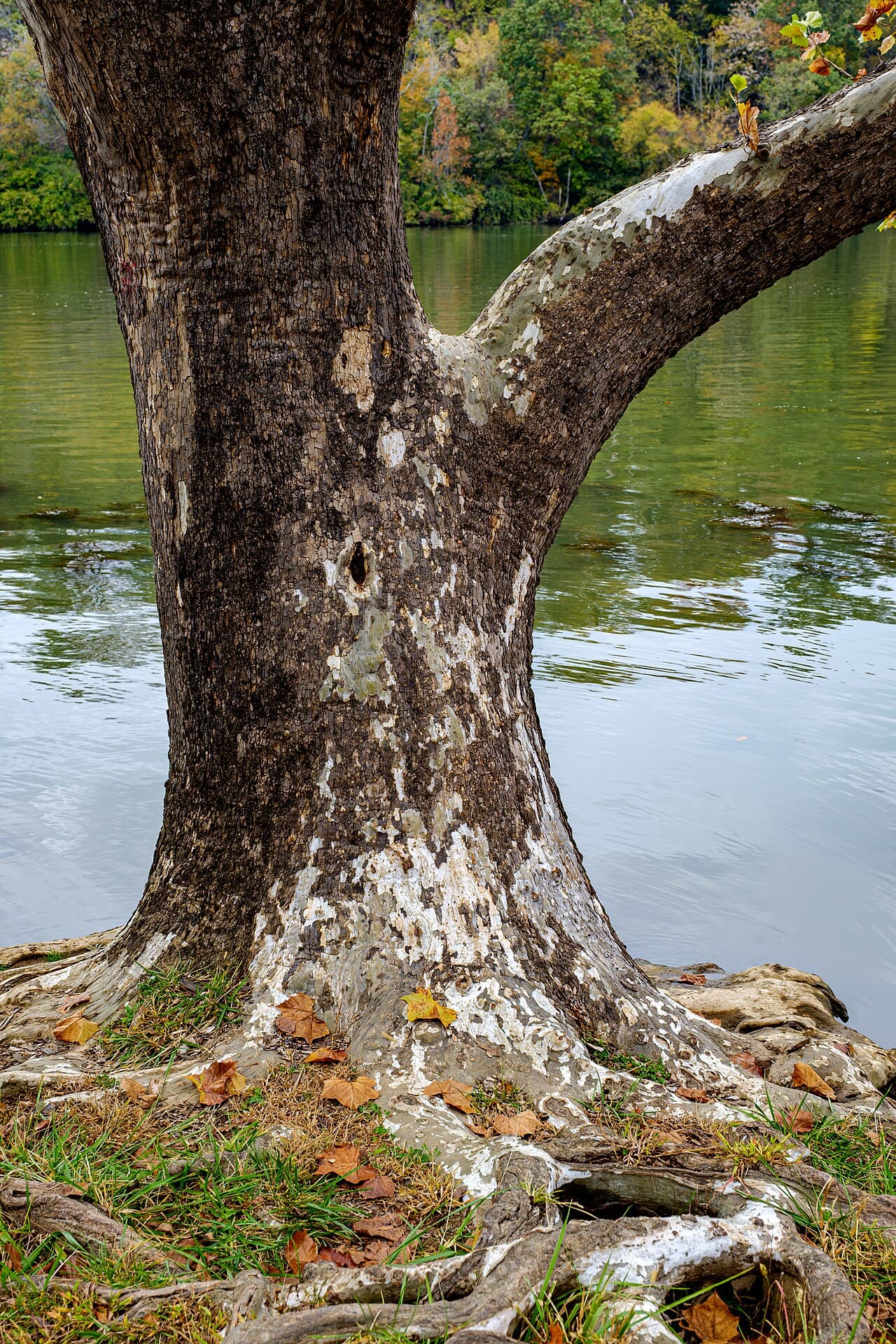
  19. A massive sycamore trunk beside a river, bark flaking away to bone-white patches

    American Sycamore

    Platanus occidentalis

    The white-boned giant of Kansas creek bottoms — massive, fast, and strong for its size. In cool wet springs anthracnose browns and drops the first flush of leaves; the tree almost always shrugs it off.

    Lobed leavesmottled barkcottony seedbronze in fall

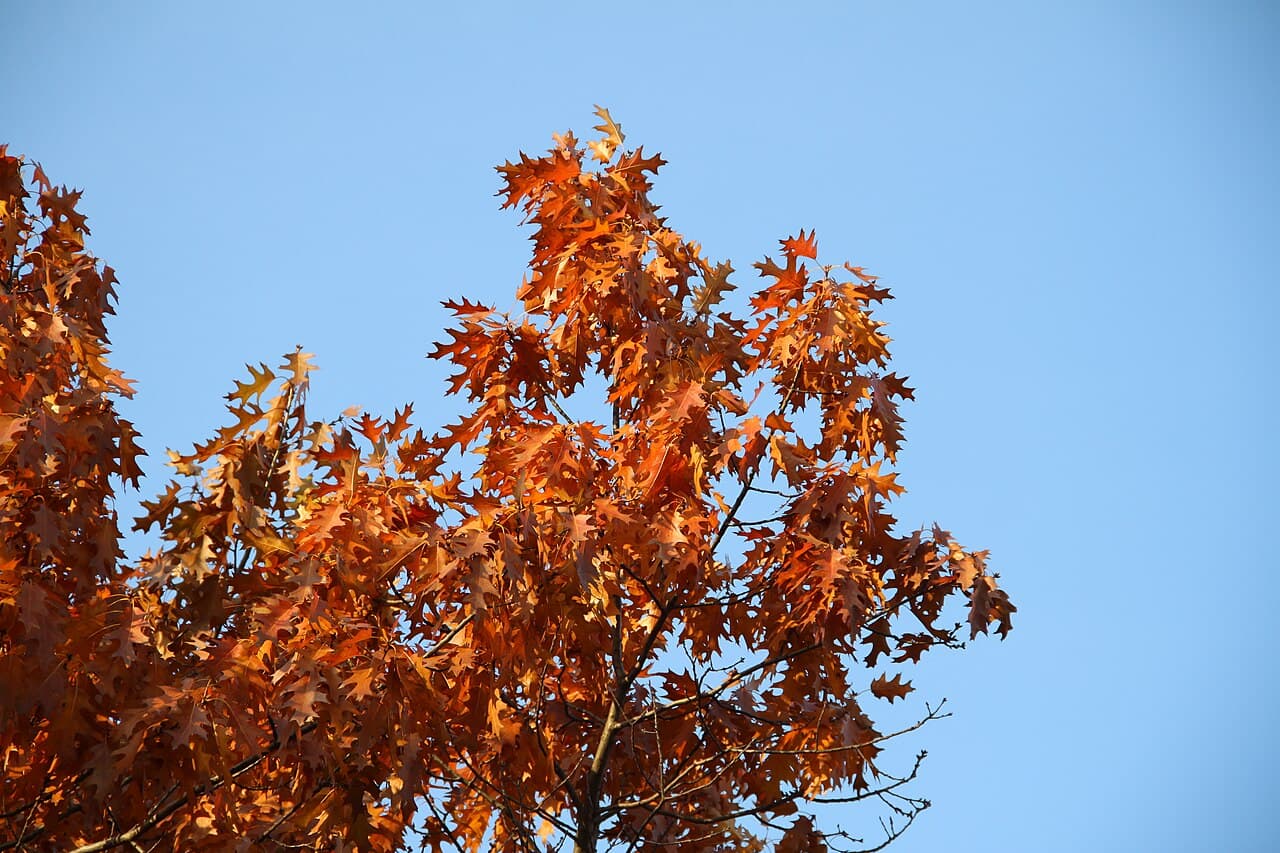
  20. The crown of a northern red oak turned rust orange against a clear autumn sky

    Northern Red Oak

    Quercus rubra

    A stately, relatively fast-growing oak for eastern and central Kansas with decent soil. Good storm structure and rich fall color — but as a red-oak-group tree it carries oak wilt risk, so pruning timing matters.

    Lobed leavesfurrowed barkacornsred in fall

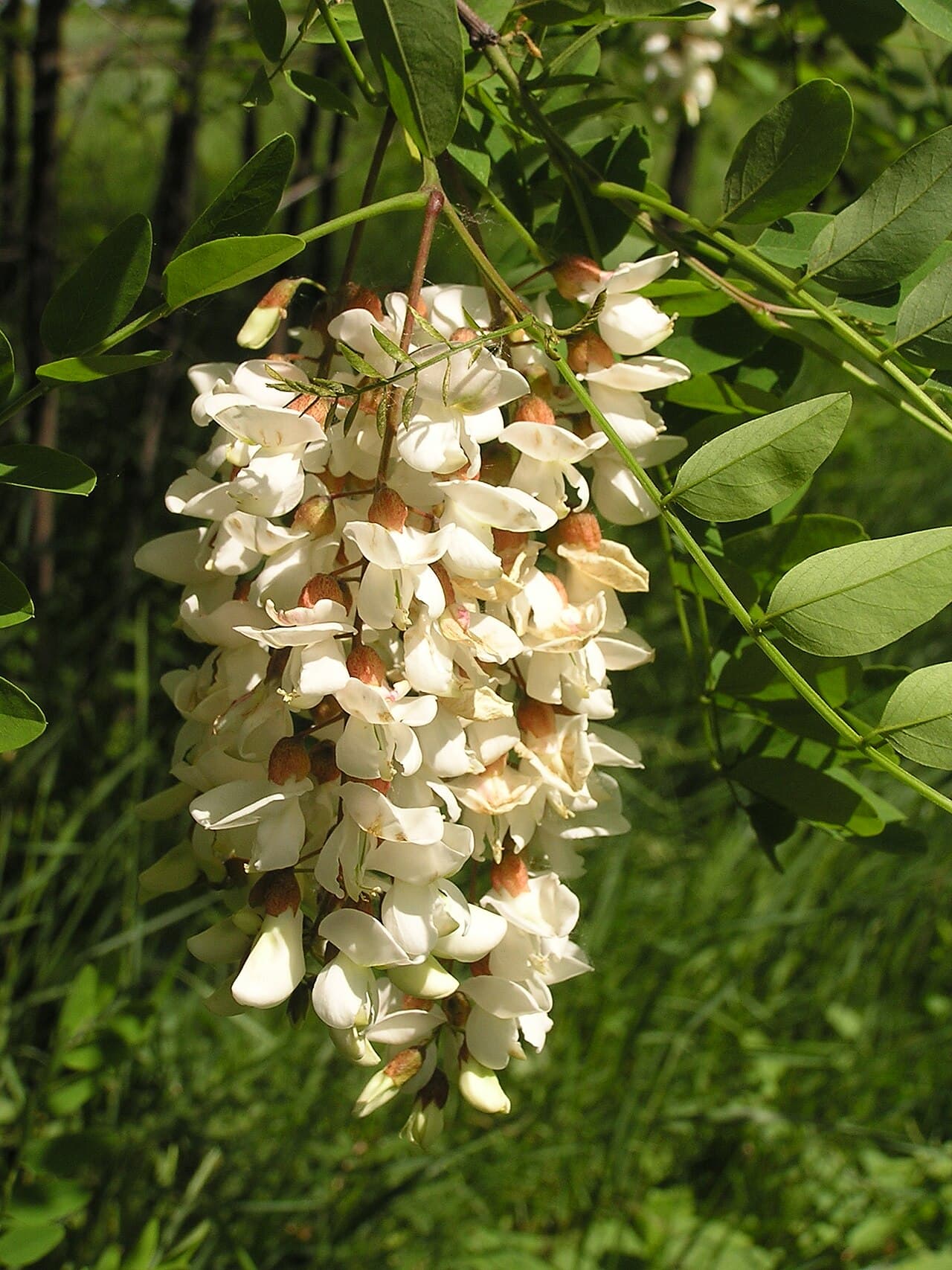
  21. Hanging clusters of fragrant white black locust flowers

    Black Locust

    Robinia pseudoacacia

    Fragrant white flower clusters in May, wood that outlasts the fence it holds up, and a root system that turns one tree into a thicket. Black locust is genuinely useful and genuinely hard to contain.

    Compound leavesfurrowed barkseed podsgold in fall

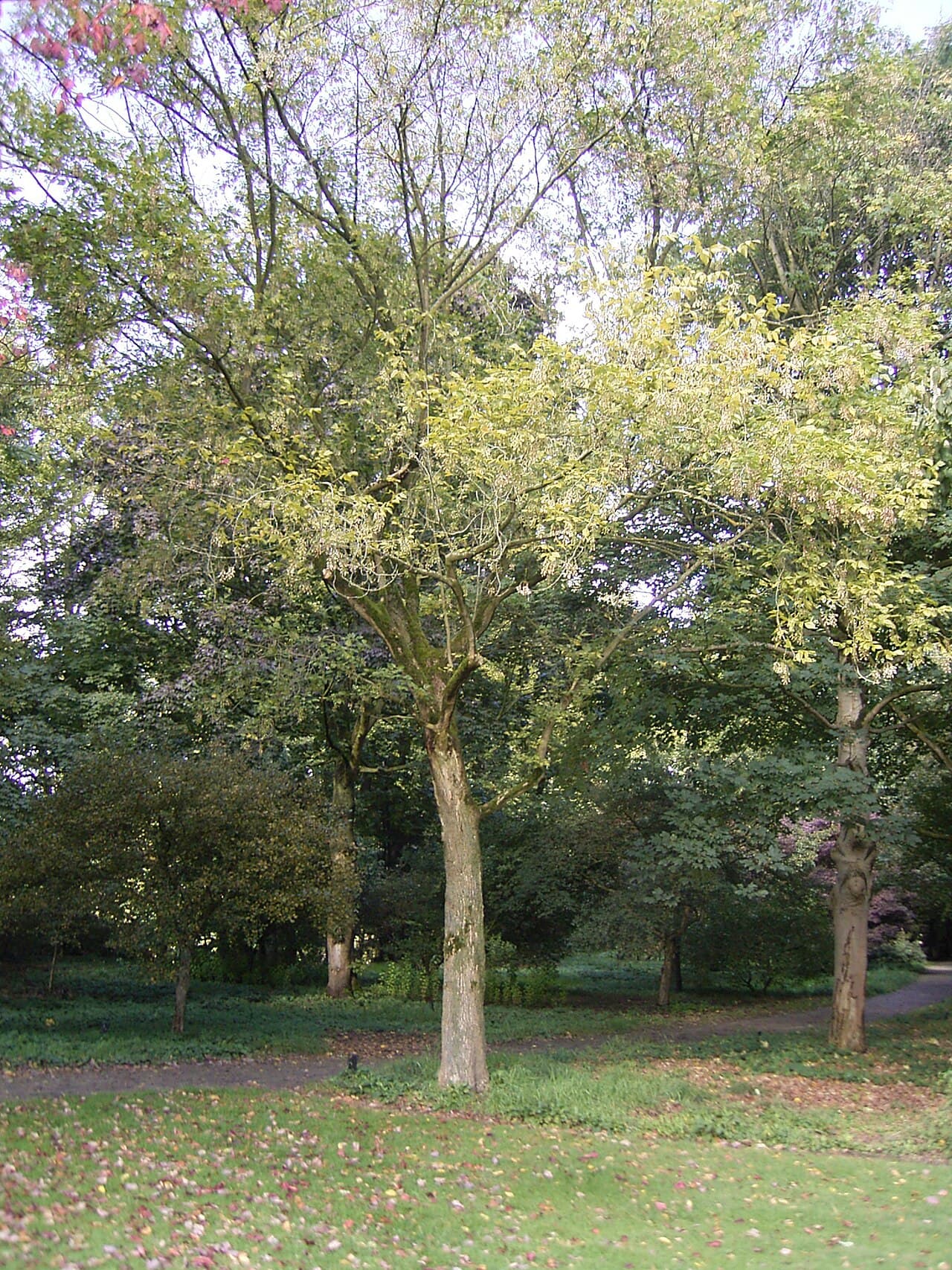
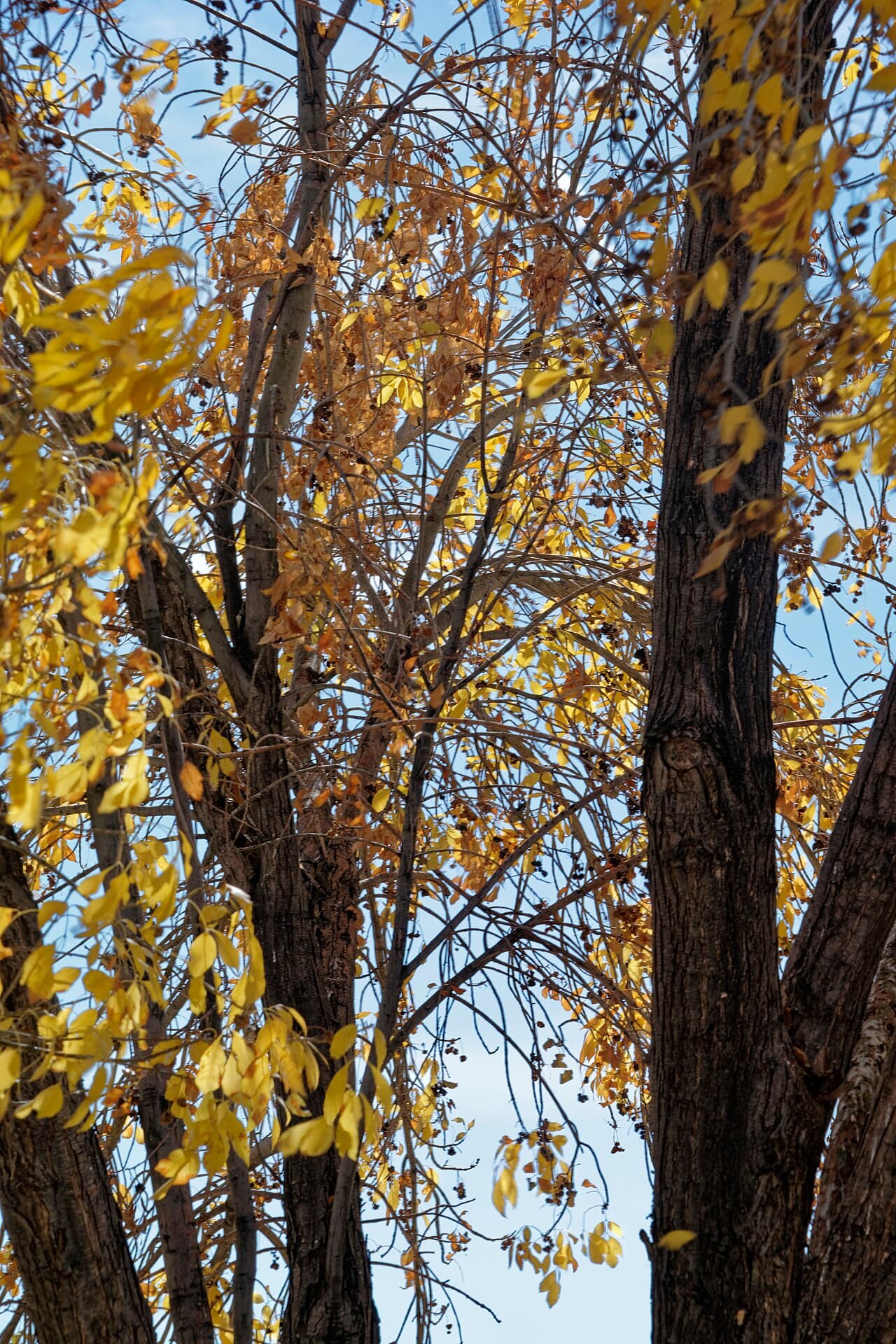
  22. A Chinese elm in autumn with yellow foliage and mottled trunks

    Chinese Elm (Lacebark Elm)

    Ulmus parvifolia

    The elm people mean when they say 'Chinese elm' is usually Siberian elm — and the mix-up has cost this tree its reputation. The real thing is a well-behaved, disease-resistant shade tree with mottled camouflage bark and the unusual habit of flowering in autumn.

    Toothed leavesmottled barkwinged seedsgold in fall

Work it out yourself

Four questions that name most Kansas trees

Botanists identify trees by elimination, not by recognition — a short chain of either/or questions, each one cutting the possibilities roughly in half. Here is that chain, written for a Kansas backyard and a single twig in your hand.

Is it carrying broad leaves, needles, or scales?

This first cut is nearly free, and it works from a car window. Kansas is overwhelmingly a broadleaf state — our tallgrass and mixed-grass country never supported much conifer, so an evergreen in a Kansas yard was almost certainly planted there on purpose.

Twenty of the twenty-two trees in this library. Keep going to question two — the branching pattern will cut this group down fast.

20 of 22 species — carry on to question two.

Told apart

Five pairs Kansans get wrong

Most misidentification in this state is not random — it lands on the same handful of pairs, over and over. Each of these has one trait that settles it in seconds, and at least one of the two is a tree you would treat very differently.

Both carry compound leaves in opposite pairs, which already puts them in a very small Kansas club. Boxelder volunteers into the same alleys and fence lines where ash was planted deliberately, so the two grow side by side all over the state.

Green Ash compared with Boxelder
TraitGreen AshFraxinus pennsylvanicaBoxelderAcer negundo
LeafletsFive to nine, evenly lance-shaped, finely toothed and uniform down the stalkUsually three, coarsely toothed and often irregularly lobed — people mistake it for poison ivy
TwigsStout, gray-brown, round in cross-sectionGreen to purple, often coated in a whitish waxy bloom you can rub off with a thumb
BarkTight, regular diamond lattice on a mature trunkThin, shallow, pale gray-brown ridges that never form a clean pattern
SeedsSingle paddle-shaped wings hanging in dense clustersPaired V-shaped wings in long chains that hang on through winter

The tell

Rub the twig, then count the wings. Boxelder is a maple, so its seeds always come in joined pairs — and that purple bloom on the twig belongs to nothing else in Kansas.

Why it matters here

This is the highest-stakes mix-up on the page. Emerald ash borer forces a treat-or-remove decision on every ash in its path, and that decision is expensive either way. Boxelder is a maple, is untouched by EAB, and is rarely worth treating for anything.

Every tree named on this page has a full profile in the directory above. If the tree looks unwell, start from the symptom instead

Once you have a name

Identification is usually the first question, not the last one. These are the pages people head to next.

Species profiles are being expanded with leaf, bark, and seed photography, pruning recommendations, and placement distances. Kansas Tree Guide is an independent educational resource. Nothing on this site replaces an on-site assessment by a qualified arborist or tree-care professional. Last reviewed August 2026.