
Root and butt rot
Fungi that decay roots and the base of the trunk, out of sight, for years before anything shows above ground. It is the leading cause of whole-tree failure in Kansas wind, and the most important thing about it is that a full green canopy is not evidence against it.
Serious. Capable of killing branches, sections, or eventually the whole tree. Often a symptom of an underlying stress that matters more than the organism itself.
What you see
- Mushrooms or shelf-like brackets growing from the root flare, the lower trunk, or a major root
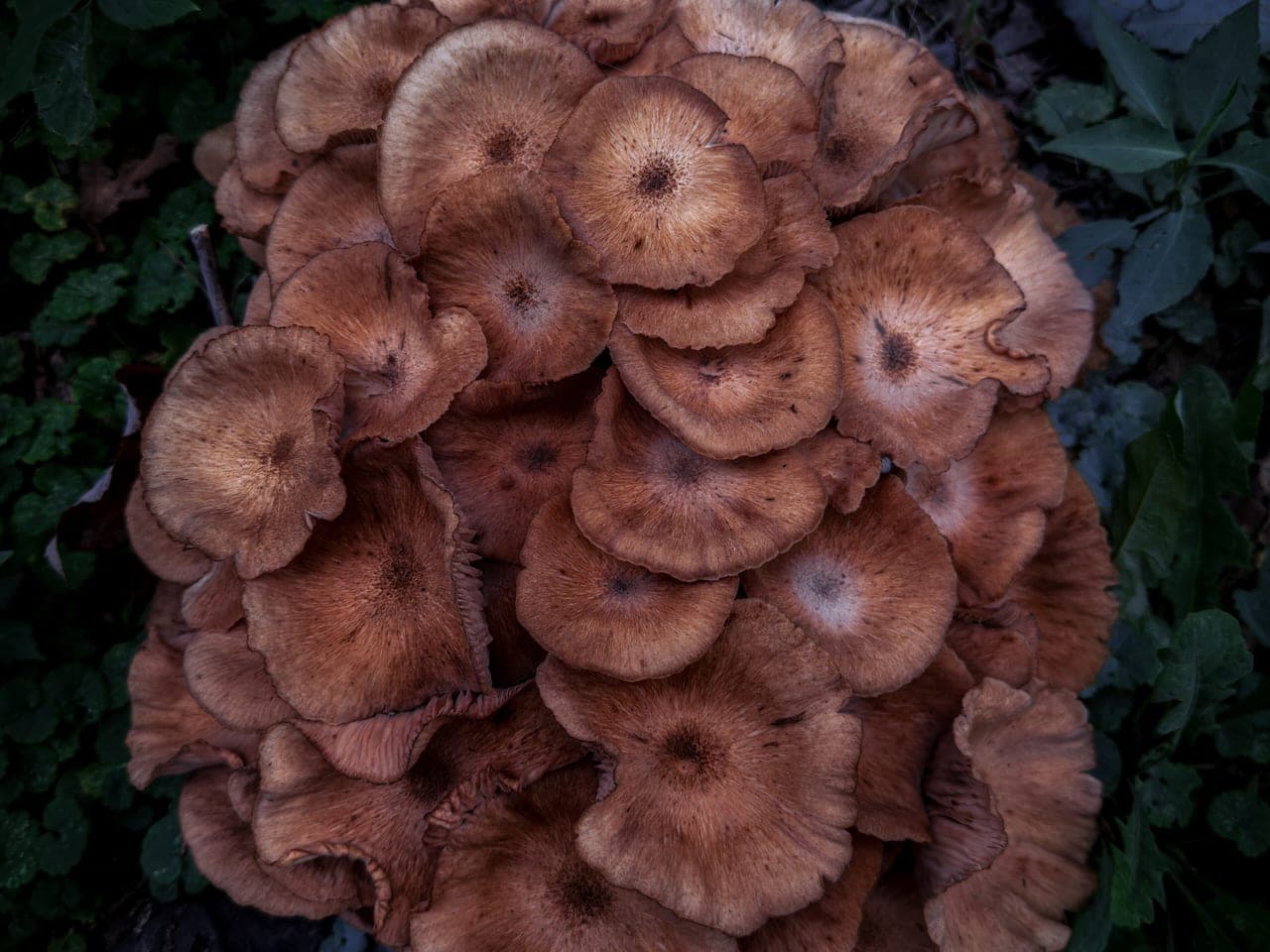
- Dense clusters of honey-coloured mushrooms at the base in autumn
- White fan-shaped sheets of fungal tissue under bark peeled back at the root collar
- Black shoelace-like strands in the soil or under bark at the base
- A general thinning and off-colour canopy with no other explanation
- Soil cracking, heaving, or lifting on one side of the trunk
- Bark at the base that sounds hollow or crumbles under a screwdriver
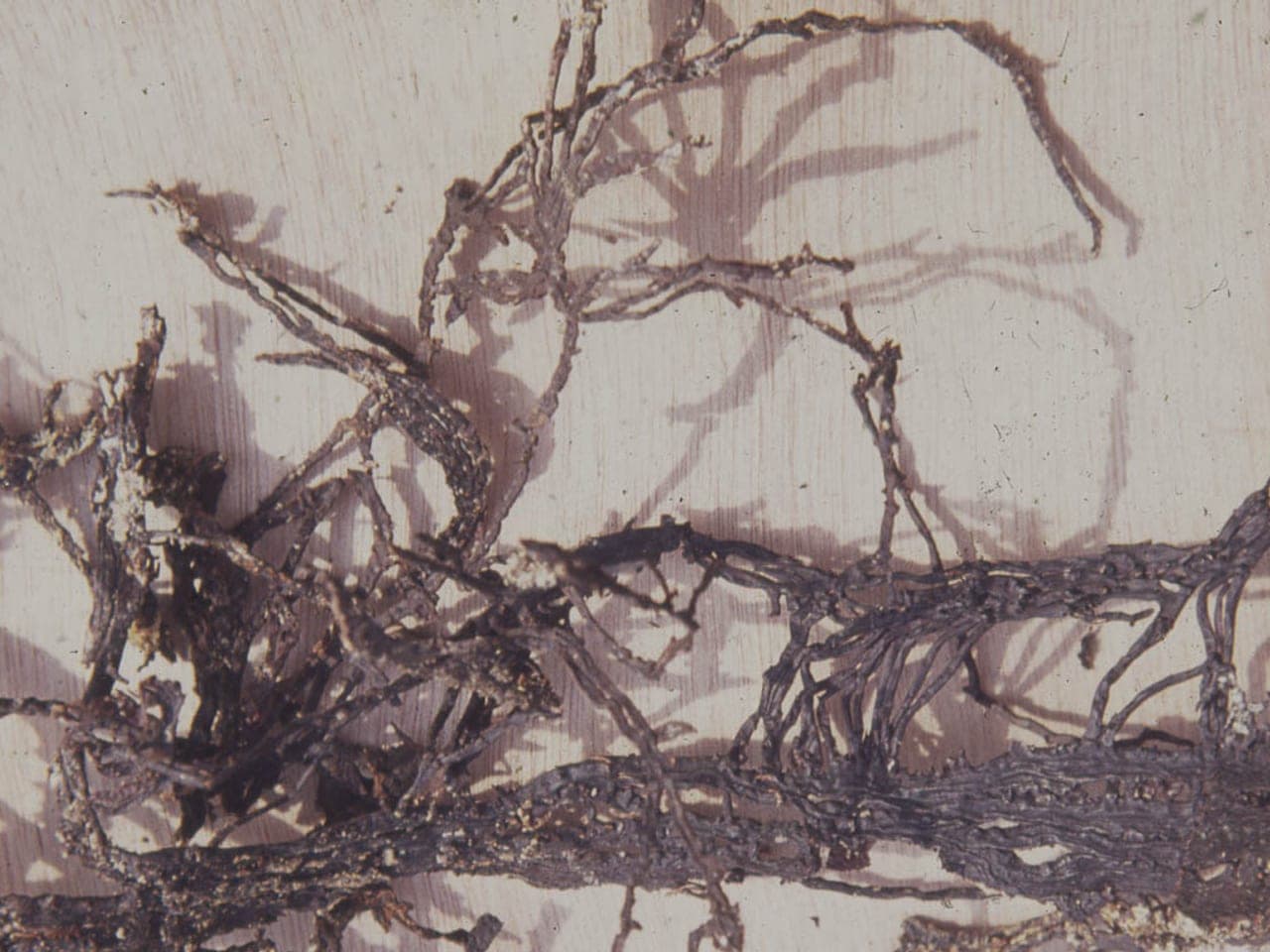
Rhizomorphs — the black bootlace strands Armillaria uses to travel root to root. Look for them under bark at the collar. 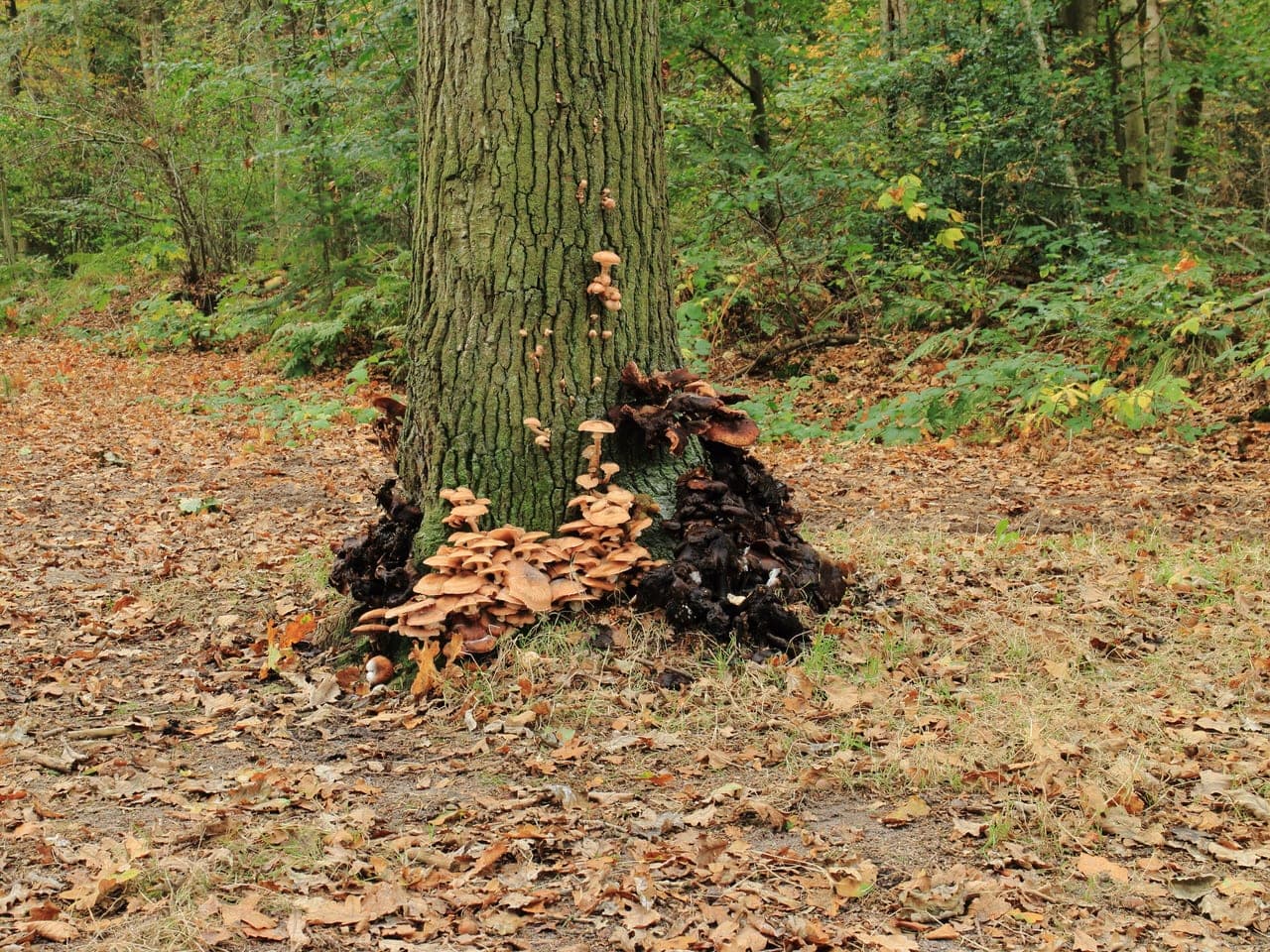
Fruiting all the way round a root flare. Its position at the base, where the whole load is carried, is what makes this serious rather than merely interesting.
How to be sure: Establish what the fungus is growing out of. Brush the mulch aside: a stalk rising from soil is a harmless decomposer, and a bracket emerging from wood is a structural problem.
Trees it affects in Kansas
Also affects: Most established landscape trees, Overwatered or poorly drained plantings of any species.
When it happens in Kansas
Year round
The decay itself is continuous and invisible. Only the fruiting bodies are seasonal, which is why the problem is nearly always older than the first mushroom.
September – November
Peak fruiting. Armillaria produces its honey-coloured clusters, and shelf fungi become conspicuous. This is when most people first notice.
After prolonged wet weather
A second flush of fruiting at any time of year, and the period when Phytophthora root rot advances fastest in heavy or poorly drained soil.
Storm season
When decayed root plates actually fail. Kansas straight-line winds find these trees reliably.
Prevention
- Do not pile mulch against the trunk — volcano mulching keeps the root collar wet and is a genuine cause of collar rot
- Plant at the right depth, with the root flare visible at the surface; deep planting is the most common root-rot precursor in new landscapes
- Water deeply and infrequently rather than daily, and make sure the site drains
- Keep construction traffic, trenching, and grade changes out of the root zone
- Avoid wounding roots and the root collar with mowers and trimmers
Treatment options
What you can do yourself
Expose the root flareAny time
Pull mulch and soil back until the trunk visibly widens into its roots. On trees planted too deep or mulched too high, this alone stops collar rot from progressing and is the single most useful thing available.
Correct drainage and wateringAny time
Phytophthora in particular is a disease of soil that stays wet. Fixing the water is the treatment; there is no useful substitute for it.
What treatment actually achieves
There is no cure. Wood already decayed does not regenerate, and no fungicide reaches decay fungi inside a trunk. Everything useful is either prevention or an assessment of how much strength remains. The reason this matters more than most entries here is the failure mode: root and butt rot takes the whole tree over at once, roots and all, rather than dropping a limb.
When the tree may not be recoverable
- A shelf conk attached to the root flare or a structural root — by the time it fruits, decay is well advanced
- Bark at the base that sounds hollow, or wood that a screwdriver pushes into easily
- Soil lifting or cracking on one side of the trunk, which suggests the root plate is already moving
- Significant decay at the base of any tree standing within falling distance of a house, drive, or play area — the tolerance for uncertainty here should be very low
Common questions
There are mushrooms in my mulch. Is my tree rotting?
Probably not. Mushrooms growing out of mulch or soil are decomposers doing useful work and say nothing about the tree. What matters is a fungus growing out of wood — the trunk, the root flare, or a structural root. Brush the mulch aside and check the attachment point.
The canopy looks completely healthy. Can the base still be rotten?
Yes, and this is the dangerous part. Root and butt decay routinely progresses to the point of failure while the crown still looks full, because the tree keeps moving water through the outer sapwood while the interior is consumed. A green canopy is not evidence of a sound base.
Can I treat it if I catch it early?
You can remove the conditions driving it — deep mulch, deep planting, standing water — and that genuinely helps. You cannot reverse decay that has already happened. Past a certain point the decision is about risk, not treatment.
Kansas Tree Guide is an independent educational resource. Nothing on this site replaces an on-site assessment by a qualified arborist or tree-care professional. Last reviewed August 2026.