
Dutch elm disease
Ophiostoma novo-ulmi
The fungus that removed American elm from Kansas streets in the middle of the last century, and it has not gone away. It is carried by bark beetles and travels between neighbouring elms through grafted roots, and the useful Kansas distinction is that Siberian and lacebark elms largely shrug it off.
Usually fatal. Once established in a susceptible tree, this generally ends in removal. Effort is better spent protecting the trees nearby than saving the one already infected.
What you see
- A single branch yellowing and wilting in early summer while the rest of the tree looks normal — flagging
- Leaves curling, browning, and dropping on the affected limb
- Wilting spreading limb by limb through the canopy over one to three seasons
- Brown or dark streaks in the sapwood when the bark is peeled back on a wilted branch
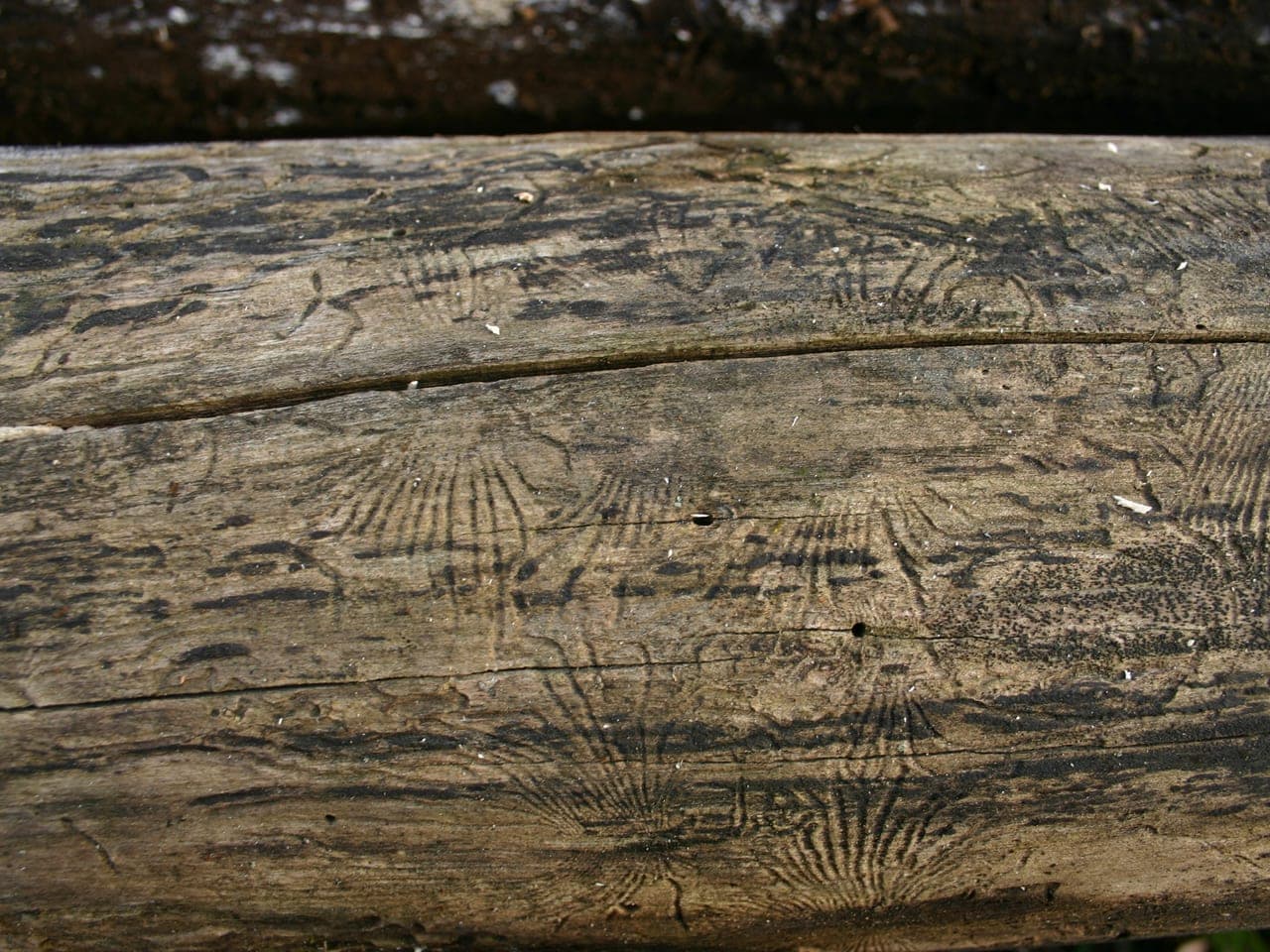
- Fine winding beetle galleries under the bark of dead limbs
- In fast infections, most of the canopy lost within one summer
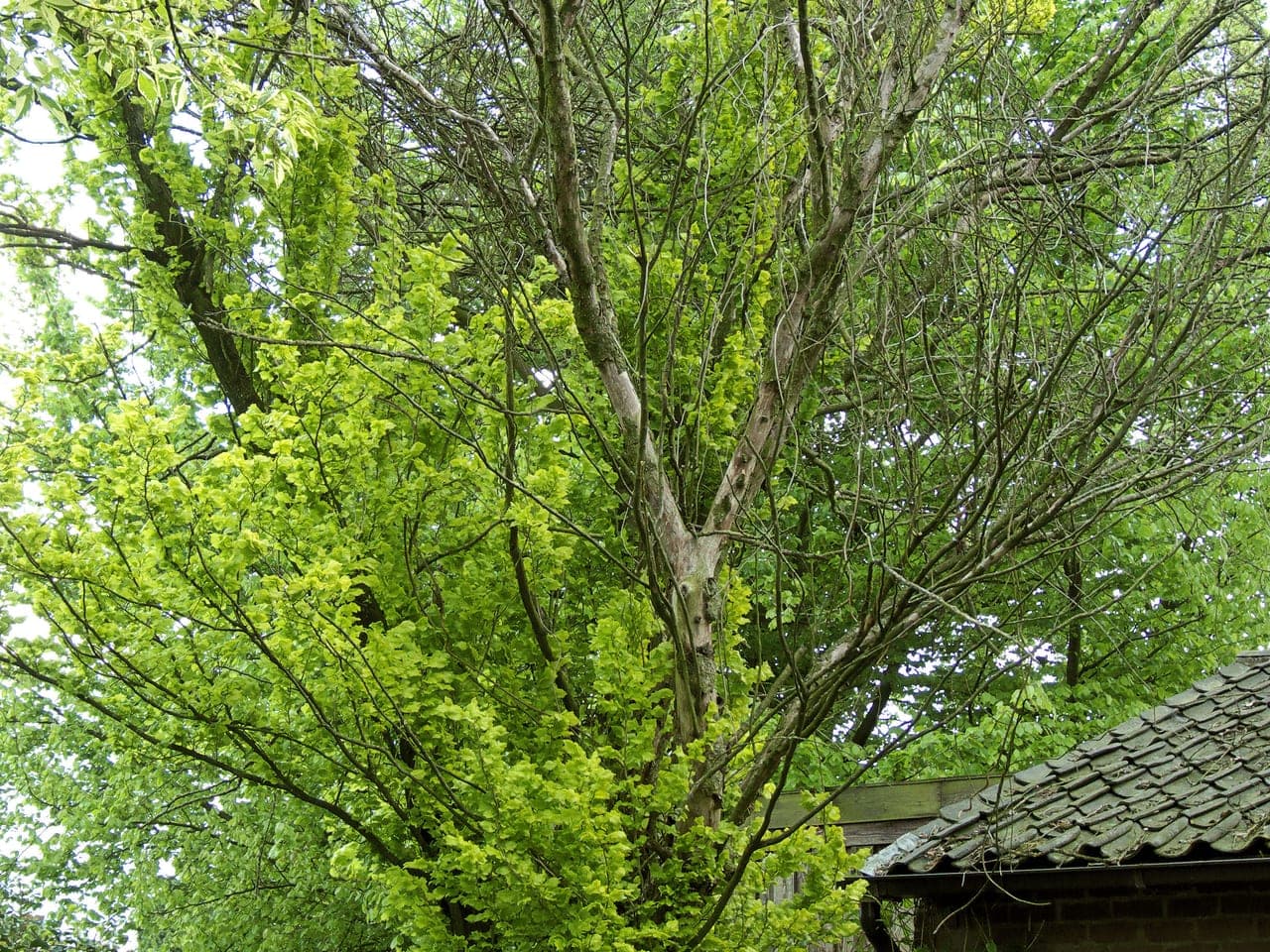
Whole limbs bare while others still carry leaves. Caught at the first flagging limb there is a slim chance; at this stage there is none. 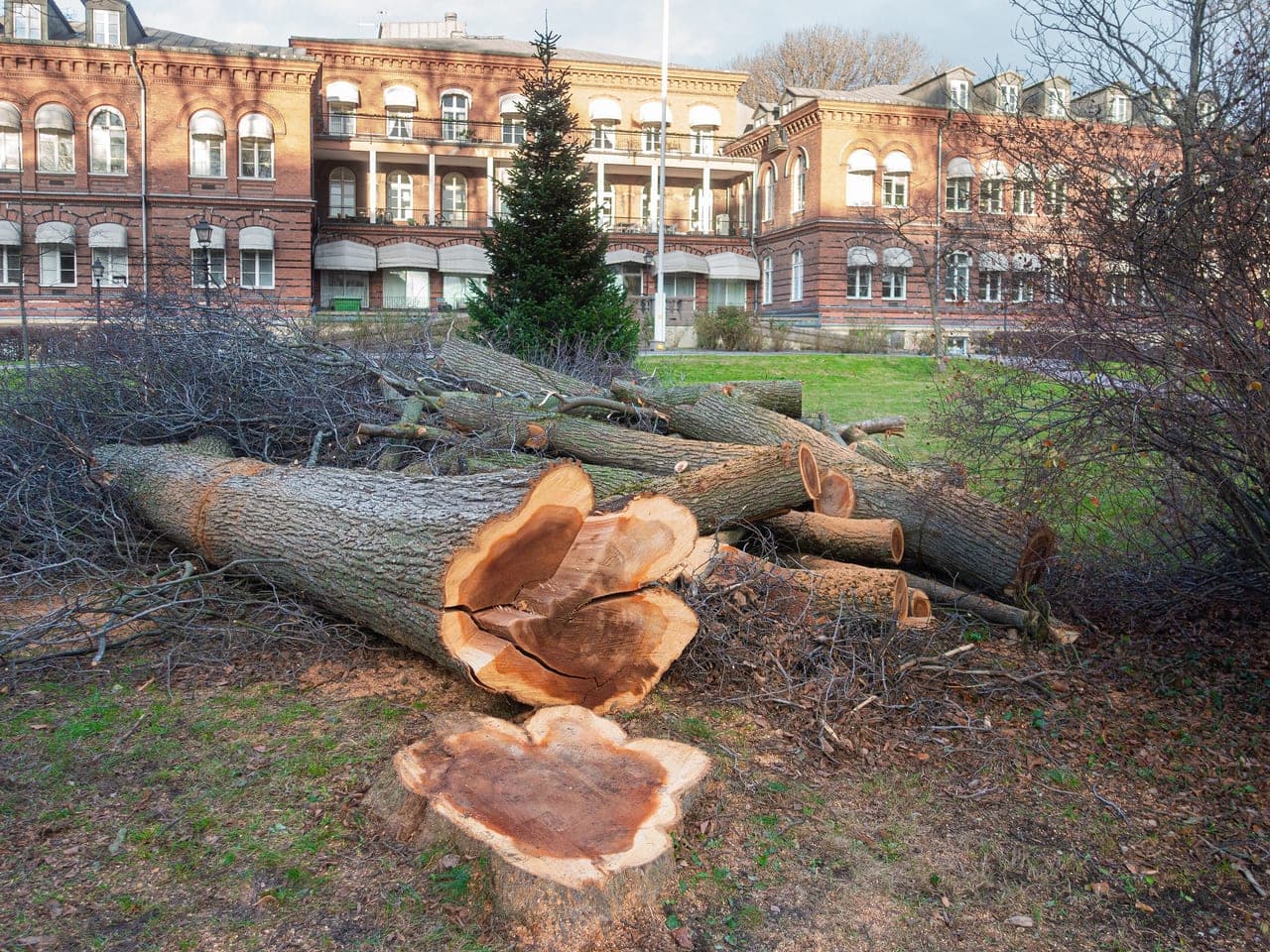
The actual control. Removing infected elms and destroying the wood before spring denies the bark beetles the material they breed in.
How to be sure: Cut a pencil-thick twig from a wilting branch and peel the bark. Dutch elm disease leaves brown streaking in the outer wood; a drought-stressed twig is uniformly pale.
Trees it affects in Kansas
Also affects: Slippery elm, Rock elm, Winged elm.
When it happens in Kansas
April – May
Elm bark beetles emerge from wood where they overwintered, carrying spores, and feed in the twig crotches of healthy elms — which is how the fungus gets in.
May – July
Flagging appears. A single branch of an otherwise healthy elm yellows and wilts, usually in the upper canopy. This is the moment when intervention still has value.
Summer
The fungus spreads through the tree's vascular system and, separately, through root grafts into neighbouring elms. A second beetle generation flies.
Fall – winter
The right time to remove and destroy infected wood, before beetles emerge from it in spring. Elm firewood with the bark still on is the classic way this disease is kept going.
Prevention
- Remove and destroy dead and dying elm wood promptly — standing dead elm and stacked bark-on elm firewood are beetle nurseries
- Never store elm firewood with the bark on through spring; debark it, burn it, or cover it completely
- Sever root grafts between an infected elm and healthy elms within about fifty feet before removal
- Prune elms only in the dormant season, since fresh wounds attract beetles
- Where you are replanting, choose resistant elms or a different genus entirely
Treatment options
What treatment actually achieves
Once the fungus reaches the trunk and root system, the tree is lost, and most trees are past that point by the time a homeowner notices. The value in acting fast is largely in protecting the elms nearby — which, given how thoroughly root grafts connect a row of street elms, is not a small thing. Be aware too that the American elms still standing in Kansas towns are survivors that have already been lucky for decades, and worth a preventive programme if you have one.
When the tree may not be recoverable
- More than about five to ten percent of the crown showing symptoms — the practical threshold beyond which treatment fails
- Wilting on multiple limbs in different parts of the canopy, which indicates the fungus is in the main stem
- Symptoms that began in the lower canopy, which usually means it arrived through the roots rather than the beetles
- A tree that has flagged, been treated, and flagged again the following season
Need professional help in the Wichita area?
Dutch elm disease usually ends in removal, and a dead tree near a house, drive, or play area is a structural problem rather than a horticultural one. A professional assessment settles both questions at once.
When a situation calls for professional help in the Wichita area, we refer readers to Kohnen's Tree Service, a working Kansas tree-care company whose field experience informs this site. That relationship is disclosed here and on our About page.
Common questions
Are all elms susceptible?
No, and this is genuinely useful in Kansas. American elm is highly susceptible. Siberian elm — extremely common across the state — and Chinese or lacebark elm are substantially resistant. If your elm is one of the latter two, Dutch elm disease is probably not what you are looking at.
One branch is wilting. Is there any chance of saving it?
A small one, if you act within days rather than weeks. Pruning well below the streaking or injecting a fungicide occasionally succeeds when less than five percent of the crown is affected. Get it identified quickly, because the odds fall away fast.
Can I keep the wood for firewood?
Only if you remove the bark or cover it completely through the following spring. Elm bark beetles breed in bark-on elm wood and emerge carrying the fungus, so a stack of untreated elm firewood is one of the most reliable ways to infect the elms around you.
Kansas Tree Guide is an independent educational resource. Nothing on this site replaces an on-site assessment by a qualified arborist or tree-care professional. Last reviewed August 2026.