
Honey Locust (thornless)
Gleditsia triacanthos var. inermis
Fine, ferny foliage that casts filtered shade lawns actually grow under, small leaflets that vanish into the grass each fall, and serious drought toughness. Thornless, seedless cultivars are the ones to plant.
- Height
- 40–70 ft
- Spread
- 35–60 ft
- Lifespan
- 90–120 yr
- Growth
- Fast
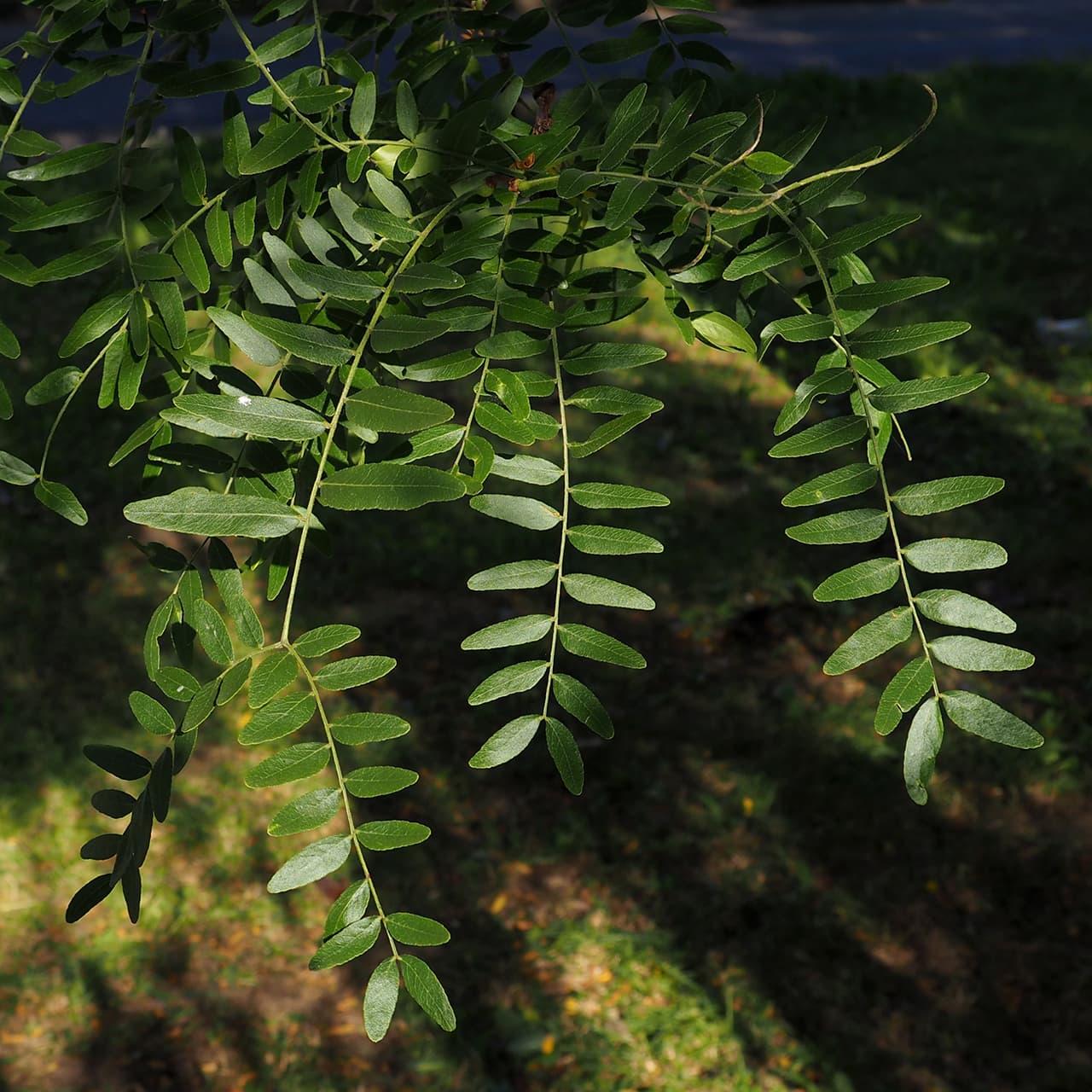
Identification
What to look at
Three features settle most identifications: the bark on the trunk, the leaf in your hand, and whatever the tree is dropping.
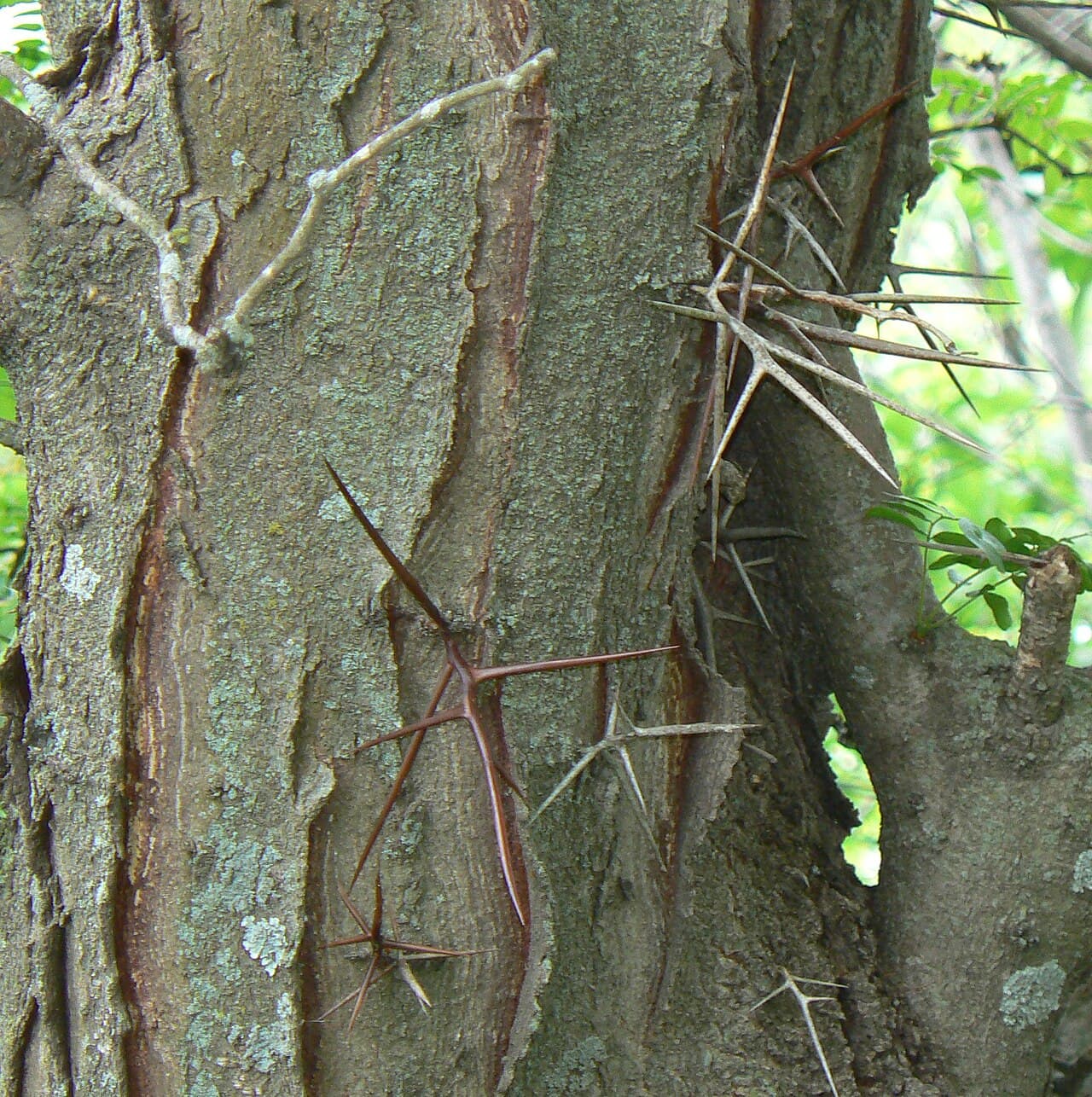
The barkWild forms carry branched thorns straight out of the trunk. Planted cultivars are thornless. 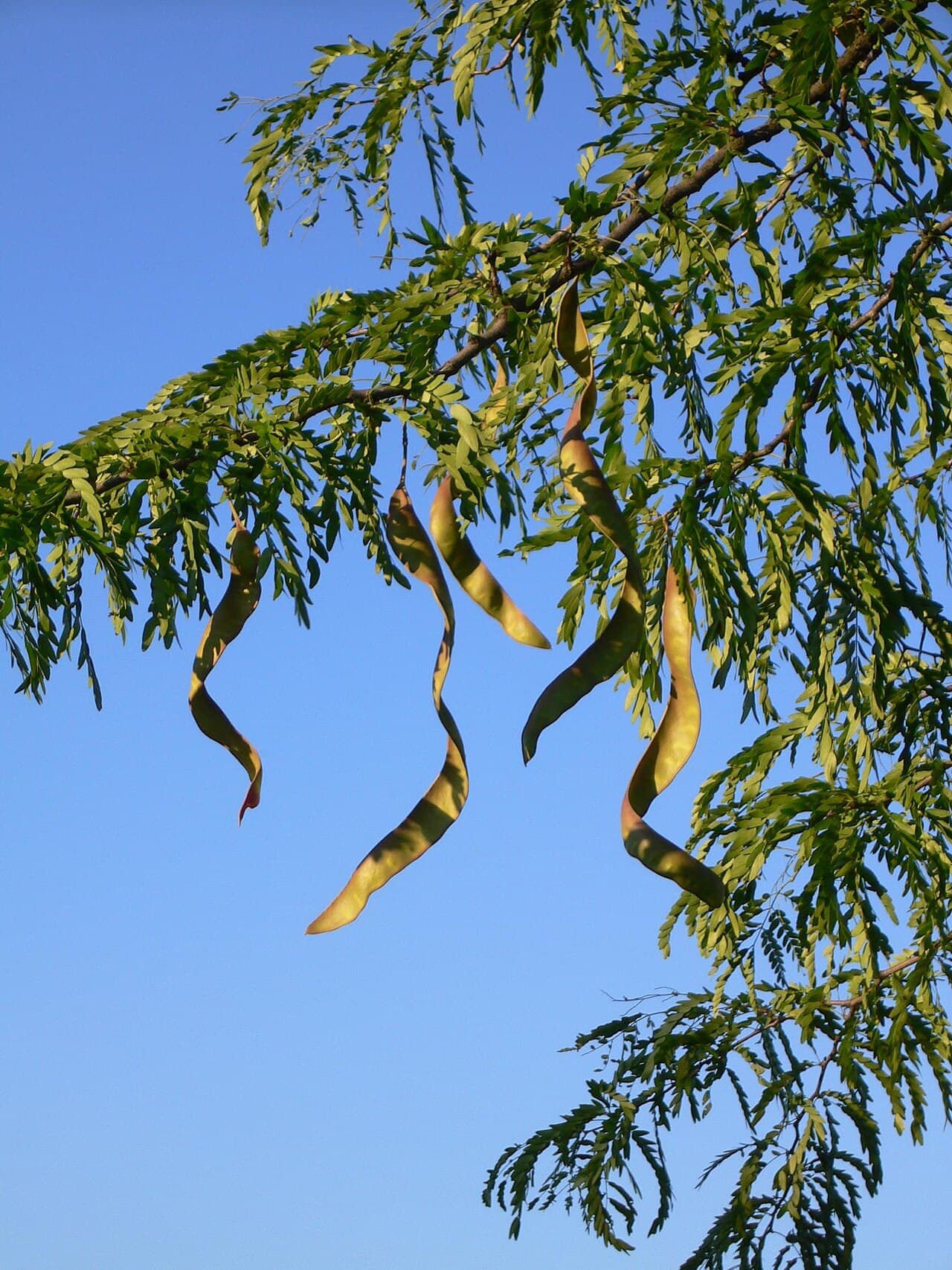
The seedLong leathery pods with a corkscrew twist, dropping through fall and winter.
How to identify it
- Feathery compound leaves with many small oval leaflets
- Light, airy canopy you can see sky through
- Wild forms carry branched thorns and long twisted pods
- Bark gray-brown, smooth young, ridged with age
Where it grows
- Native range
- Native to the central United States including eastern Kansas. The thornless, seedless selections of the variety inermis are the ones sold and planted; wild trees carry both branched thorns and long pods.
- Soil
- Very tolerant — alkaline clay, road salt, compaction, and drought are all handled well.
- Sunlight
- Full sun
- Drought & heat
- High drought tolerance, high heat tolerance.
A proven street and yard tree across Kansas. Keep it vigorous with deep watering in drought years — stressed honey locusts invite borers.
Root behavior
Deep and non-aggressive, making it one of the safer large trees to plant near sidewalks, drives, and patios.
Storm and branch-failure risk
Good. The fine, open foliage lets wind pass through rather than catching it. Over-mature trees can drop sizeable limbs, and trees weakened by canker are noticeably more failure-prone.
Overall storm resistance: Good. Assessing damage after a storm
Kansas pests and diseases
Mimosa webworm
ManageableCaterpillars web leaflets together and skeletonize them, turning patches of the crown brown and papery by late summer. Ugly rather than dangerous on an established tree.
Thyronectria canker
SeriousSunken cankers on limbs and trunk that girdle and kill branches, almost always on trees already stressed by drought. Deep watering in dry years is the real defense.
Spider mites
ManageableHot, dry Kansas summers bring stippled, bronzed foliage and fine webbing. A hard spray of water repeated over several days often resolves it.
Full profiles in the pest library
Photographs, seasonal timing, treatment options, and the point past which the tree cannot be saved.
Seeing something not listed here? Work from the symptom instead
Pruning
Best windowDormant season; avoid late-summer cuts, which invite canker
Train to a single central leader early — honey locust naturally forms co-dominant stems that become weak points at size. Make cuts in dry weather; wet-season wounds are an entry point for thyronectria canker.
Planting near homes
A good near-home choice. The filtered shade lets lawn grow underneath, the tiny leaflets need no raking, and the roots stay out of trouble.
When removal may be necessary
- Thyronectria canker has girdled major limbs and dieback is spreading through the crown
- Extensive trunk decay above a target
Removal is a judgment call about risk, not a formula. A tree with one of these conditions over open lawn is a very different situation from the same tree over a driveway — and that judgment needs someone on site.
Kansas Tree Guide is an independent educational resource. Nothing on this site replaces an on-site assessment by a qualified arborist or tree-care professional. Last reviewed August 2026.