
Chinese Elm (Lacebark Elm)
Ulmus parvifolia
The elm people mean when they say 'Chinese elm' is usually Siberian elm — and the mix-up has cost this tree its reputation. The real thing is a well-behaved, disease-resistant shade tree with mottled camouflage bark and the unusual habit of flowering in autumn.
- Height
- 40–50 ft
- Spread
- 35–50 ft
- Lifespan
- 50–100 yr
- Growth
- Moderate
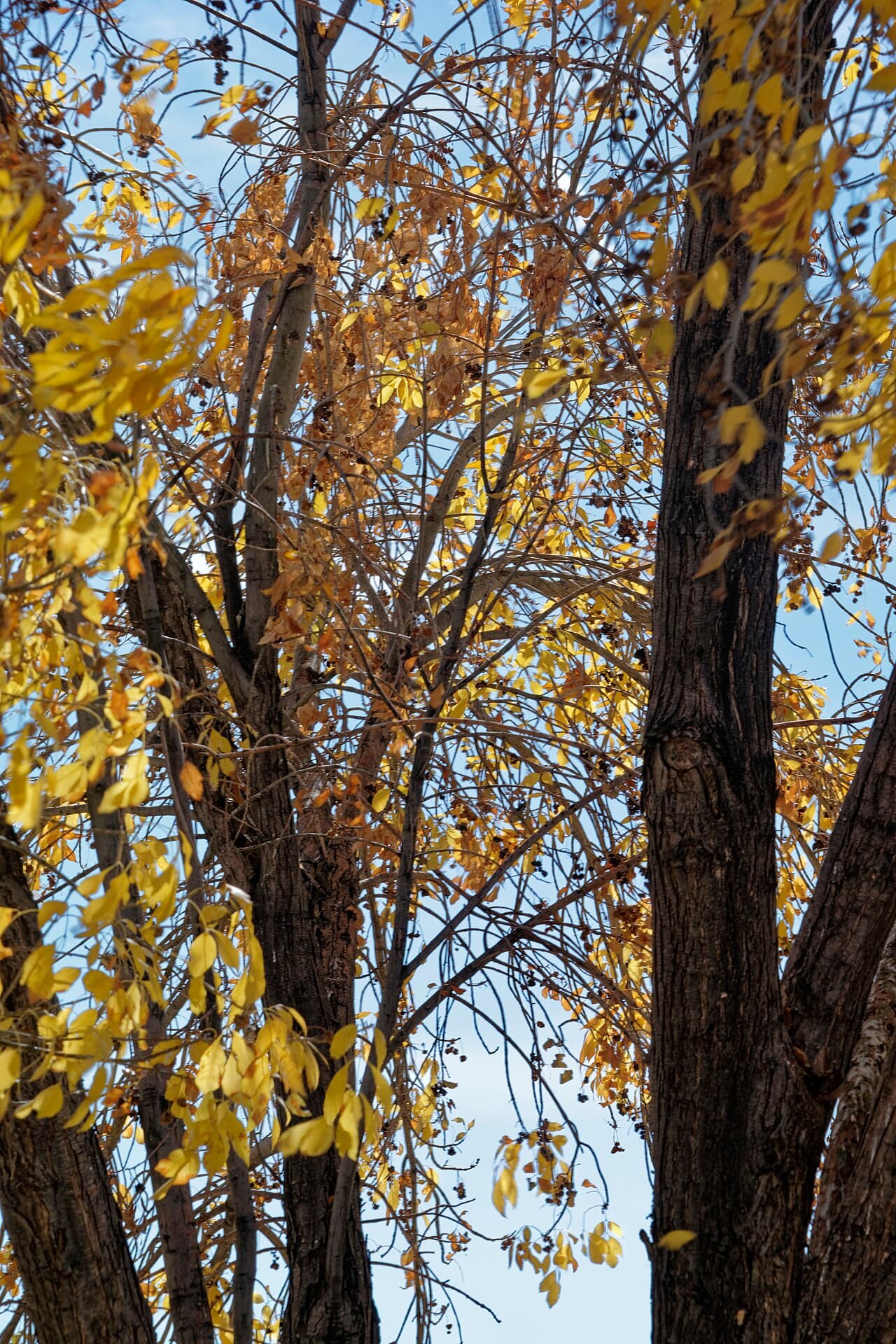
Identification
What to look at
Three features settle most identifications: the bark on the trunk, the leaf in your hand, and whatever the tree is dropping.
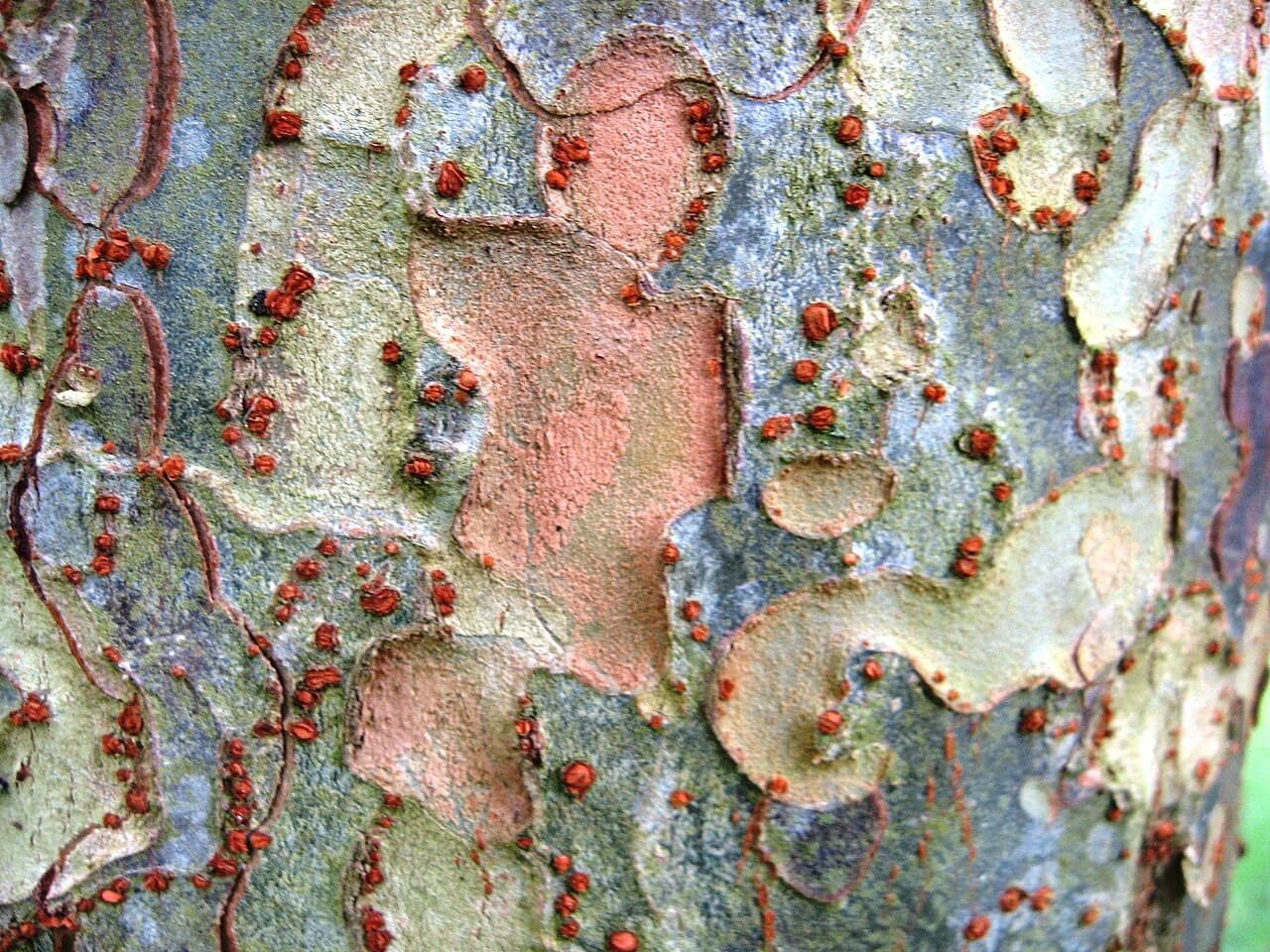
The barkThe lacebark effect: flaking patches of gray, orange, and olive. Nothing else in Kansas looks like it. 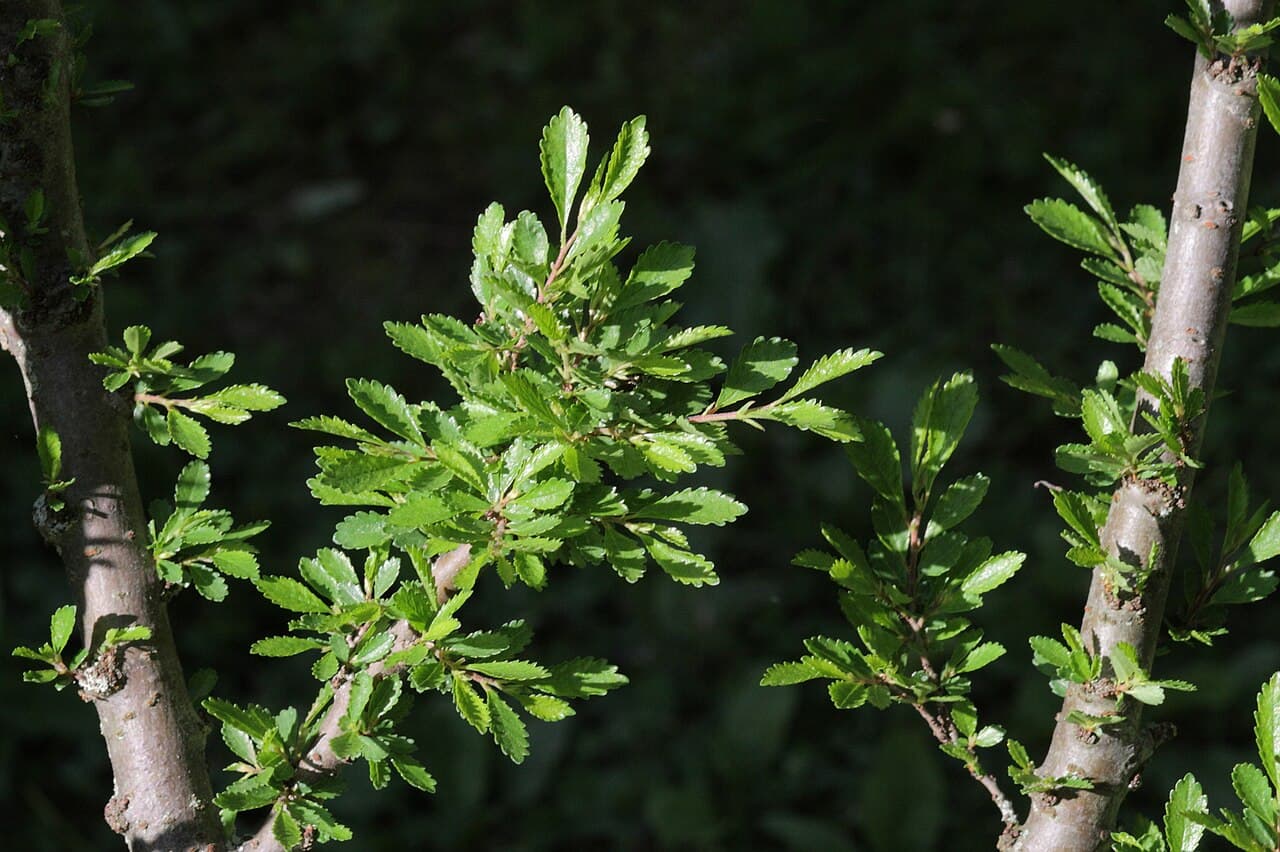
The leafSmall, glossy, and singly toothed — rarely longer than two inches. 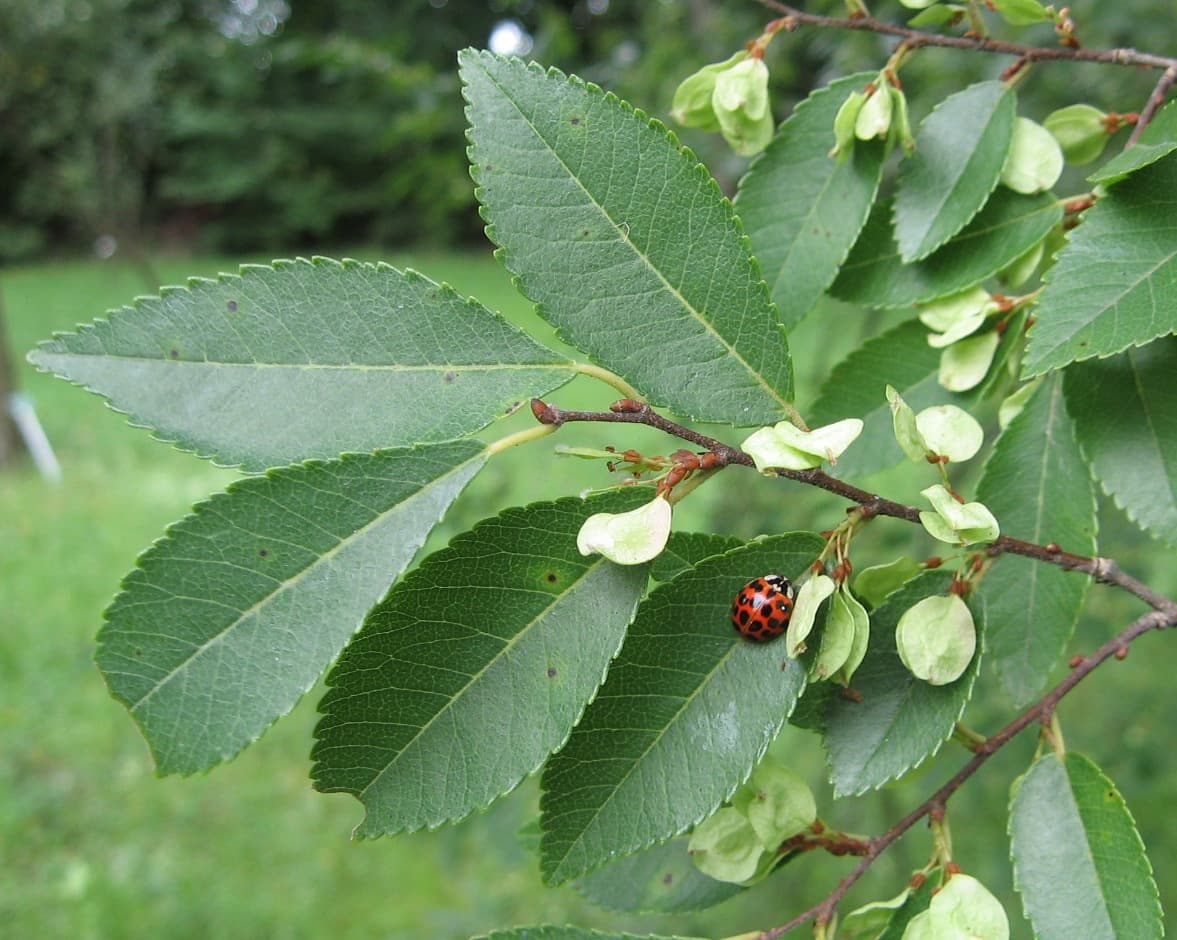
The seedPapery seeds ripen in autumn, months after every other elm has finished.
How to identify it
- Small, glossy, single-toothed leaves under two inches long
- Bark flakes away in patches of gray, orange, and olive — the 'lacebark' effect
- Flowers and sets seed in late summer and fall, never in spring
- Rounded, arching crown with fine branching
Where it grows
- Native range
- Native to China, Korea, and Japan. Introduced as a landscape tree and, unlike Siberian elm, it does not seed itself aggressively into Kansas fence lines. Also sold as lacebark elm.
- Soil
- Broadly adaptable, handling alkaline clay, urban compaction, and drought once established.
- Sunlight
- Full sun to part shade
- Drought & heat
- High drought tolerance, high heat tolerance.
Genuinely different from the Siberian elm it gets confused with: stronger wood, far less seeding, and real resistance to Dutch elm disease. The autumn bloom is the definitive tell — Siberian elm flowers in March.
Root behavior
Moderately deep and considerably better behaved than either American or Siberian elm near paving and laterals.
Storm and branch-failure risk
Substantially stronger wood than Siberian elm. The main structural issue is co-dominant leaders on young nursery stock, which are easy to correct early and awkward to fix later.
Overall storm resistance: Good. Assessing damage after a storm
Kansas pests and diseases
Dutch elm disease resistance
CosmeticChinese elm is highly resistant to Dutch elm disease and moderately resistant to elm leaf beetle. That resistance is the whole reason it is recommended where American and Siberian elm are not.
Elm leaf beetle
ManageableOccasionally skeletonizes foliage, but damage is typically far lighter than on American or Siberian elm and rarely needs treatment.
Full profiles in the pest library
Photographs, seasonal timing, treatment options, and the point past which the tree cannot be saved.
Seeing something not listed here? Work from the symptom instead
Pruning
Best windowDormant season — November through February
Select a single leader in the first few years and space the scaffolds. After that its natural form is good and it needs very little.
Planting near homes
A good near-home choice and one of the better replacements when a Siberian elm or an ash comes out. Reasonable size, sound wood, attractive bark, and few serious problems.
When removal may be necessary
- Structural decay above a target, which is uncommon in this species
- A co-dominant union has split — often correctable while young by subordinating one stem
Removal is a judgment call about risk, not a formula. A tree with one of these conditions over open lawn is a very different situation from the same tree over a driveway — and that judgment needs someone on site.
Kansas Tree Guide is an independent educational resource. Nothing on this site replaces an on-site assessment by a qualified arborist or tree-care professional. Last reviewed August 2026.