
Siberian Elm
Ulmus pumila
The tough, fast, brittle elm that filled Dust Bowl-era windbreaks and now seeds itself into every unmowed corner of Kansas. It survives anything — and drops limbs on whatever's beneath it.
- Height
- 50–70 ft
- Spread
- 35–50 ft
- Lifespan
- 50–70 yr
- Growth
- Fast
Identification
What to look at
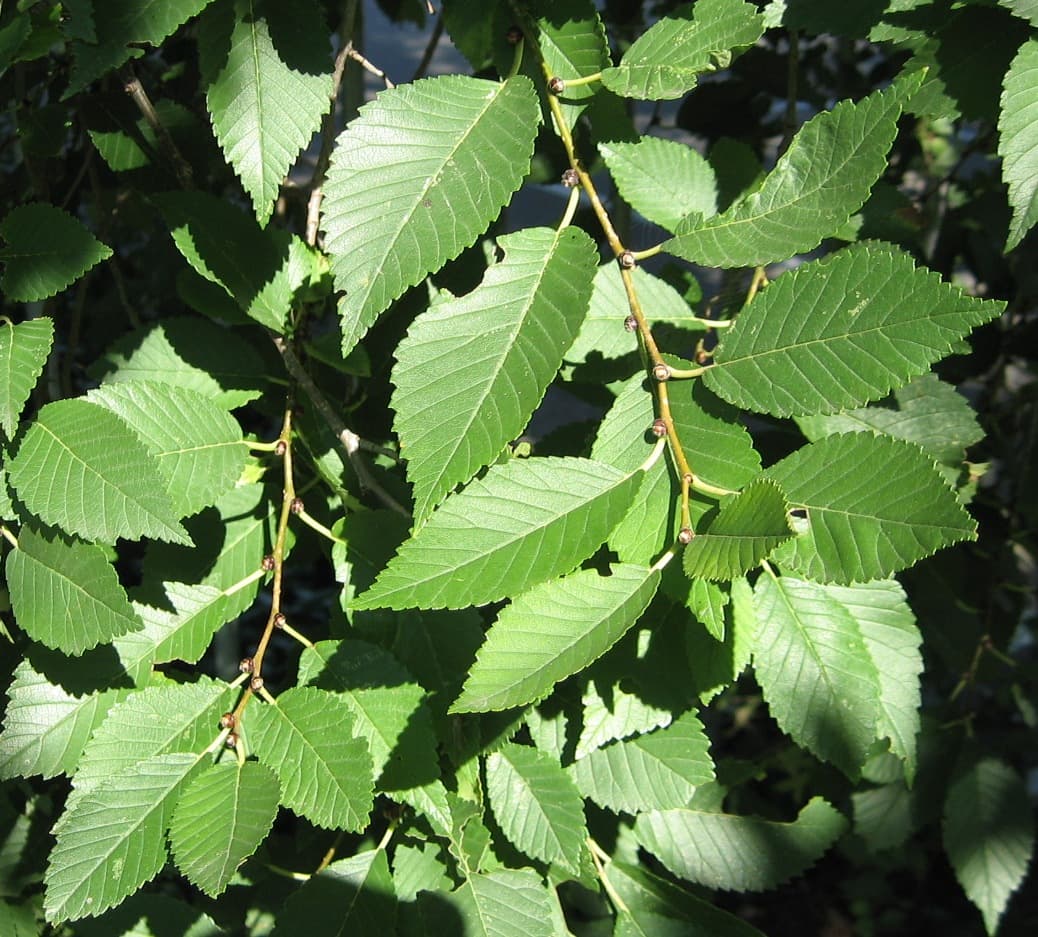
Three features settle most identifications: the bark on the trunk, the leaf in your hand, and whatever the tree is dropping.
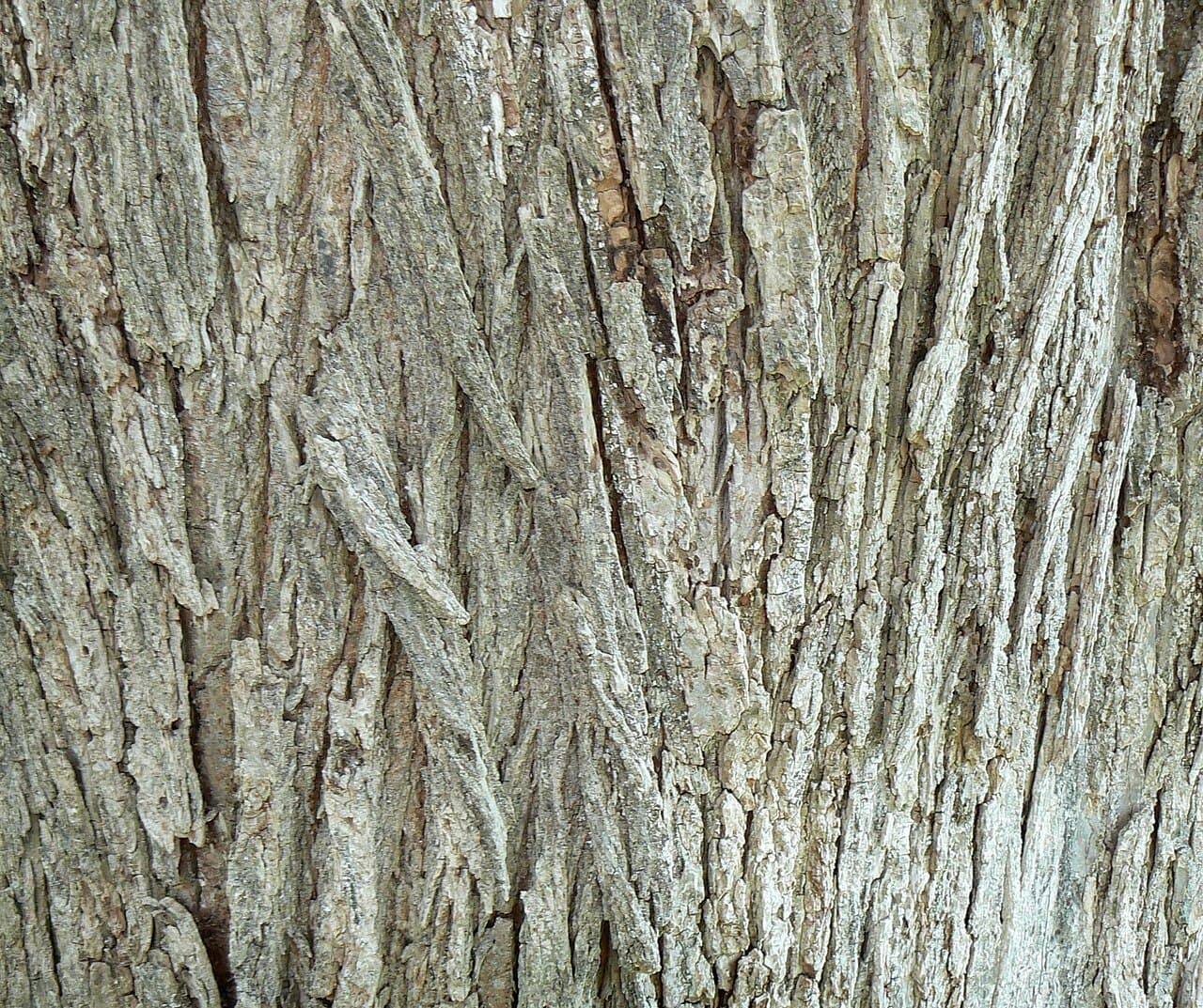
The barkIrregular, shallow furrows without the clean lattice of American elm. 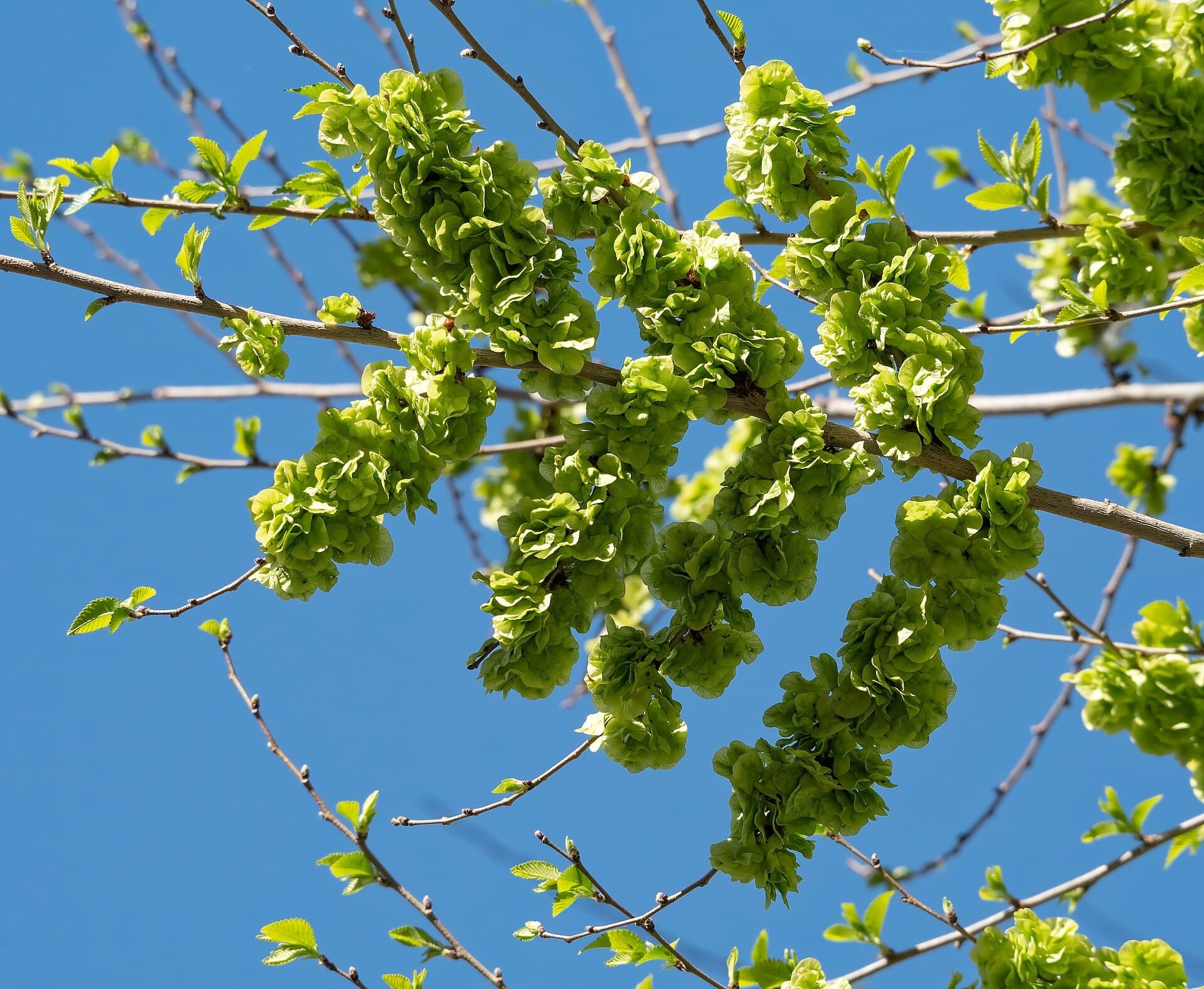
The seedAn enormous seed crop, shed by March — the opposite of Chinese elm, which seeds in autumn.
How to identify it
- Small, nearly symmetrical single-toothed leaves
- Twiggy, irregular crown full of deadwood
- Brittle branches litter the ground after every wind
- Papery round seeds in heavy spring crops
Where it grows
- Native range
- Native to northern China, eastern Siberia, and Mongolia. Planted by the million in Dust Bowl-era shelterbelt programs and now thoroughly naturalized and weedy across Kansas.
- Soil
- Anything at all. Exceptional drought and alkalinity tolerance is precisely why it was chosen for shelterbelts — and why it now grows where nobody planted it.
- Sunlight
- Full sun
- Drought & heat
- High drought tolerance, high heat tolerance.
Common in older farmsteads and alleys. Budget for cleanup after every storm, and don't let volunteers establish along fences — they're far harder to remove at forty feet.
Root behavior
Shallow, greedy, and competitive. Hard on lawns and neighboring plantings, and quick to find moisture around foundations and laterals.
Storm and branch-failure risk
Brittle. It sheds small limbs in almost any wind and larger ones in ice, and accumulates deadwood faster than most trees its size. Cleanup is a recurring cost rather than a one-time event.
Overall storm resistance: Poor. Assessing damage after a storm
Kansas pests and diseases
Elm leaf beetle
ManageableThe same skeletonizing pest that hits American elm. Siberian elm tolerates the damage but looks ragged by August.
Wetwood and slime flux
CosmeticDark, foul-smelling seepage running down the trunk from a crack or old wound. It stains bark and kills grass beneath, but there is no effective treatment and the tree usually carries on.
Weedy seeding
SeriousAn enormous spring seed crop germinates in gutters, flower beds, fence lines, and cracked pavement. Managing seedlings is the ongoing cost of having one nearby.
Full profiles in the pest library
Photographs, seasonal timing, treatment options, and the point past which the tree cannot be saved.
Seeing something not listed here? Work from the symptom instead
Pruning
Best windowDormant season — November through February
Budget for routine deadwood removal rather than one-time shaping. Structural pruning rarely pays off on a tree with wood this weak; the goal is keeping failures away from targets.
Planting near homes
Avoid. Between constant limb drop, aggressive roots, and prolific seeding, it is the wrong tree next to a house, drive, or patio.
When removal may be necessary
- It has become a recurring limb-failure hazard over a house, drive, or play area
- Extensive trunk decay, which is common in older trees
- Volunteers along a fence line — cut them while they are small, because they are far harder to remove at forty feet
Removal is a judgment call about risk, not a formula. A tree with one of these conditions over open lawn is a very different situation from the same tree over a driveway — and that judgment needs someone on site.
Kansas Tree Guide is an independent educational resource. Nothing on this site replaces an on-site assessment by a qualified arborist or tree-care professional. Last reviewed August 2026.