Northern Red Oak
Quercus rubra
A stately, relatively fast-growing oak for eastern and central Kansas with decent soil. Good storm structure and rich fall color — but as a red-oak-group tree it carries oak wilt risk, so pruning timing matters.
- Height
- 60–75 ft
- Spread
- 45–65 ft
- Lifespan
- 150–200 yr
- Growth
- Moderate
Identification
What to look at
Three features settle most identifications: the bark on the trunk, the leaf in your hand, and whatever the tree is dropping.
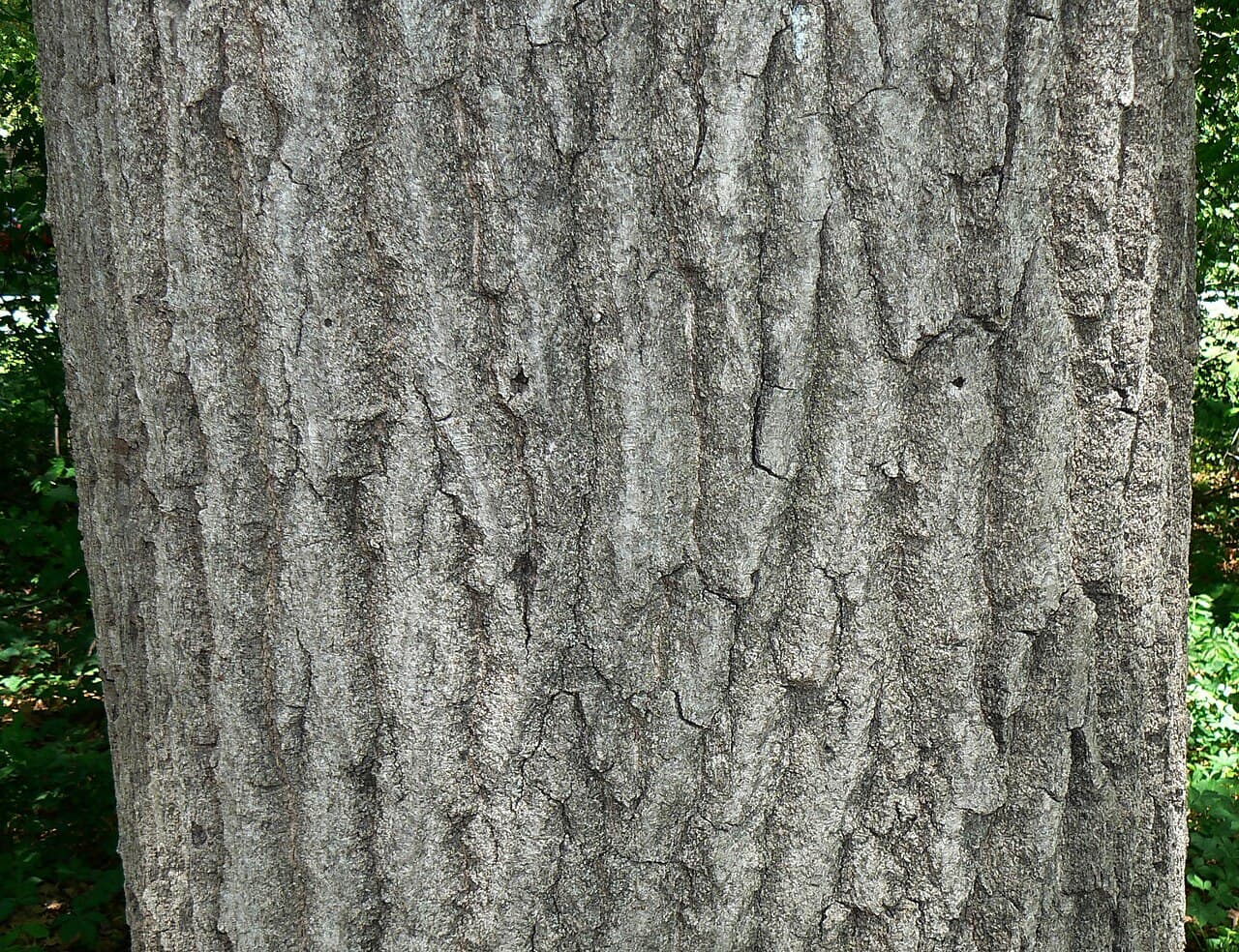
The barkFlat-topped ridges running the trunk like ski trails — the classic red oak tell. 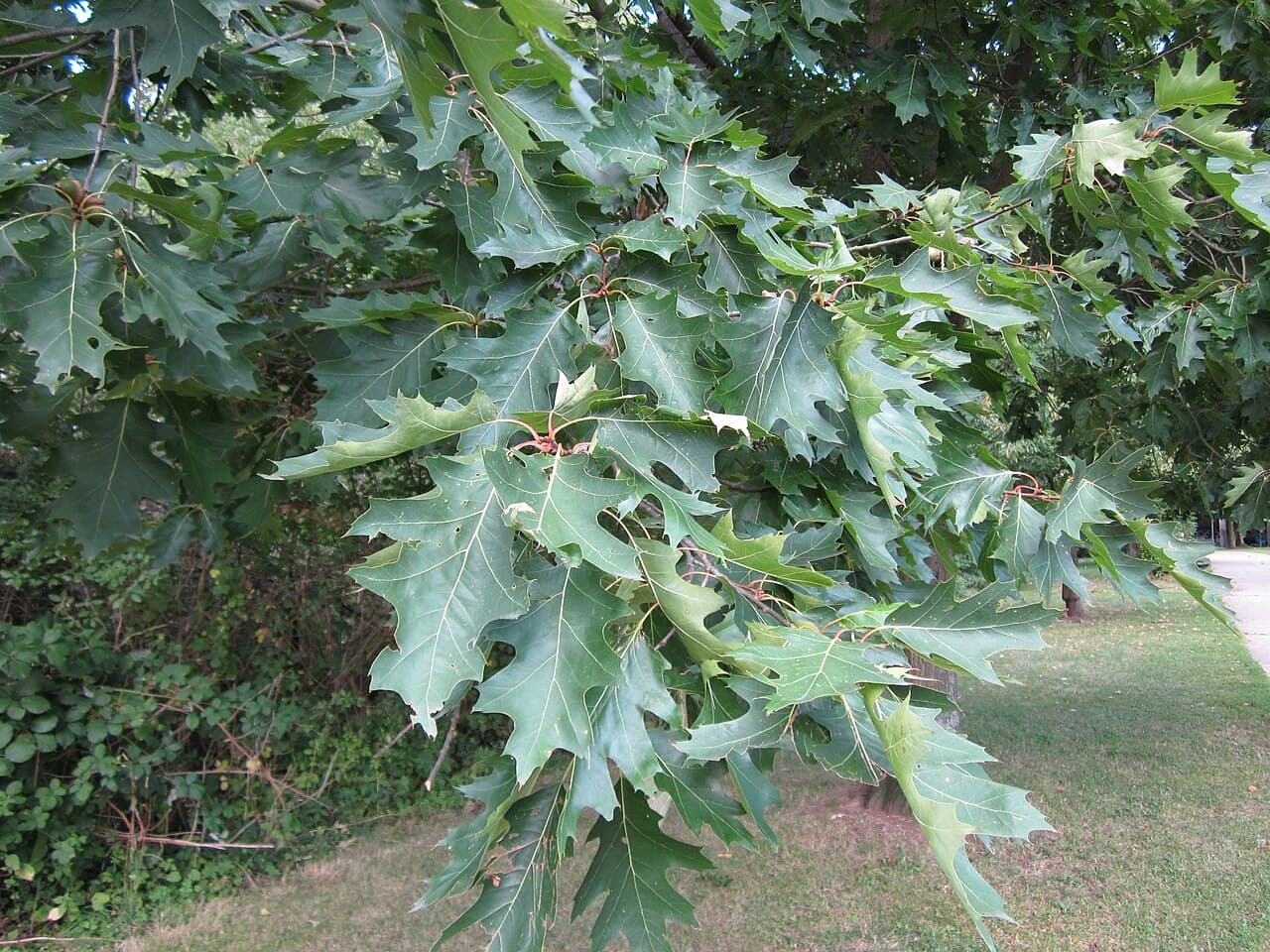
The leafLobes cut about halfway to the midrib, each point ending in a stiff bristle. 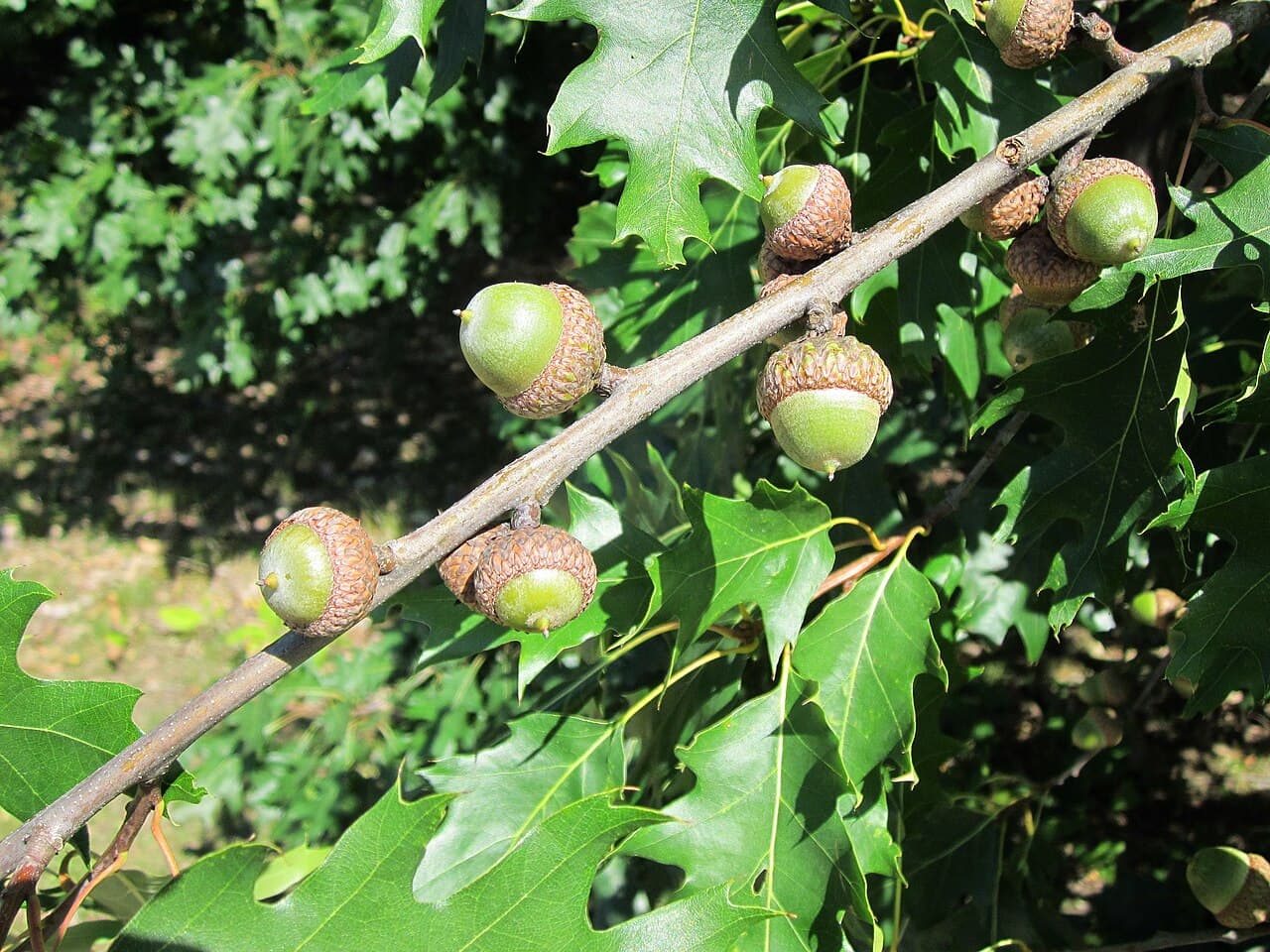
The seedLarge acorns sitting in shallow, saucer-like caps.
How to identify it
- Pointed lobes with bristle tips, cut about halfway to the midrib
- Smooth gray bark with long, flat-topped ridges ('ski trails')
- Large acorns with shallow, saucer-like caps
- Rounded, open crown
Where it grows
- Native range
- Native across eastern North America, reaching its western limit in the woodlands of eastern Kansas. Planted successfully well west of that where soil is deep enough.
- Soil
- Prefers deep, well-drained, slightly acidic soil. More forgiving of neutral ground than pin oak, but still shows chlorosis on thin, alkaline, or heavily compacted sites.
- Sunlight
- Full sun to light shade
- Drought & heat
- Moderate drought tolerance, moderate heat tolerance.
Never prune red oaks from April through July in Kansas — that's when the beetles that spread oak wilt fly. Winter pruning only.
Root behavior
Deep and well-behaved once established, with low risk to walks, drives, and buried lines.
Storm and branch-failure risk
Strong wood and generally sound branch attachments — one of the more storm-reliable large shade trees available in eastern Kansas.
Overall storm resistance: Good. Assessing damage after a storm
Kansas pests and diseases
Oak wilt
SeriousThe reason the pruning window matters. Wilting and bronzing spreads down from the top of the crown and the tree can die within a single season. Confirmed cases need fast action, including trenching to cut root grafts.
Two-lined chestnut borer
SeriousA secondary pest that finishes off oaks already stressed by drought or construction. Crown dieback starts at the top. Prevention is deep watering and root-zone protection.
Anthracnose
CosmeticIrregular brown blotches along leaf veins after a cool, wet spring. It looks bad in May and matters very little — the tree pushes a healthy second flush.
Full profiles in the pest library
Photographs, seasonal timing, treatment options, and the point past which the tree cannot be saved.
Seeing something not listed here? Work from the symptom instead
Pruning
Best windowDormant season only — December through February. Never April through July.
Train young trees to a single central leader, then prune sparingly. As a red-oak-group tree it carries real oak wilt risk, so confine all cuts to the dormant season and paint any accidental spring wound immediately.
Planting near homes
A good choice near a home where there is room for a 45 to 65 foot crown. Strong structure and deep roots make it a low-worry large tree.
When removal may be necessary
- Oak wilt confirmed — remove promptly and sever root grafts to protect nearby oaks
- Extensive trunk decay or a hollow above a target
- The root plate has lifted after a storm
Removal is a judgment call about risk, not a formula. A tree with one of these conditions over open lawn is a very different situation from the same tree over a driveway — and that judgment needs someone on site.
Kansas Tree Guide is an independent educational resource. Nothing on this site replaces an on-site assessment by a qualified arborist or tree-care professional. Last reviewed August 2026.