
White Mulberry
Morus alba
The volunteer tree in every unmowed Kansas fence line, planted by birds and nearly impossible to discourage. Fast, tough — and the berries stain everything they touch.
- Height
- 30–50 ft
- Spread
- 30–50 ft
- Lifespan
- 50–75 yr
- Growth
- Fast
Identification
What to look at
Three features settle most identifications: the bark on the trunk, the leaf in your hand, and whatever the tree is dropping.
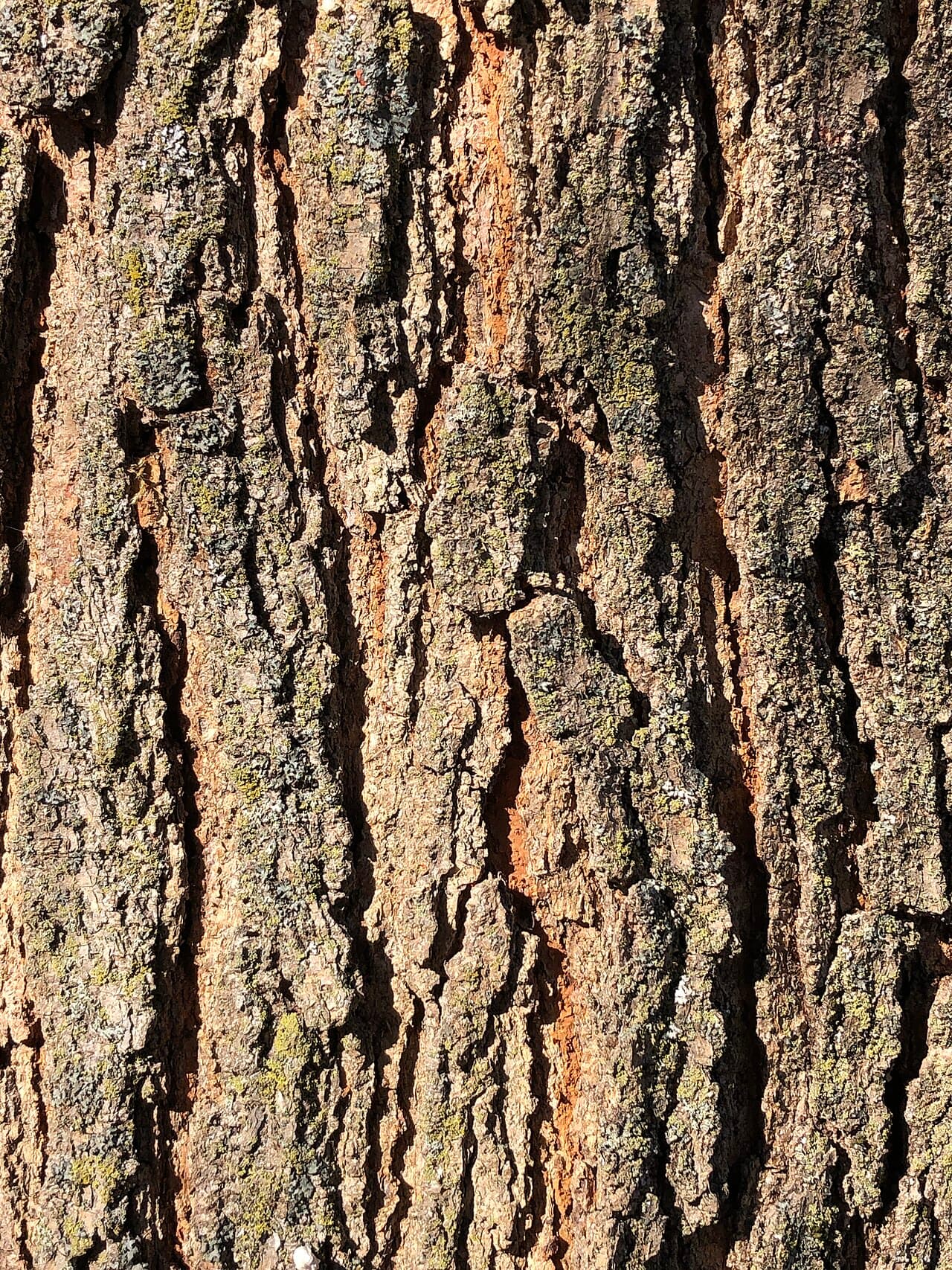
The barkOrange-brown and furrowed, with the colour showing brightest in fresh cracks. 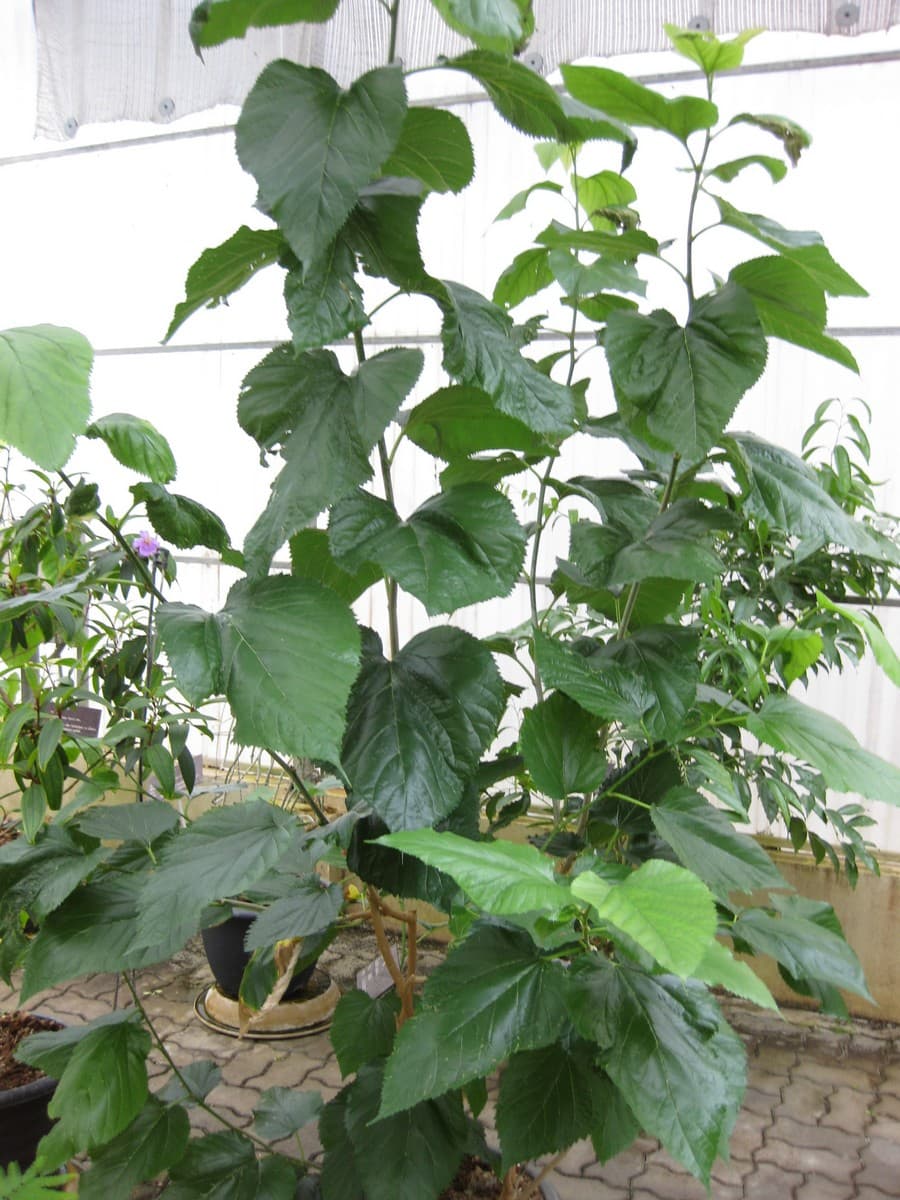
The leafUnlobed, mitten, and multi-lobed leaves all on the same branch — the mulberry signature.
How to identify it
- Glossy leaves in mixed shapes: unlobed, mitten, or multi-lobed
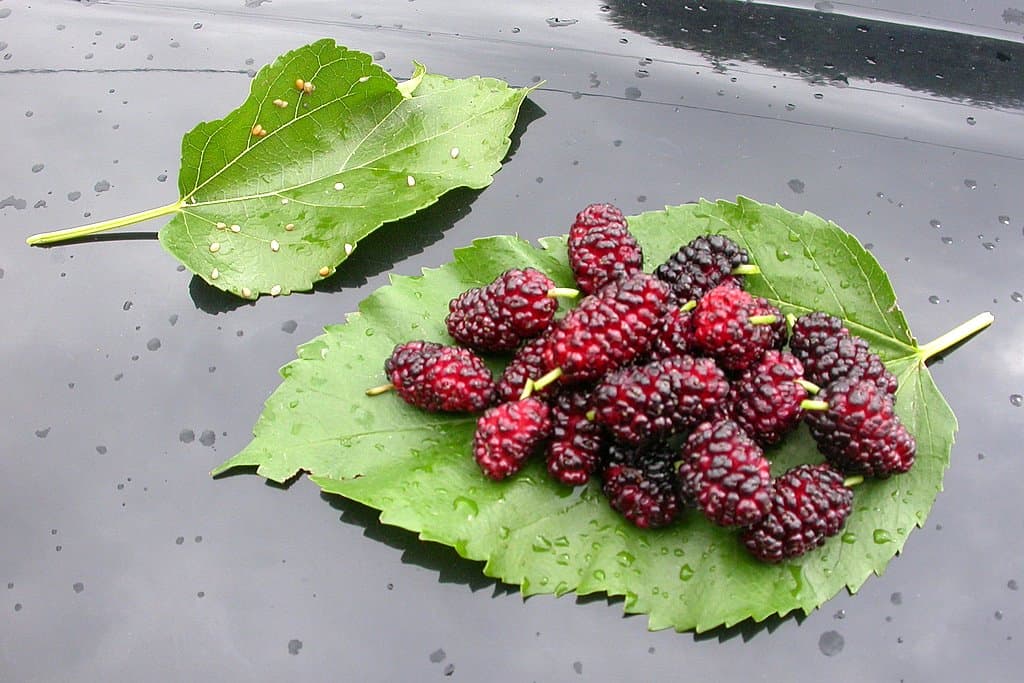
- Blackberry-shaped fruit from white to purple in early summer
- Orange-brown bark on twisting trunks
- Vigorous sprouts from stumps and fence rows
Where it grows
- Native range
- Native to China and introduced to North America for silkworm culture. Now one of the most widespread naturalized trees in Kansas, planted by birds into every unmowed fence line in the state.
- Soil
- Anything. Drought, alkalinity, compaction, and neglect are all tolerated.
- Sunlight
- Full sun to part shade
- Drought & heat
- High drought tolerance, high heat tolerance.
If you inherit one shading the back corner, it's honest shade. Just never let one establish over a driveway, patio, or sewer lateral.
Root behavior
Shallow, aggressive, and opportunistic around paving and older sewer laterals — a poor neighbor to anything buried.
Storm and branch-failure risk
Fair. The wood is moderately weak and limbs break in strong wind, though the tree itself is hard to kill.
Overall storm resistance: Fair. Assessing damage after a storm
Kansas pests and diseases
Staining fruit
SeriousThe defining problem. Female trees produce heavy crops of soft dark fruit that stain everything beneath them, and birds carry it onto surfaces well outside the canopy.
Popcorn disease
CosmeticA fungus that swells individual fruit segments into puffy white lobes. Odd-looking, harmless to the tree, and it reduces the fruit mess slightly.
Bacterial blight
ManageableAngular black leaf spots and blackened shoot tips in wet springs. Prune out affected shoots in dry weather.
Full profiles in the pest library
Photographs, seasonal timing, treatment options, and the point past which the tree cannot be saved.
Seeing something not listed here? Work from the symptom instead
Pruning
Best windowDormant season — November through February
Routine deadwood removal is most of the job. Heavy heading cuts produce vigorous, weakly attached watersprouts, so reduce back to living side branches instead.
Planting near homes
Avoid, mainly for the fruit. Ripe mulberries stain drives, patios, siding, and cars for weeks, and birds spread the stain well beyond the canopy.
When removal may be necessary
- It overhangs a drive, patio, walkway, or parking area where staining fruit is a recurring problem
- Volunteers are established near a foundation, walk, or sewer lateral — remove them small
Removal is a judgment call about risk, not a formula. A tree with one of these conditions over open lawn is a very different situation from the same tree over a driveway — and that judgment needs someone on site.
Kansas Tree Guide is an independent educational resource. Nothing on this site replaces an on-site assessment by a qualified arborist or tree-care professional. Last reviewed August 2026.