Green Ash
Fraxinus pennsylvanica
For decades one of Kansas' most dependable shade trees — until emerald ash borer arrived. EAB is now confirmed in a growing list of Kansas counties and is fatal to untreated ash, which changes the math for every ash owner.
- Height
- 50–60 ft
- Spread
- 35–50 ft
- Lifespan
- 50–100 yr
- Growth
- Fast
Identification
What to look at
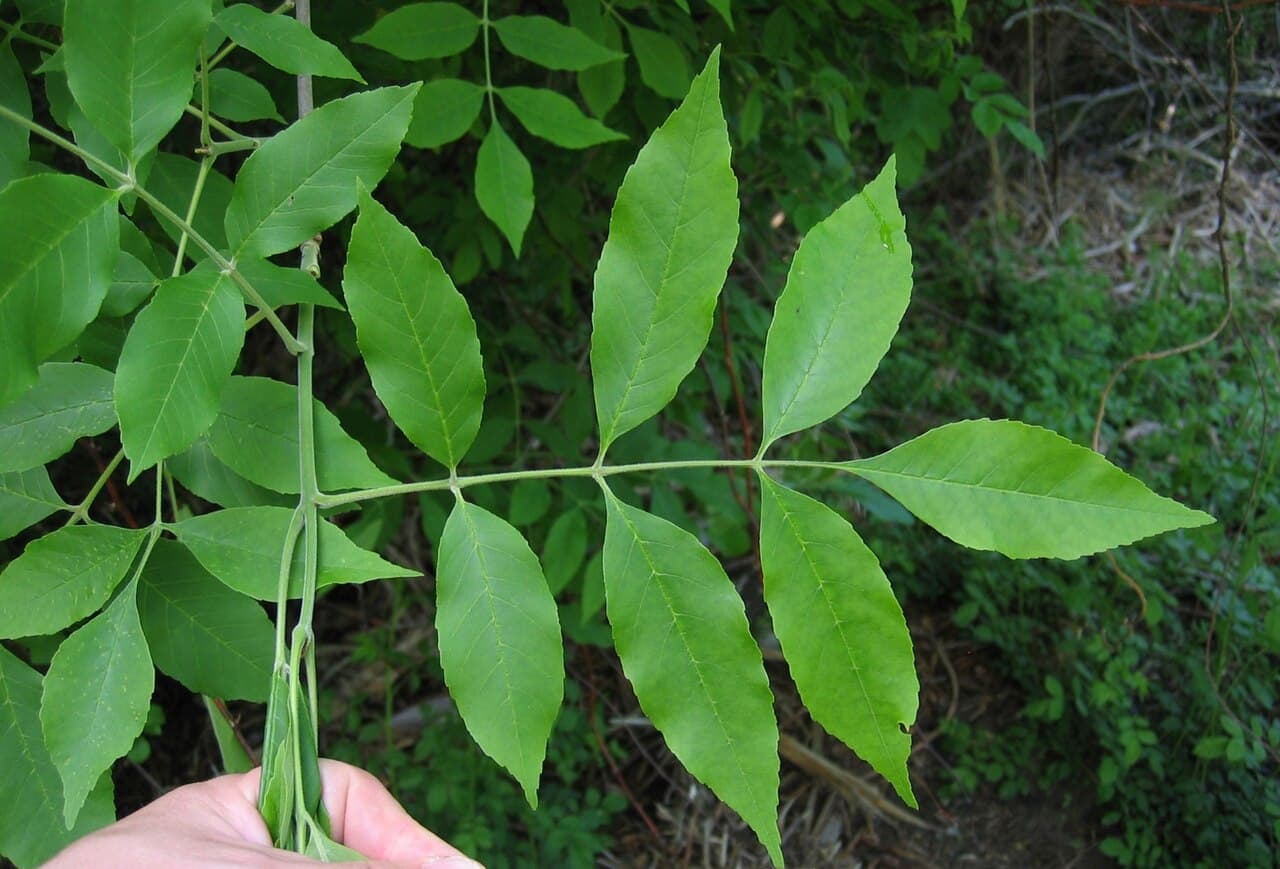
Three features settle most identifications: the bark on the trunk, the leaf in your hand, and whatever the tree is dropping.
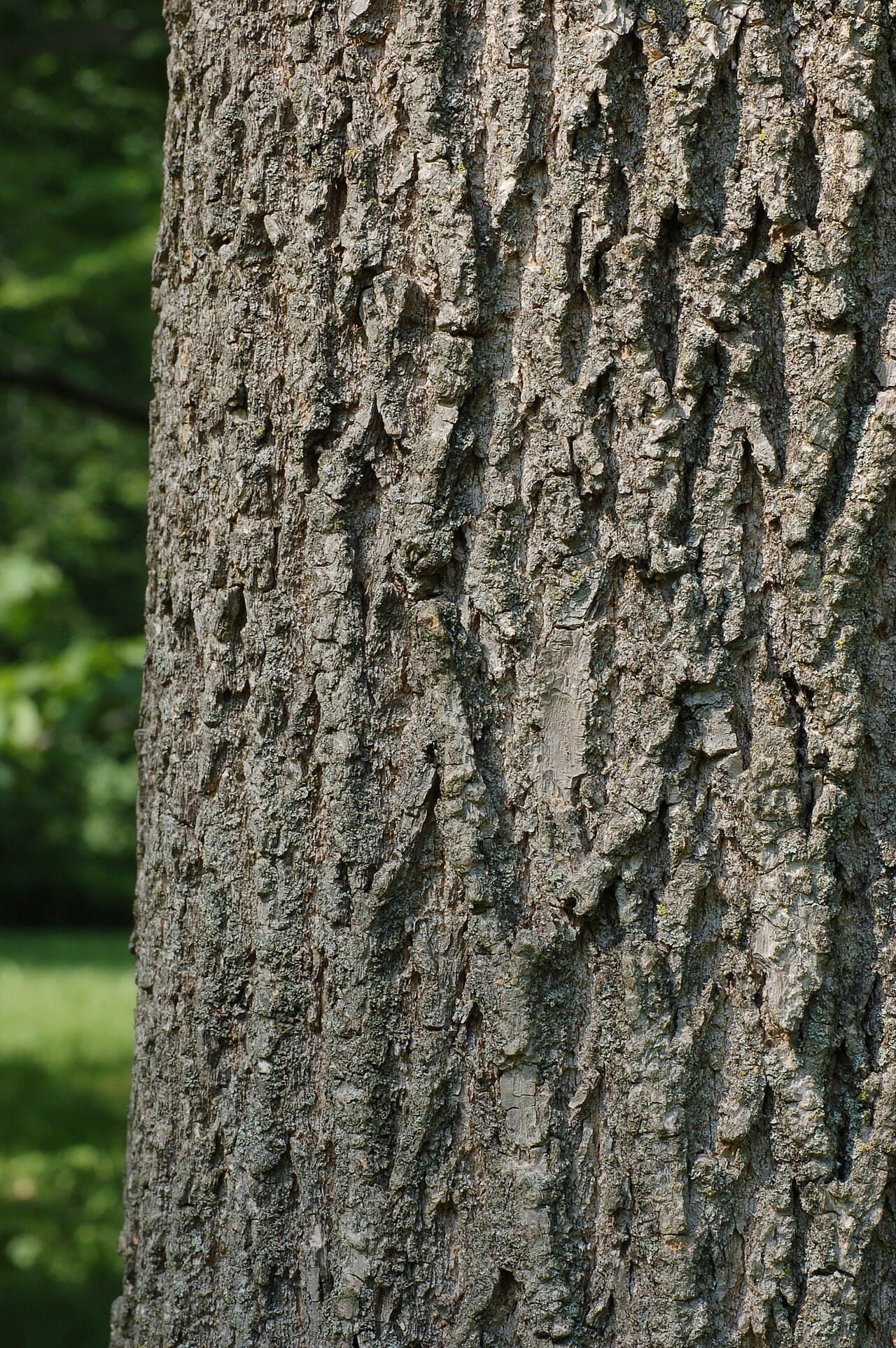
The barkA tight, regular diamond lattice — the fastest way to confirm an ash from the ground. 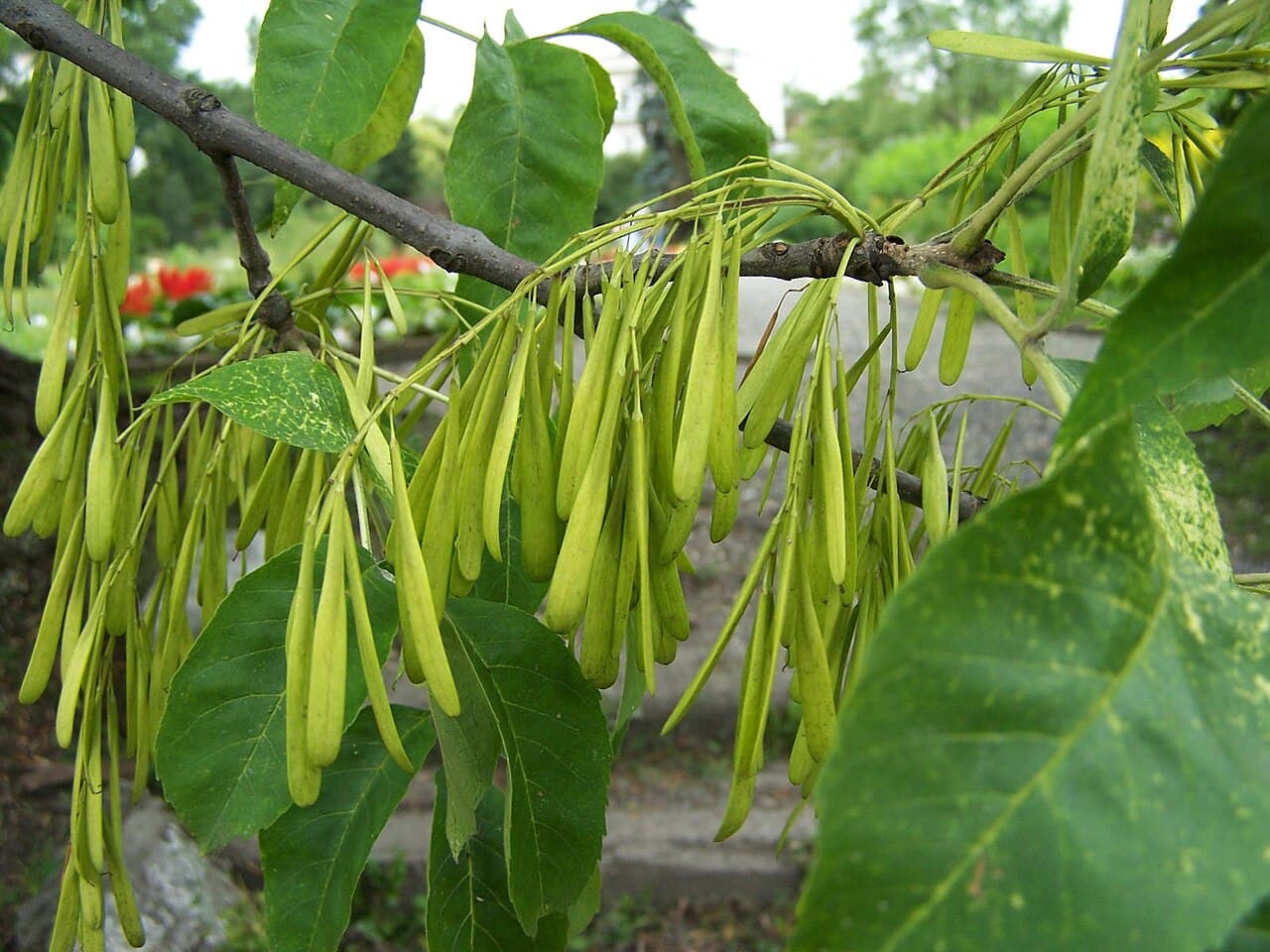
The seedSingle paddle-shaped wings in dense hanging clusters on female trees.
How to identify it
- Opposite, compound leaves with 5–9 leaflets
- Diamond-patterned furrowed bark on mature trunks
- Paddle-shaped seeds hang in clusters on female trees
- Branches emerge directly opposite one another
Where it grows
- Native range
- Native across the eastern and central United States including Kansas, common in bottomlands and planted heavily as a street and yard tree through the second half of the twentieth century.
- Soil
- Very adaptable — tolerates wet ground, drought, compaction, and alkaline clay with equal indifference.
- Sunlight
- Full sun
- Drought & heat
- High drought tolerance, high heat tolerance.
Don't plant new ash in Kansas. If you have a healthy, well-placed ash you want to keep, talk to a professional about preventive trunk treatments before EAB reaches your neighborhood — after dieback appears, it's usually too late.
Root behavior
Moderately shallow and fibrous. Not usually destructive to paving or laterals, though surface rooting shows up on compacted sites.
Storm and branch-failure risk
Fair while healthy; over-mature trees develop weak unions. The bigger issue is what happens after emerald ash borer — a killed ash becomes brittle remarkably fast and is dangerous to climb, so dead ash need removal sooner than other dead trees.
Overall storm resistance: Fair. Assessing damage after a storm
Kansas pests and diseases
Emerald ash borer
SeriousThe decision every Kansas ash owner now faces. Look for thinning from the top down, D-shaped exit holes about an eighth of an inch across, S-shaped galleries under the bark, and pale patches where woodpeckers have worked. Preventive trunk treatment works; treatment after major dieback generally does not.
Ash/lilac borer
ManageableA clearwing moth larva that tunnels the lower trunk, leaving ragged holes and swollen scars. Far less lethal than EAB, and often confused with it — the exit holes are round, not D-shaped.
Ash anthracnose
CosmeticBrown blotches and early leaf drop after a wet spring. Alarming in May, harmless by July.
Full profiles in the pest library
Photographs, seasonal timing, treatment options, and the point past which the tree cannot be saved.
Seeing something not listed here? Work from the symptom instead
Pruning
Best windowDormant season — November through February
Train young trees to a central leader and space the scaffolds. If you are treating for emerald ash borer, keep the canopy intact — heavy pruning during treatment works against the tree by reducing the foliage that drives uptake.
Planting near homes
Use caution, and not because of the tree's habits. Any ash near a structure now carries a standing decision: commit to preventive treatment on a schedule, or plan removal before it dies and becomes hazardous.
When removal may be necessary
- Emerald ash borer damage has taken more than about a third of the canopy — past that point treatment rarely recovers the tree
- The tree is already dead: ash decays and becomes unsafe to climb faster than most species, so removal should not wait
- Bark is splitting and blonding where woodpeckers have stripped it chasing larvae
Removal is a judgment call about risk, not a formula. A tree with one of these conditions over open lawn is a very different situation from the same tree over a driveway — and that judgment needs someone on site.
Kansas Tree Guide is an independent educational resource. Nothing on this site replaces an on-site assessment by a qualified arborist or tree-care professional. Last reviewed August 2026.